Cybersecurity
Cybersecurity is the practice of protecting systems, networks, and data from cyber threats and unauthorized access.
Cybersecurity is the practice of protecting systems, networks, and data from cyber threats and unauthorized access.
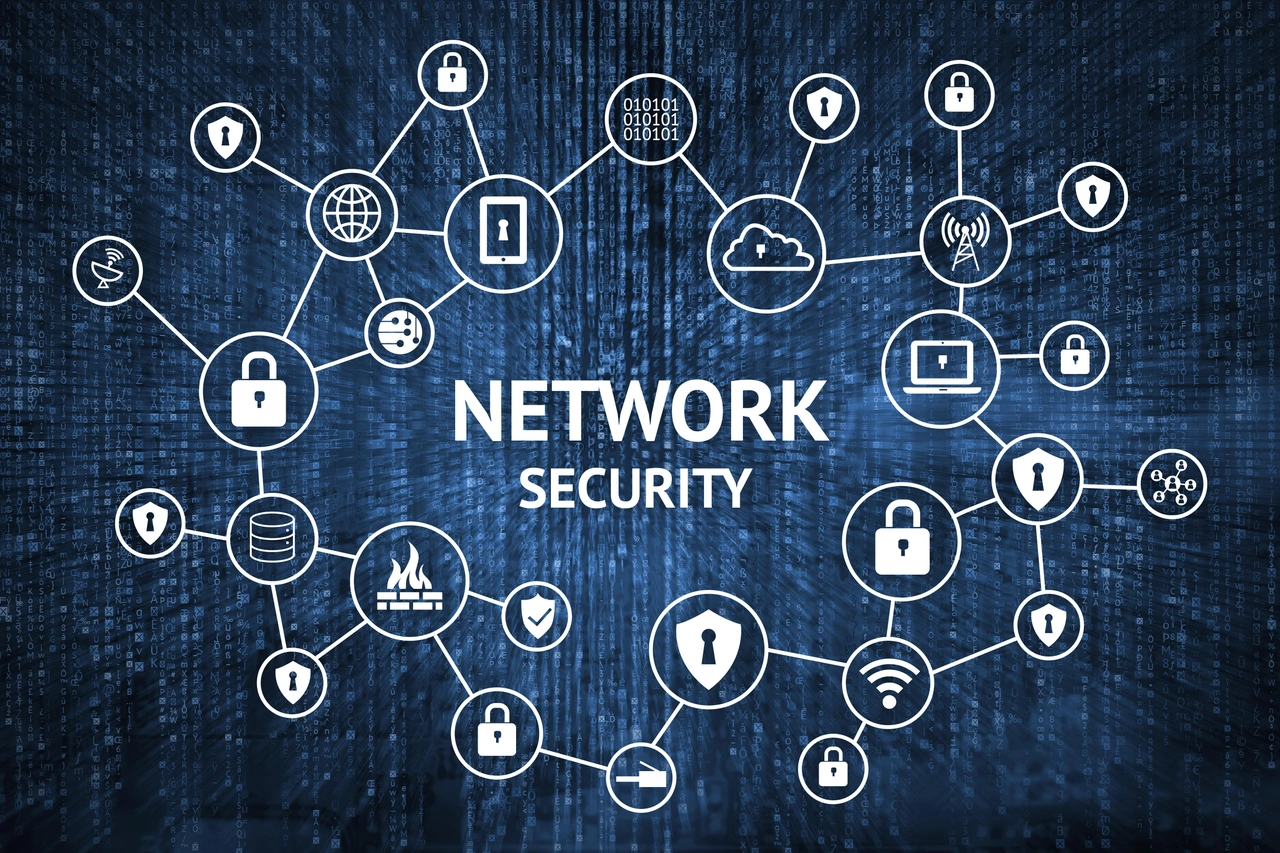
Network security is a crucial aspect of cybersecurity that focuses on protecting computer networks from unauthorized access, cyber threats, and data breaches. It involves implementing policies, technologies, and practices to ensure the confidentiality, integrity, and availability of data transmitted across networks. Organizations use various security measures such as firewalls, intrusion detection systems (IDS), intrusion prevention systems (IPS), and encryption to safeguard sensitive information from cyberattacks. Firewalls act as a barrier between a trusted network and external threats, while IDS and IPS monitor network traffic for suspicious activities. Encryption ensures that data remains unreadable to unauthorized users, preventing interception and theft.
With the rise of cyber threats such as malware, phishing, ransomware, and denial-of-service (DoS) attacks, network security plays a critical role in protecting personal and corporate data. Businesses implement Virtual Private Networks (VPNs) to secure remote connections and ensure safe data transmission over public networks. Multi-factor authentication (MFA) is another essential security layer that prevents unauthorized access by requiring additional verification steps beyond passwords. Network administrators regularly conduct penetration testing and vulnerability assessments to identify and fix security weaknesses before cybercriminals exploit them.
As technology evolves, emerging threats like AI-powered cyberattacks, IoT vulnerabilities, and cloud security risks require advanced security strategies. Organizations are now adopting zero-trust security models, which assume that no user or device is inherently trustworthy and must be continuously verified. Governments and regulatory bodies enforce compliance standards such as GDPR, HIPAA, and ISO 27001 to ensure data protection. In the modern digital landscape, strong network security is vital for businesses, governments, and individuals to protect sensitive information, prevent cyber threats, and maintain trust in digital communication....
Click here for more information
Ethical hacking is the practice of intentionally probing computer systems, networks, and applications for security vulnerabilities to identify and fix weaknesses before malicious hackers can exploit them. Ethical hackers, also known as white-hat hackers, use penetration testing techniques to simulate real-world cyberattacks and assess an organization's security posture. They follow legal and ethical guidelines while conducting tests, ensuring that sensitive data remains protected. Organizations hire ethical hackers to strengthen their cybersecurity defenses, prevent data breaches, and comply with industry security regulations.
The process of ethical hacking includes reconnaissance, scanning, gaining access, maintaining access, and covering tracks—similar to the methods used by malicious hackers but with permission and legal authorization. Ethical hackers use various tools like Nmap, Metasploit, Wireshark, Burp Suite, and John the Ripper to identify vulnerabilities in systems and applications. They focus on securing networks, preventing malware infections, detecting weak passwords, and protecting sensitive data from threats such as phishing, ransomware, and SQL injection attacks. Certifications like Certified Ethical Hacker (CEH), Offensive Security Certified Professional (OSCP), and GIAC Penetration Tester (GPEN) validate ethical hackers' skills and knowledge.
Ethical hacking plays a crucial role in cybersecurity, risk management, and compliance for businesses and governments. Many organizations conduct bug bounty programs, where ethical hackers are rewarded for finding and reporting security flaws. With cyber threats evolving rapidly, ethical hacking helps companies stay ahead of cybercriminals by proactively identifying and addressing security vulnerabilities. It is a vital component of modern cybersecurity strategies, ensuring data protection, privacy, and system integrity in the digital world.........
Click here for more information

Cryptography is the practice of securing communication and information through mathematical techniques, making it accessible only to authorized parties while protecting it from unauthorized access. It is a fundamental aspect of cybersecurity, ensuring data confidentiality, integrity, authentication, and non-repudiation. Cryptography is widely used in secure messaging, online transactions, digital signatures, and data encryption to protect sensitive information from cyber threats. It relies on encryption algorithms to convert plaintext into ciphertext, which can only be decrypted by someone with the correct key.
There are two main types of cryptography: Symmetric and Asymmetric encryption. Symmetric encryption uses a single key for both encryption and decryption, making it fast and efficient but requiring secure key distribution. Examples include AES (Advanced Encryption Standard) and DES (Data Encryption Standard). Asymmetric encryption, also known as public-key cryptography, uses two keys—a public key for encryption and a private key for decryption. This method enhances security and is commonly used in SSL/TLS certificates, digital signatures, and secure email communication. Examples of asymmetric encryption algorithms include RSA, ECC (Elliptic Curve Cryptography), and Diffie-Hellman key exchange.
Cryptography is essential for securing sensitive data, preventing unauthorized access, and ensuring the authenticity of digital transactions. It is widely implemented in blockchain, cloud security, end-to-end encryption apps (like WhatsApp and Signal), and password hashing. However, cryptographic security depends on key management, algorithm strength, and resistance to attacks like brute-force, man-in-the-middle (MITM), and quantum computing threats. As technology advances, cryptography continues to evolve, enhancing privacy and security in the digital world..........
Click here for more information

Cloud security refers to the set of policies, technologies, and controls used to protect data, applications, and infrastructure in cloud computing environments. As organizations increasingly move their operations to the cloud, ensuring the confidentiality, integrity, and availability of cloud-based resources has become crucial. Cloud security encompasses various aspects, including data encryption, access control, identity management, and threat monitoring. Cloud service providers (CSPs) like AWS, Microsoft Azure, and Google Cloud implement robust security measures, but organizations must also take responsibility for securing their cloud environments using best practices like multi-factor authentication (MFA), strong passwords, and role-based access control (RBAC).
One of the primary concerns in cloud security is data protection. Since data is stored remotely, encryption is used to secure it both at rest and in transit, preventing unauthorized access. Another important aspect is identity and access management (IAM), which ensures that only authorized users can access specific resources. Firewalls, intrusion detection systems (IDS), and security information and event management (SIEM) tools are commonly used to monitor and mitigate potential threats in cloud environments. Compliance with security standards like ISO 27001, GDPR, HIPAA, and SOC 2 is essential to ensure cloud security best practices.
Cloud security also involves preventing data breaches, DDoS attacks, insider threats, and misconfigurations, which are common risks in cloud environments. Zero Trust Architecture (ZTA) is an advanced security model that ensures strict verification of all users and devices before granting access. Organizations also use cloud security posture management (CSPM) and cloud workload protection platforms (CWPP) to continuously assess and strengthen cloud security. As cloud technology evolves, cybersecurity professionals must stay updated with emerging threats and new security measures to protect cloud assets effectively..........
Click here for more information

Cyber Threat Intelligence (CTI) is the process of collecting, analyzing, and applying information about potential cyber threats to enhance an organization's security posture. It involves identifying and understanding cyber threats, including malware, phishing attacks, ransomware, zero-day vulnerabilities, and advanced persistent threats (APTs). The primary goal of CTI is to help organizations make informed security decisions, proactively defend against cyber threats, and minimize the risk of cyberattacks. Cyber threat intelligence is categorized into strategic, tactical, operational, and technical intelligence, each serving different purposes in threat detection and mitigation.
CTI sources include threat feeds, dark web monitoring, security reports, honeypots, and malware analysis. Security teams analyze Indicators of Compromise (IoCs) like IP addresses, domain names, file hashes, and attack patterns to detect and block malicious activities. CTI platforms such as MITRE ATT&CK, Threat Intelligence Platforms (TIPs), and Security Information and Event Management (SIEM) tools help organizations automate threat detection and response. Sharing threat intelligence through platforms like ISACs (Information Sharing and Analysis Centers) enables organizations to strengthen collective cybersecurity defenses.
Effective cyber threat intelligence improves an organization's ability to predict, prevent, and respond to cyber threats. By integrating CTI with firewalls, intrusion detection systems (IDS), endpoint detection and response (EDR), and Security Operations Centers (SOC), businesses can detect cyber threats early and mitigate risks efficiently. As cyber threats continue to evolve, organizations must stay ahead by continuously updating their threat intelligence strategies, training security teams, and leveraging AI-driven threat detection solutions..........
Click here for more information

Comments