VR in Entertainment & Gaming
1. what is VR in Entertainment & Gaming?
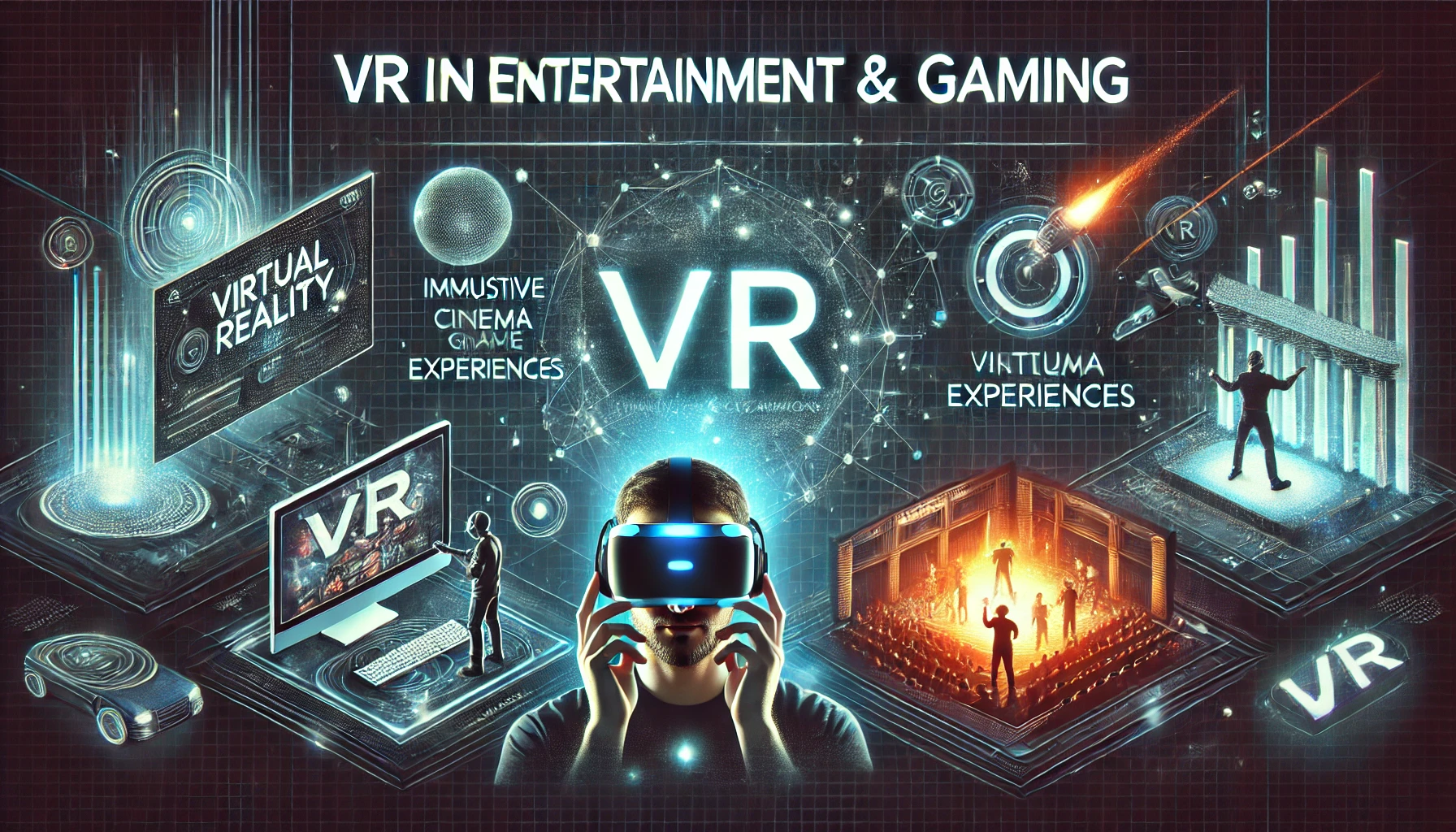
VR in Entertainment & Gaming is revolutionizing the way users interact with digital content, offering immersive experiences that were once limited to imagination. Virtual Reality (VR) technology allows users to step into fully interactive 3D environments, where they can engage with virtual worlds as if they were physically present. In the entertainment industry, VR has transformed how people experience movies, concerts, and live events. With VR headsets, users can be transported into virtual cinemas, where they can experience films in a 360-degree format, or attend virtual concerts, standing among a crowd while seeing and hearing the performance as though they were there in person. This level of immersion makes entertainment feel more lifelike and interactive, offering an entirely new way of experiencing digital content.
In the gaming industry, VR has brought a new level of realism and interactivity, taking gameplay beyond the screen and into the user’s environment. Players using VR headsets can physically move around within a game, interact with the virtual environment, and engage with characters and objects in real-time. This creates a more immersive, active experience, where players feel truly "inside" the game. For example, VR games like Beat Saber or Half-Life: Alyx allow players to use their hands, bodies, and head movements to control gameplay, making them feel as though they are part of the action. VR gaming also enables new genres, such as virtual sports or first-person exploration, which couldn't be achieved with traditional gaming devices.
VR in entertainment and gaming is pushing the boundaries of storytelling and gameplay. With the ability to interact with and influence the virtual environment, users are no longer passive consumers of content; instead, they are active participants, shaping their experiences in ways that were once impossible. Additionally, multiplayer VR games allow players to connect in shared virtual spaces, interacting with each other and the environment, further enhancing the sense of immersion. As VR technology continues to evolve, its role in entertainment and gaming will likely continue to expand, offering even more lifelike, interactive, and engaging experiences that redefine how we consume digital content.
2.VR Gaming Platforms
VR Gaming Platforms
are digital ecosystems that support immersive virtual reality (VR) gaming experiences, providing the necessary hardware, software, and content for players to engage with virtual environments. These platforms enable users to connect with VR games, interact with other players, and enjoy a fully immersive experience. The VR gaming experience is enhanced by specialized headsets, motion controllers, and sensors that track players' movements and gestures, allowing for a highly interactive and engaging experience. Popular VR gaming platforms are often tied to specific hardware, such as Oculus, PlayStation VR, and SteamVR, each providing a unique selection of games, tools, and services tailored to their respective hardware ecosystems.
One of the leading VR gaming platforms is Oculus, now part of Meta (formerly Facebook). Oculus devices, such as the Oculus Quest 2 and Oculus Rift S, offer standalone and PC-connected VR experiences, respectively. The platform includes a vast library of VR games, from action-packed shooters like Superhot VR to immersive simulations like The Walking Dead: Saints & Sinners. Oculus also supports social features, such as the ability to meet friends in virtual spaces, participate in virtual events, and explore shared environments. The Oculus Store is home to many exclusive titles, making it a go-to destination for players seeking top-tier VR gaming experiences.
PlayStation VR is another prominent VR gaming platform, which brings VR capabilities to the PlayStation 4 and PlayStation 5 consoles. Offering a wide range of VR games like Astro Bot Rescue Mission, Blood & Truth, and No Man's Sky VR, it provides an accessible entry point into VR gaming for console players. PlayStation VR also takes advantage of the PlayStation ecosystem, offering integration with the console’s existing features, such as PlayStation Move controllers and PlayStation Camera, to deliver a seamless and immersive experience. The platform is expected to evolve with the release of the PlayStation VR2, which offers enhanced features like improved resolution, haptic feedback, and adaptive triggers, further elevating the gaming experience.
3.360-degree Videos
360-degree Videos
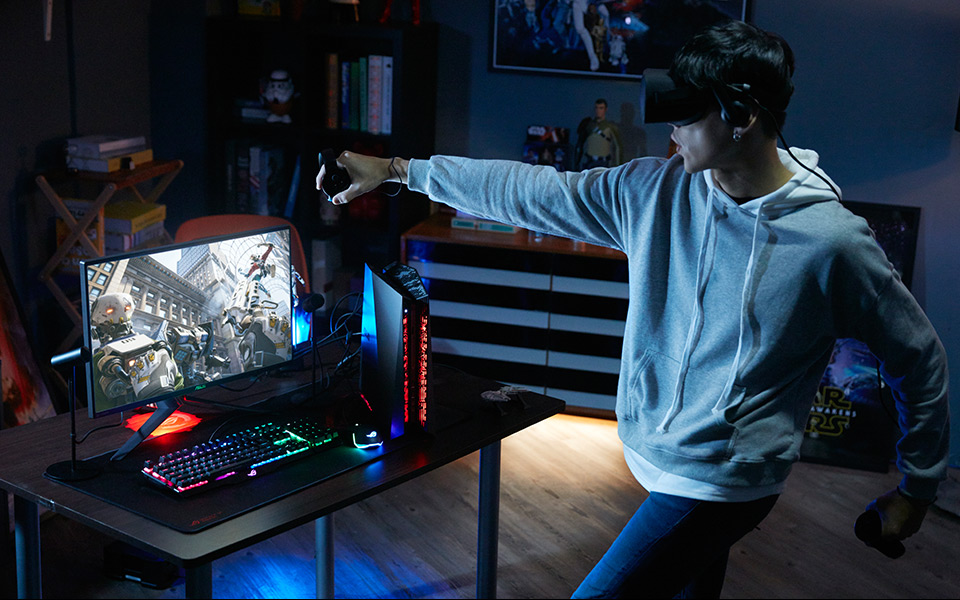
are a type of immersive video that captures a complete view of the surrounding environment, allowing viewers to experience the content from every angle, as though they were physically present in the scene. Unlike traditional video, where the camera captures only a fixed view, 360-degree videos are filmed using specialized cameras equipped with multiple lenses that capture a full panoramic image. These videos are often displayed in a spherical format, and viewers can look around freely in any direction, whether it’s up, down, left, or right, to explore the environment. The result is an immersive experience that makes the viewer feel as though they are part of the action, rather than just observing it.
In the context of virtual reality (VR), 360-degree videos are especially powerful. When viewed through a VR headset, the experience becomes even more lifelike and engaging. Viewers can turn their heads to look around the scene as if they were physically located within it. For example, in a 360-degree travel video, viewers can virtually explore faraway destinations, looking in every direction to take in the surroundings, from bustling city streets to serene landscapes. This capability is especially useful in industries like tourism, education, and entertainment, where offering immersive experiences can provide more engaging and interactive content than traditional video formats.
Beyond VR, 360-degree videos are also accessible on platforms like YouTube and Facebook, which allow users to interact with the content by dragging their mouse or swiping their smartphone screen to change the viewing angle. These videos are popular for sharing immersive experiences, such as concerts, events, or extreme sports. The ability to capture and view video from all directions adds a layer of depth to content, making it more compelling for audiences who want to feel as though they are experiencing the event firsthand. As technology continues to evolve, 360-degree videos are becoming more accessible and are expected to play an increasingly prominent role in both entertainment and education, offering audiences more interactive and engaging content.

360-degree Videos
are a type of immersive video that captures a complete view of the surrounding environment, allowing viewers to experience the content from every angle, as though they were physically present in the scene. Unlike traditional video, where the camera captures only a fixed view, 360-degree videos are filmed using specialized cameras equipped with multiple lenses that capture a full panoramic image. These videos are often displayed in a spherical format, and viewers can look around freely in any direction, whether it’s up, down, left, or right, to explore the environment. The result is an immersive experience that makes the viewer feel as though they are part of the action, rather than just observing it.
In the context of virtual reality (VR), 360-degree videos are especially powerful. When viewed through a VR headset, the experience becomes even more lifelike and engaging. Viewers can turn their heads to look around the scene as if they were physically located within it. For example, in a 360-degree travel video, viewers can virtually explore faraway destinations, looking in every direction to take in the surroundings, from bustling city streets to serene landscapes. This capability is especially useful in industries like tourism, education, and entertainment, where offering immersive experiences can provide more engaging and interactive content than traditional video formats.
Beyond VR, 360-degree videos are also accessible on platforms like YouTube and Facebook, which allow users to interact with the content by dragging their mouse or swiping their smartphone screen to change the viewing angle. These videos are popular for sharing immersive experiences, such as concerts, events, or extreme sports. The ability to capture and view video from all directions adds a layer of depth to content, making it more compelling for audiences who want to feel as though they are experiencing the event firsthand. As technology continues to evolve, 360-degree videos are becoming more accessible and are expected to play an increasingly prominent role in both entertainment and education, offering audiences more interactive and engaging content.
4.Multiplayer VR Worlds
Multiplayer VR Worlds
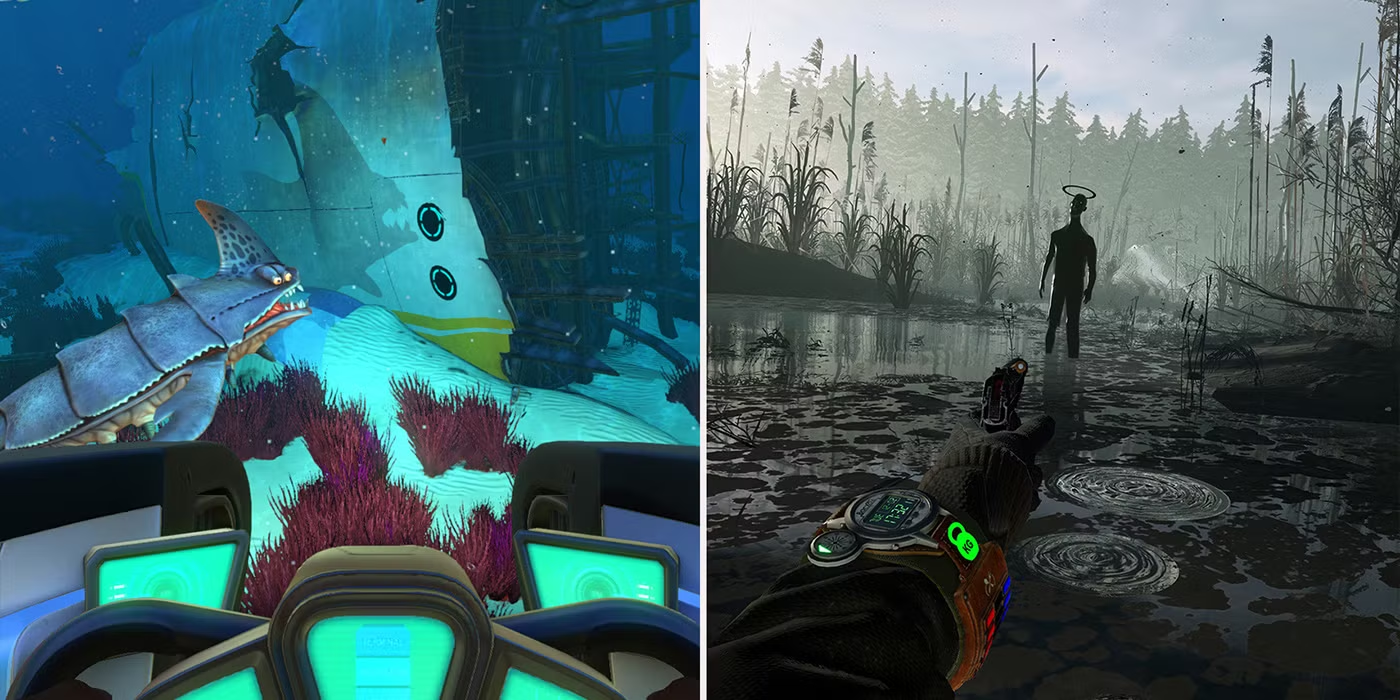
are immersive virtual environments where multiple users can interact with each other in real-time, using Virtual Reality (VR) technology. These worlds are designed to be shared spaces, where players or participants can engage in various activities, explore virtual landscapes, and socialize with others while wearing VR headsets and using motion controllers. Unlike traditional online multiplayer games, multiplayer VR worlds offer a much higher level of immersion, as players feel like they are physically present in the virtual environment. These virtual worlds can range from gaming experiences to social platforms, offering a wide range of interactions and experiences for participants.
One of the most well-known examples of multiplayer VR worlds is VRChat, a social platform where users can create custom avatars, design virtual spaces, and interact with other players in a wide variety of environments. Players can attend virtual parties, play games, and chat with others in real-time, offering a level of social interaction that goes beyond traditional online multiplayer games. VRChat is also a hub for creative expression, allowing users to create and share their own worlds, characters, and experiences. Other examples of multiplayer VR worlds include Rec Room, where users can play games like paintball or escape rooms with friends, and AltspaceVR, which focuses on social gatherings, virtual meetups, and live events.
Multiplayer VR worlds are not just limited to gaming and socializing; they are also expanding into education, business, and even entertainment. For instance, in the business world, companies are using VR to host virtual conferences, meetings, and training sessions where employees from all over the globe can collaborate in real-time, just as if they were in the same room. In education, VR allows students to collaborate in virtual classrooms or explore interactive learning environments. These worlds offer new opportunities for cross-disciplinary interactions and create immersive experiences that cannot be replicated with traditional tools.
5.VR Motion Controllers
VR Motion Controllers
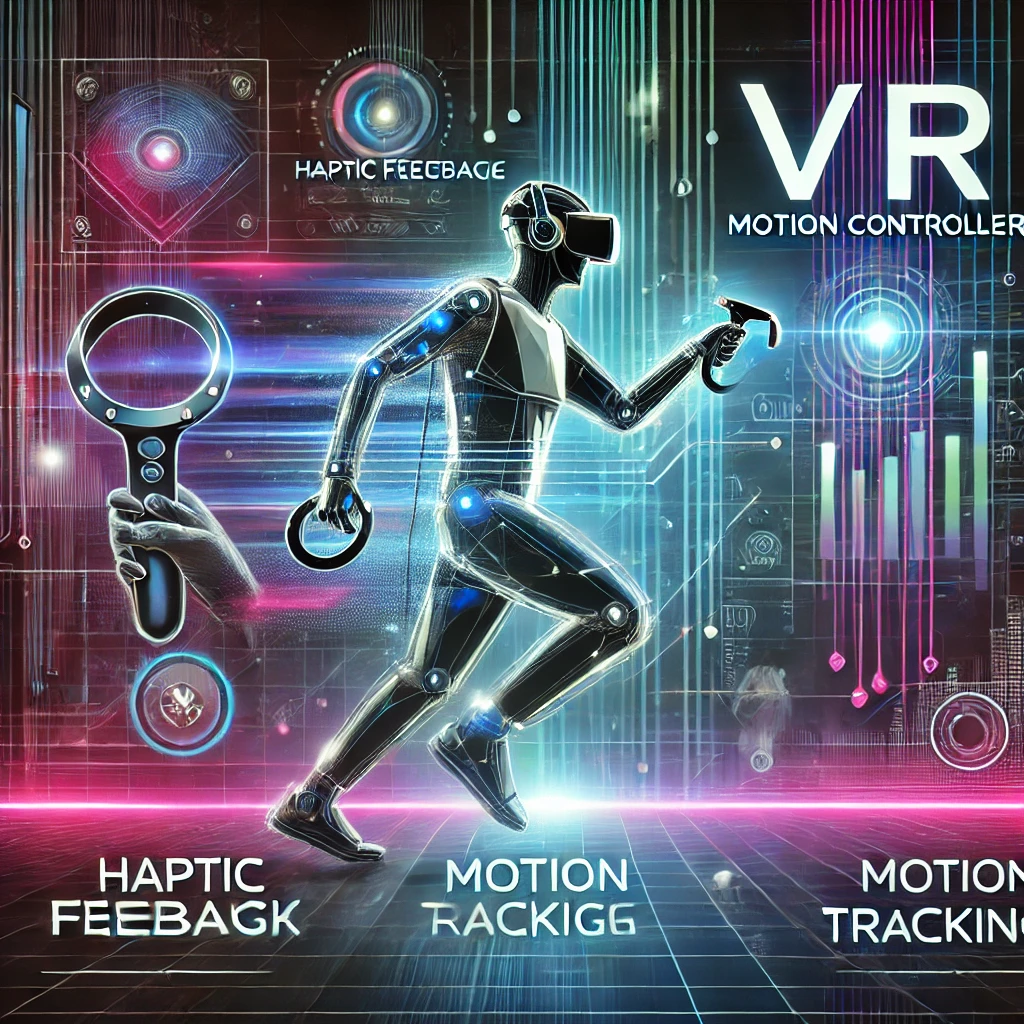
are essential input devices designed to enhance the immersive experience in Virtual Reality (VR) by allowing users to interact naturally with the virtual environment. These controllers are equipped with sensors, gyroscopes, and motion tracking technology, enabling them to detect the user’s hand movements, gestures, and positioning. When used with a VR headset, motion controllers allow players to reach out, grab objects, press buttons, or perform other interactive tasks within the virtual world, making the experience feel more intuitive and realistic. For example, in a VR game, a player can swing a sword, aim a bow, or even pick up and manipulate virtual objects, with the movements being reflected accurately in the game world. This level of interaction helps bridge the gap between the physical and digital worlds, enhancing user engagement..
One of the most widely recognized VR motion controllers is the Oculus Touch, which pairs with the Oculus Rift and Oculus Quest headsets. The Oculus Touch controllers track hand movements with high accuracy and feature ergonomic designs, providing users with a comfortable and responsive experience. Similarly, PlayStation VR uses the PlayStation Move controllers, which offer similar functionality for PlayStation VR users, including motion-sensing capabilities and buttons for interacting with the virtual world. The Valve Index controllers, also known as Knuckles, take immersion to the next level by incorporating individual finger tracking, allowing users to move their fingers naturally within the virtual space. This provides an even more intuitive and lifelike experience, especially in games and applications that require intricate hand movements.
The integration of motion controllers in VR has expanded their use beyond gaming into areas like education, training, and simulation. For instance, VR-based training programs for medical professionals or industrial workers often use motion controllers to simulate realistic scenarios, where the user can practice delicate procedures or operations. In educational settings, motion controllers can be used for interactive learning, where students can manipulate 3D models, conduct experiments, or explore complex concepts in a hands-on, engaging manner. As VR technology evolves, motion controllers will continue to improve in precision and comfort, enhancing immersion and allowing for more advanced applications across different industries.
6.VR Fitness & Sports Simulations
VR Fitness & Sports Simulations
are an innovative use of Virtual Reality (VR) technology to create interactive and immersive workouts, training sessions, and sports experiences. These simulations use VR headsets and motion controllers to simulate real-world fitness activities or sports environments, offering users a fun and engaging way to stay fit, improve skills, or experience different sports from the comfort of their own home. The integration of motion tracking in VR allows users to replicate actions such as running, jumping, punching, or cycling, providing an effective workout while also offering an entertainment element. VR fitness applications aim to make exercise more enjoyable, helping users stay motivated and engaged by immersing them in a dynamic, virtual world where they can perform activities like boxing, dancing, or obstacle course running.
VR fitness games like Beat Saber, BoxVR, and The Thrill of the Fight have become extremely popular, blending exercise with gaming. These games track the user’s movements through VR motion controllers, requiring players to physically move, dodge, punch, or perform other actions to score points or complete levels. In Beat Saber, for example, players use lightsabers to slice through blocks that appear in rhythm to the music, engaging their arms and upper body in a cardio-intensive workout. Similarly, BoxVR focuses on boxing workouts, combining punches, hooks, and jabs with an energizing music soundtrack, allowing players to get a full-body workout. By incorporating fun, game-like elements, VR fitness platforms can make exercise more appealing to a wide range of users, from beginners to fitness enthusiasts.
In the realm of sports simulations, VR offers athletes and sports enthusiasts a way to practice and enhance their skills in various sports, such as tennis, football, basketball, and golf, all within a virtual environment. Programs like VR Sports Challenge and Tennis World Tour VR offer realistic simulations where players can practice their swings, shots, and other movements without needing a physical court or field. VR sports training is also gaining traction in professional athletics, where athletes use VR to rehearse specific scenarios, visualize plays, and improve their reaction times or strategies. For instance, quarterbacks in American football can use VR to simulate passing scenarios, while golfers can practice their swings in different course conditions. These simulations not only provide a training tool but also help players focus on improving technique and form in a risk-free, virtual environment.

7.VR Theme Parks
VR Theme Parks
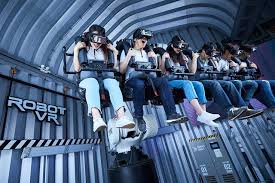
are a groundbreaking development in the entertainment industry that combines the excitement of traditional theme park attractions with the immersive experiences of Virtual Reality (VR). In these theme parks, visitors can put on VR headsets to experience a wide range of simulated environments, from thrilling roller coasters to fantastical worlds, all enhanced with digital elements. The integration of VR allows for experiences that go beyond the physical limitations of real-world attractions, providing visitors with fully immersive, interactive, and highly customizable adventures. These theme parks aim to offer visitors a unique blend of physical rides and virtual experiences, creating a new kind of thrill that blends the best of both the physical and digital worlds.
One prominent example of VR theme park attractions is the VR roller coaster. These rides use VR headsets to transport riders into entirely different worlds as they experience the thrill of a traditional roller coaster. For example, a rider on a roller coaster may be visually transported into a futuristic city or a fantasy world, making the ride feel more dynamic and engaging. The added virtual environment can include elements like flying dragons, futuristic landscapes, or even space travel, which would not be possible on a traditional roller coaster. The combination of the physical thrill of the ride with the visual immersion of VR creates a heightened sense of excitement for participants, making the experience much more engaging than a traditional amusement ride.
VR theme parks are also expanding beyond roller coasters, incorporating a variety of immersive experiences like virtual escape rooms, interactive storytelling experiences, and gaming zones. In these areas, visitors can participate in collaborative challenges or solo adventures where they can interact with the virtual world, solve puzzles, or battle virtual enemies. For instance, in VR escape rooms, players wear VR headsets and are tasked with solving puzzles or completing missions within a completely virtual environment. This adds an extra layer of excitement to the traditional escape room format, as the environment can change dynamically and incorporate elements of fantasy or science fiction.
8.Holographic Displays
Holographic Displays are cutting-edge visual technologies that use light projections to create three-dimensional (3D) images, which appear to float in mid-air without the need for special glasses or screens. These displays leverage the principles of interference, diffraction, and light scattering to create realistic and interactive 3D images. The result is a more immersive viewing experience, where users can see objects in full 3D, viewing them from different angles, as if they were physically present. Holographic displays have the potential to revolutionize fields like entertainment, education, healthcare, and communication by offering a more dynamic and visually rich alternative to traditional 2D displays such as monitors and projectors.
One of the most prominent examples of holographic displays in use today is 3D holographic projections used in live events or performances. For instance, artists and musicians can be "projected" as holograms, allowing them to perform virtually on stage, even after their passing, as seen in the holographic concerts of deceased artists like Tupac Shakur at Coachella. Additionally, holographic telecommunication is becoming a reality, where people can interact in 3D space, seeing and talking to each other as if they were physically present, which can enhance remote collaboration and virtual meetings. Companies such as Microsoft with HoloLens and Vuzix are pushing the envelope by combining augmented reality (AR) with holographic technologies, creating mixed-reality experiences where digital objects seamlessly blend with the physical world.
The potential of holographic displays is also growing in consumer electronics. For example, future smartphones and tablets might incorporate holographic displays that allow users to view 3D images or videos without needing glasses or special accessories. In medical fields, holography can be used for advanced visualization, where doctors can view 3D images of organs, tissues, or tumors during procedures, helping in diagnosis and planning treatments with more precision. Furthermore, in education, holographic displays have the potential to make learning more engaging by offering students interactive 3D models of complex systems like the human body, historical artifacts, or scientific phenomena, making subjects more accessible and understandable.
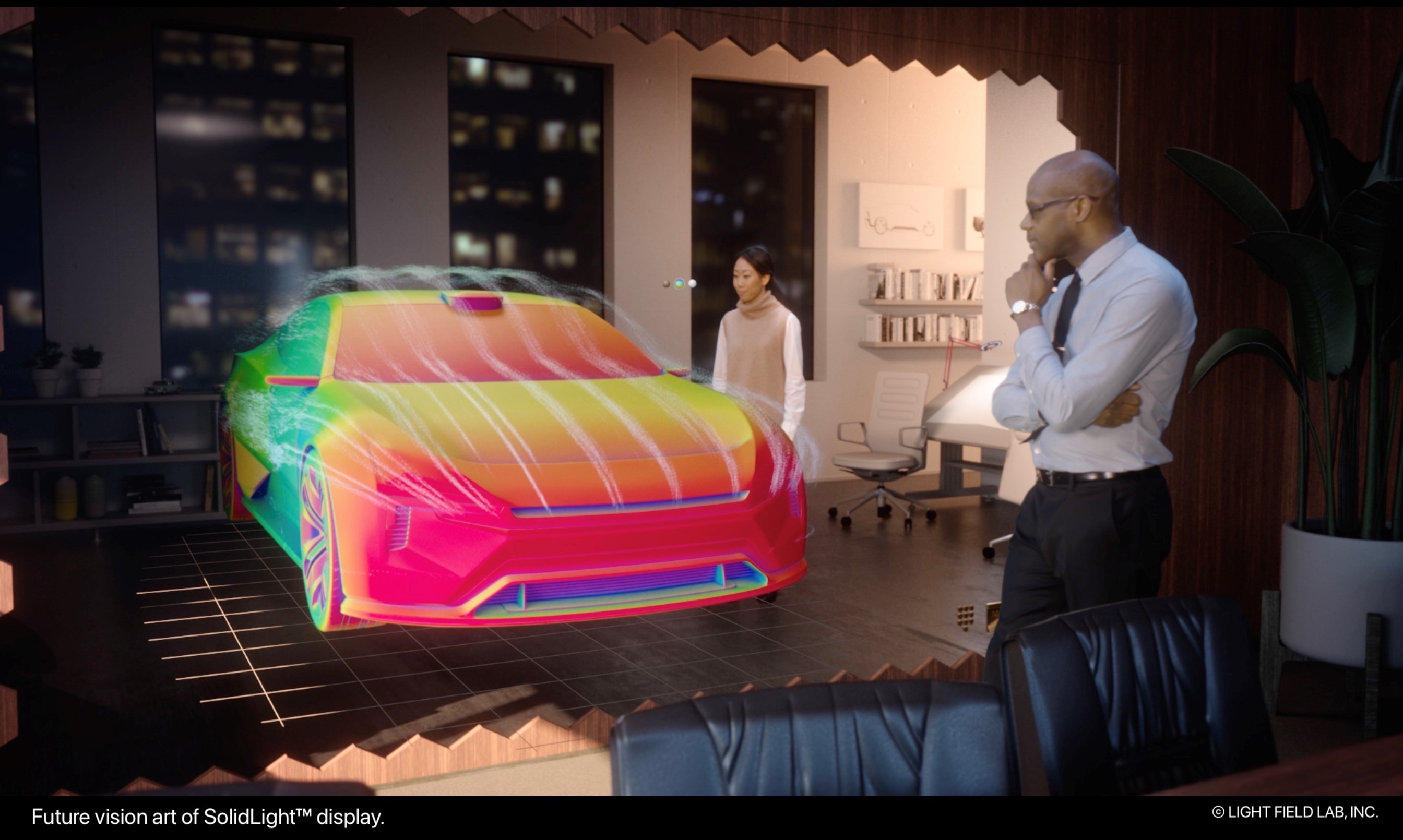
Holographic Displays are cutting-edge visual technologies that use light projections to create three-dimensional (3D) images, which appear to float in mid-air without the need for special glasses or screens. These displays leverage the principles of interference, diffraction, and light scattering to create realistic and interactive 3D images. The result is a more immersive viewing experience, where users can see objects in full 3D, viewing them from different angles, as if they were physically present. Holographic displays have the potential to revolutionize fields like entertainment, education, healthcare, and communication by offering a more dynamic and visually rich alternative to traditional 2D displays such as monitors and projectors.
One of the most prominent examples of holographic displays in use today is 3D holographic projections used in live events or performances. For instance, artists and musicians can be "projected" as holograms, allowing them to perform virtually on stage, even after their passing, as seen in the holographic concerts of deceased artists like Tupac Shakur at Coachella. Additionally, holographic telecommunication is becoming a reality, where people can interact in 3D space, seeing and talking to each other as if they were physically present, which can enhance remote collaboration and virtual meetings. Companies such as Microsoft with HoloLens and Vuzix are pushing the envelope by combining augmented reality (AR) with holographic technologies, creating mixed-reality experiences where digital objects seamlessly blend with the physical world.
The potential of holographic displays is also growing in consumer electronics. For example, future smartphones and tablets might incorporate holographic displays that allow users to view 3D images or videos without needing glasses or special accessories. In medical fields, holography can be used for advanced visualization, where doctors can view 3D images of organs, tissues, or tumors during procedures, helping in diagnosis and planning treatments with more precision. Furthermore, in education, holographic displays have the potential to make learning more engaging by offering students interactive 3D models of complex systems like the human body, historical artifacts, or scientific phenomena, making subjects more accessible and understandable.
Comments