Software Development Methodologies
1. what is Software Development Methodologies?
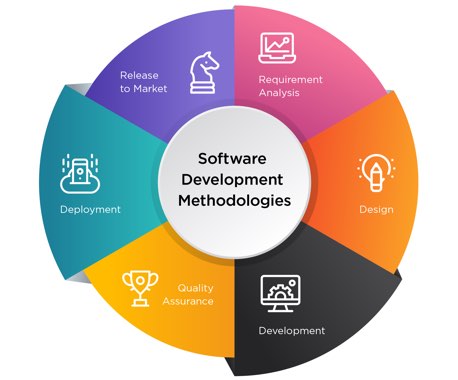
Software Development Methodologies are structured approaches or frameworks that guide the planning, development, testing, and maintenance of software applications. These methodologies provide a systematic way to manage complex software projects, ensuring that tasks are organized, deadlines are met, and high-quality software is delivered. Different methodologies are chosen based on project requirements, team size, and client needs. Each methodology offers unique processes, best practices, and tools to handle the software development lifecycle (SDLC). Popular methodologies include Waterfall, Agile, Scrum, Kanban, and DevOps, each catering to specific project demands and delivery timelines. These methodologies help maintain transparency, collaboration, and efficiency throughout the development process.
One of the most traditional methodologies is the Waterfall Model, where development flows in a linear, sequential manner through predefined phases: requirements gathering, design, implementation, testing, deployment, and maintenance. This model is suitable for projects with clear, unchanging requirements, as each phase must be completed before moving to the next. In contrast, Agile methodologies prioritize flexibility and customer collaboration. Agile breaks the project into small, manageable units called sprints, typically lasting 1-4 weeks, where functional software is delivered incrementally. Agile emphasizes continuous feedback and adaptability, allowing teams to respond to changing requirements quickly. Scrum is a specific Agile framework with defined roles such as Scrum Master and Product Owner, focusing on delivering working software in time-boxed iterations.
Modern methodologies like DevOps integrate development (Dev) and operations (Ops) to foster collaboration between software engineers and IT teams. DevOps focuses on automation, continuous integration (CI), continuous delivery (CD), and rapid deployment to ensure faster and more reliable software delivery. Another popular approach, Kanban, visualizes the workflow using a board system with stages like To-Do, In Progress, and Done, promoting work-in-progress (WIP) limits to maintain steady delivery. These methodologies are not mutually exclusive—many teams adopt a hybrid approach, combining the strengths of multiple methodologies to suit their project’s needs. As technology advances, methodologies evolve to support modern challenges like scalability, cloud integration, and user-centric design, ensuring software meets business goals effectively.
2.Agile
Agile
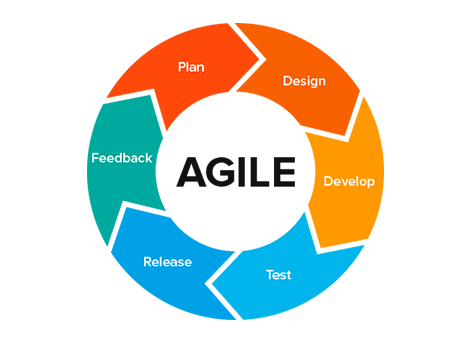
is a flexible and iterative software development methodology that emphasizes collaboration, customer feedback, and rapid delivery of small, functional software increments. It was introduced in 2001 through the Agile Manifesto, which outlined four core values: individuals and interactions over processes and tools, working software over comprehensive documentation, customer collaboration over contract negotiation, and responding to change over following a plan. Agile is designed to adapt to changing requirements throughout the development process by breaking projects into small, manageable iterations called sprints (usually lasting 1-4 weeks). Each sprint delivers a working product that can be tested and reviewed, allowing teams to incorporate feedback quickly.
A key feature of Agile is continuous improvement through regular meetings like daily stand-ups, sprint planning, sprint reviews, and retrospectives. These meetings ensure the team stays aligned, tracks progress, and identifies areas for enhancement. Agile fosters close collaboration between cross-functional teams—including developers, testers, and product owners—and stakeholders, ensuring that the product evolves based on real-time user needs. Agile frameworks such as Scrum, Kanban, Extreme Programming (XP), and Lean provide specific guidelines for managing Agile projects. For example, Scrum uses roles like Scrum Master (to facilitate the process) and Product Owner (to represent customer interests), while Kanban focuses on visualizing tasks and maintaining a continuous flow.
Agile's adaptability makes it ideal for dynamic environments where requirements frequently change, such as software startups or customer-centric industries. It enhances time-to-market, allowing businesses to deliver high-value features faster while reducing the risk of project failure. However, Agile requires strong communication, self-organizing teams, and stakeholder involvement for success. Organizations adopting Agile often report higher customer satisfaction, improved product quality, and better team collaboration. As the software landscape evolves, Agile continues to be a leading methodology for delivering scalable, user-focused software solutions efficiently.
3.DevOps
DevOps
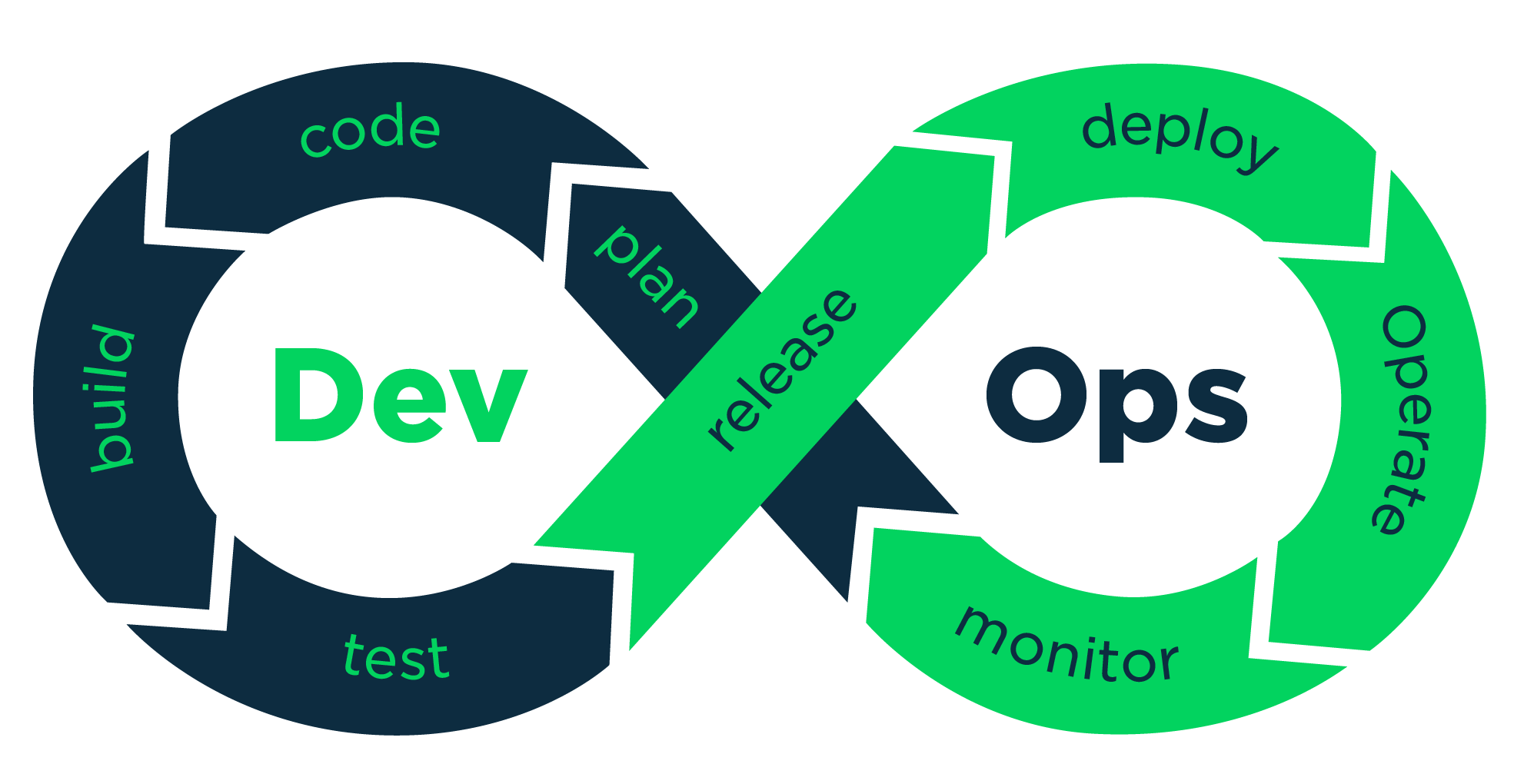
is a software development methodology that integrates development (Dev) and operations (Ops) teams to improve collaboration, automation, and delivery speed. It aims to break down silos between these traditionally separate functions, enabling continuous integration (CI), continuous delivery (CD), and faster software releases. DevOps focuses on automating the entire software delivery lifecycle (SDLC)—from code development and testing to deployment and monitoring—to enhance efficiency, reduce errors, and deliver software faster. This methodology is driven by key practices like infrastructure as code (IaC), automated testing, and containerization using tools such as Docker, Kubernetes, Jenkins, and Ansible.
A core principle of DevOps is continuous feedback and improvement, ensuring rapid detection and resolution of issues. CI/CD pipelines automate the process of building, testing, and deploying code changes, enabling teams to deliver new features and bug fixes quickly and reliably. Infrastructure as Code (IaC) allows infrastructure to be defined and managed through code, ensuring consistent environments across development, staging, and production. This automation reduces manual work, minimizes configuration errors, and speeds up recovery times in case of failures. Monitoring and logging using tools like Prometheus, ELK Stack, and Grafana are essential for maintaining system health, detecting performance issues, and providing real-time insights.
DevOps promotes a culture of collaboration, where developers and operations work together throughout the software lifecycle, improving communication and shared responsibility. This methodology enhances business agility by allowing companies to respond quickly to market demands and customer needs. Organizations adopting DevOps report faster deployment times, improved system reliability, and higher software quality. While implementing DevOps requires cultural change, process adjustments, and tool integration, the long-term benefits include better scalability, reduced downtime, and enhanced user experiences, making DevOps a critical approach for modern software development and IT operations.
4.Waterfall Model
Waterfall Model
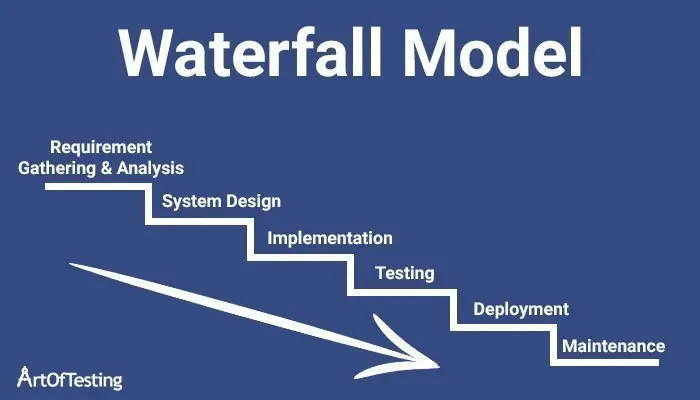
is a linear and sequential software development methodology where each phase of the project must be completed before moving to the next one. It follows a top-down approach, similar to a waterfall, where progress flows in one direction—from requirement gathering to deployment. This model is rigid and structured, making it ideal for projects with well-defined requirements and minimal changes. The key phases in the Waterfall Model are Requirement Analysis, System Design, Implementation (Coding), Testing, Deployment, and Maintenance. Each phase produces specific deliverables and requires formal approval before proceeding to the next stage.
One major advantage of the Waterfall Model is its clarity and simplicity. Since each phase is completed one at a time, it is easy to understand, plan, and manage. This model works well for small-scale projects or situations where the requirements are fixed from the beginning. It provides a documented and systematic approach, ensuring thorough testing and quality control at each phase. This makes it particularly useful for industries like aerospace, banking, and healthcare, where accuracy and compliance are crucial. However, the model’s inflexibility is a drawback if requirements change during the project, as it is difficult to revisit previous stages without restarting the entire process.
Despite being considered outdated compared to Agile or DevOps, the Waterfall Model is still used in projects where predictability, stability, and documentation are critical. It is beneficial for projects with fixed budgets and timelines, where all specifications are known beforehand. However, its linear nature means that late-stage defects or requirement changes can be costly and time-consuming to fix. While the Waterfall Model offers discipline and order, it lacks flexibility to accommodate changing user needs or emerging technologies, making it less suitable for dynamic, fast-paced environments.
5.Scrum Framework
Scrum Framework
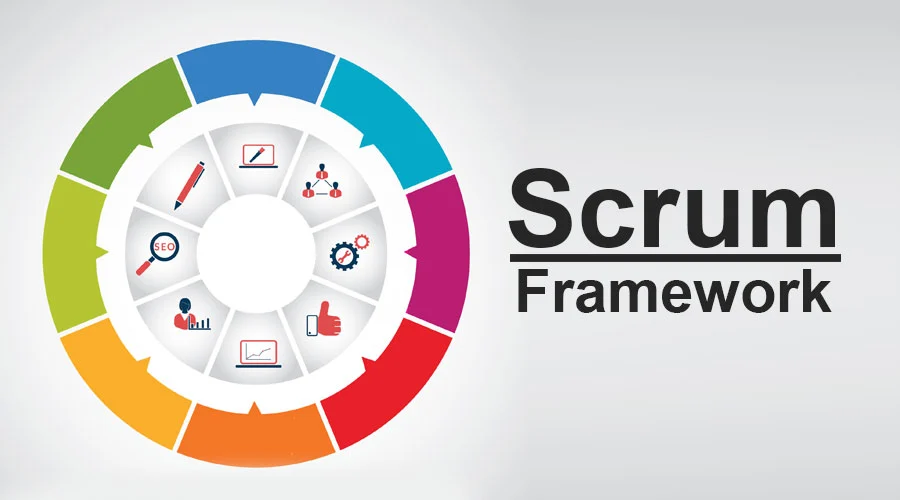
is a widely used Agile methodology designed to deliver software in an iterative and incremental manner. It promotes collaboration, flexibility, and continuous improvement by breaking projects into smaller units called sprints, typically lasting 2 to 4 weeks. Each sprint produces a working product increment, ensuring that software is delivered frequently and consistently. The framework is built around transparency, inspection, and adaptation, allowing teams to respond quickly to changing requirements. Scrum relies on empirical process control, meaning decisions are based on real-world observations and data, which helps in refining processes and improving outcomes over time. This framework is especially useful for complex projects where requirements evolve throughout the development cycle.
In Scrum, there are three primary roles—the Product Owner, the Scrum Master, and the Development Team. The Product Owner is responsible for defining the product vision, maintaining the product backlog, and ensuring that the development team works on tasks that provide the most business value. The Scrum Master acts as a facilitator, helping the team follow Scrum practices, removing obstacles, and fostering an environment of continuous improvement. The Development Team is a self-organizing, cross-functional group responsible for delivering the sprint’s objectives. By clearly defining these roles, Scrum ensures that all stakeholders collaborate effectively and remain focused on delivering high-quality software.
Scrum includes five core events that structure the development process and maintain team alignment. Sprint Planning involves selecting tasks from the product backlog to complete during the sprint. The Daily Stand-up is a brief, time-boxed meeting where team members share updates and identify challenges. The Sprint Review occurs at the end of the sprint, allowing stakeholders to evaluate the completed work and provide feedback. The Sprint Retrospective focuses on reflecting on the sprint to identify areas for improvement. The actual Sprint itself represents the work cycle. These events ensure continuous communication, rapid feedback, and a structured approach to delivering value. By following the Scrum framework, organizations can achieve faster delivery, higher product quality, and improved customer satisfaction, making it one of the most effective methodologies for modern software development.
6.Continuous Integration/Continuous Deployment (CI/CD)
Continuous Integration/Continuous Deployment (CI/CD)
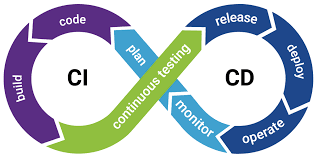
are software development practices that aim to deliver code changes more frequently and reliably. CI focuses on automating the process of integrating code changes from multiple developers into a shared repository. Each new code commit triggers an automated build and test process to ensure the code is functional and doesn’t break existing features. This allows teams to identify and fix errors quickly. CI improves collaboration, reduces integration problems, and accelerates the development process. Popular CI tools include Jenkins, GitLab CI, Travis CI, and CircleCI, which provide pipelines to automate tasks like code compilation, unit testing, and reporting errors.
Continuous Deployment (CD) takes automation a step further by automatically delivering code changes to production once they pass the testing stage. This means that every validated code change is deployed without manual intervention, ensuring rapid delivery of new features and bug fixes. Continuous Delivery is a similar concept but may involve a manual step before final deployment. CD allows for faster releases, improved user feedback, and reduced downtime. It relies on infrastructure automation and containerization using tools like Docker and Kubernetes to streamline the deployment process. With CD, businesses can respond to user needs faster, roll out updates seamlessly, and maintain system stability.
The CI/CD pipeline typically consists of several stages: source code management, build, test, staging, and deployment. The process starts with source code being pushed to a version control system like Git. Automated scripts then build the application and run tests (including unit, integration, and performance tests). If the tests pass, the code is packaged and deployed to a staging environment for final checks. Once approved, the code is automatically deployed to production. This pipeline enhances developer productivity, minimizes human error, and ensures faster delivery of high-quality software. CI/CD has become a standard in modern software development, especially for organizations practicing Agile and DevOps methodologies.
7.Extreme Programming (XP)
Extreme Programming (XP)
is a software development methodology that emphasizes customer satisfaction, flexibility, and rapid delivery of high-quality software. It was introduced by Kent Beck in the 1990s and is part of the Agile framework. XP focuses on frequent releases through small development cycles, ensuring that new features are delivered continuously. It encourages close collaboration between developers, managers, and customers, which helps in quickly adapting to changing requirements. Core practices of XP include pair programming, test-driven development (TDD), continuous integration, and refactoring. These practices aim to reduce bugs, enhance code quality, and deliver working software faster.
A key feature of XP is pair programming, where two developers work on the same piece of code together. This improves code quality as one developer writes the code while the other reviews it in real-time. Another important practice is test-driven development (TDD), where tests are written before the actual code. This ensures that the code meets requirements and reduces errors. XP also emphasizes continuous integration, where code is frequently merged and tested to avoid integration issues. Regular refactoring (improving code without changing its behavior) helps maintain clean, efficient, and manageable code over time. These technical practices ensure a robust, maintainable codebase and better collaboration among team members.
In Extreme Programming, customer involvement is crucial throughout the development process. Customers are encouraged to provide continuous feedback, helping teams align the software with business goals. XP also emphasizes simplicity and embracing change. Developers focus on delivering the simplest solution that meets current needs while remaining open to evolving requirements. Short development cycles (1-2 weeks) allow for regular releases and testing, ensuring the product remains aligned with user needs. This methodology is particularly beneficial in dynamic environments where rapid delivery and high adaptability are essential. By fostering teamwork, continuous improvement, and a focus on user satisfaction, XP helps deliver reliable and efficient software solutions.
.webp)
8.Test-Driven Development (TDD)
Test-Driven Development (TDD) is a software development practice where tests are written before the actual code. This methodology, part of the Agile framework, was popularized by Kent Beck as a key practice of Extreme Programming (XP). TDD follows a simple cycle known as Red-Green-Refactor: first, you write a failing test (Red), then write the minimum code needed to pass the test (Green), and finally, Refactor the code to improve its structure while ensuring the test still passes. This process ensures the code meets functional requirements and remains clean, efficient, and maintainable over time.
One major advantage of TDD is that it helps catch bugs early and reduces the likelihood of future errors. By creating automated tests before writing code, developers can verify each feature works as expected. This approach enhances code quality by enforcing small, manageable changes and ensuring that any modification does not break existing functionality. Refactoring becomes easier because developers can confidently improve the code, knowing the tests will catch any mistakes. Additionally, TDD provides living documentation—the tests themselves describe how the software is supposed to behave, which helps new team members understand the codebase quickly.
TDD improves collaboration and communication between developers, testers, and stakeholders. With a comprehensive suite of tests, teams can ensure new features meet business requirements while maintaining backward compatibility. It also fosters continuous integration because automated tests can be run frequently, ensuring that recent changes do not disrupt the system. TDD is widely used in modern development environments, especially in mission-critical applications where reliability and accuracy are paramount. While it may increase initial development time, it significantly reduces debugging and maintenance efforts, leading to faster, safer, and more predictable software delivery in the long run.
.png)
Test-Driven Development (TDD) is a software development practice where tests are written before the actual code. This methodology, part of the Agile framework, was popularized by Kent Beck as a key practice of Extreme Programming (XP). TDD follows a simple cycle known as Red-Green-Refactor: first, you write a failing test (Red), then write the minimum code needed to pass the test (Green), and finally, Refactor the code to improve its structure while ensuring the test still passes. This process ensures the code meets functional requirements and remains clean, efficient, and maintainable over time.
One major advantage of TDD is that it helps catch bugs early and reduces the likelihood of future errors. By creating automated tests before writing code, developers can verify each feature works as expected. This approach enhances code quality by enforcing small, manageable changes and ensuring that any modification does not break existing functionality. Refactoring becomes easier because developers can confidently improve the code, knowing the tests will catch any mistakes. Additionally, TDD provides living documentation—the tests themselves describe how the software is supposed to behave, which helps new team members understand the codebase quickly.
TDD improves collaboration and communication between developers, testers, and stakeholders. With a comprehensive suite of tests, teams can ensure new features meet business requirements while maintaining backward compatibility. It also fosters continuous integration because automated tests can be run frequently, ensuring that recent changes do not disrupt the system. TDD is widely used in modern development environments, especially in mission-critical applications where reliability and accuracy are paramount. While it may increase initial development time, it significantly reduces debugging and maintenance efforts, leading to faster, safer, and more predictable software delivery in the long run.
Comments