Quantum Computing
Quantum computing is an advanced computing technology that uses quantum bits (qubits) to perform complex calculations at exponentially faster speeds than classical computers.
Quantum computing is an advanced computing technology that uses quantum bits (qubits) to perform complex calculations at exponentially faster speeds than classical computers.
Quantum computing is a revolutionary technology that leverages the principles of quantum mechanics to process information in ways that classical computers cannot. Unlike classical computers, which use bits (0s and 1s) to perform computations, quantum computers use qubits (quantum bits). Qubits can exist in multiple states simultaneously due to a property called superposition, enabling quantum computers to solve complex problems faster than classical computers. Additionally, qubits can be entangled, meaning the state of one qubit is dependent on another, allowing for faster and more efficient data processing. These principles enable quantum computers to tackle problems in cryptography, optimization, and material science that are beyond the reach of classical systems.
Quantum computing relies on specialized hardware and algorithms to function effectively. Quantum gates manipulate qubits, similar to how logic gates work in classical computers, but they follow quantum rules. Some of the well-known quantum algorithms include Shor’s Algorithm, which can factor large numbers exponentially faster than classical algorithms, and Grover’s Algorithm, which speeds up search processes. These capabilities make quantum computing particularly useful for breaking encryption systems, improving machine learning models, and solving optimization problems in logistics and finance. However, building stable quantum computers is challenging due to quantum decoherence, where qubits lose their quantum state due to external interference.
Despite its challenges, quantum computing holds immense potential for the future. Tech giants like IBM, Google, and Microsoft are investing in quantum research, and cloud-based quantum computing services are emerging, allowing researchers and businesses to experiment with quantum algorithms. Fields such as drug discovery, climate modeling, and artificial intelligence are expected to benefit significantly from quantum advancements. While large-scale, fault-tolerant quantum computers are still in development, the ongoing progress in quantum hardware, software, and algorithms indicates that quantum computing will play a transformative role in the coming decades.
Click here for more information
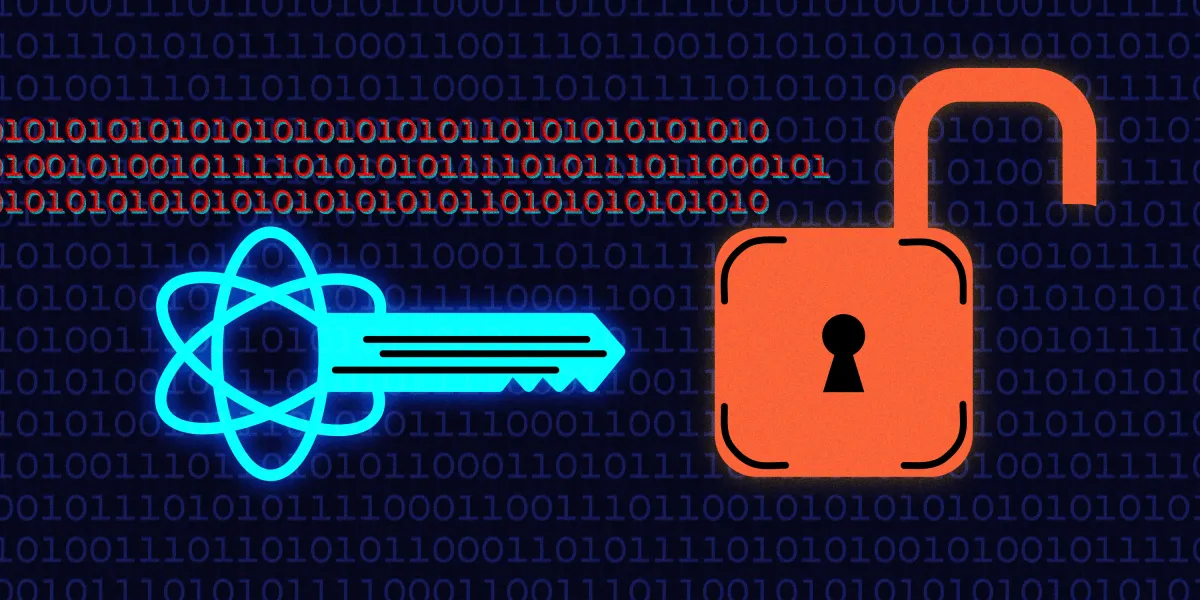
uantum cryptography is an advanced form of cryptographic security that leverages the principles of quantum mechanics to secure communication channels. Unlike classical encryption methods, which rely on complex mathematical algorithms and can be broken by powerful computers, quantum cryptography ensures data security using the laws of physics. The core concept behind quantum cryptography is Quantum Key Distribution (QKD), which allows two parties to share encryption keys in a way that is theoretically immune to eavesdropping. One of the most well-known QKD protocols is the BB84 protocol, developed by Charles Bennett and Gilles Brassard, which uses quantum states to securely transmit cryptographic keys.
One of the key advantages of quantum cryptography is its resistance to cyber threats, including attacks from future quantum computers. In traditional cryptographic systems, security relies on the complexity of mathematical problems like factoring large numbers (RSA encryption) or solving discrete logarithms (Elliptic Curve Cryptography). However, quantum algorithms like Shor’s Algorithm can efficiently break these encryption methods, making them obsolete in the era of quantum computing. In contrast, quantum cryptographic techniques such as QKD do not rely on computational difficulty but on quantum principles like superposition and entanglement, making them fundamentally secure. Any attempt to intercept a quantum-encrypted message disturbs the quantum states, alerting the communicating parties to the presence of an eavesdropper.
Despite its strong security benefits, quantum cryptography faces several challenges. Current QKD systems require specialized quantum hardware, such as single-photon sources and detectors, which are expensive and difficult to integrate into existing communication networks. Moreover, the transmission of quantum states is highly sensitive to environmental factors like noise and interference, limiting the distance over which secure quantum communication can occur. Researchers are actively working on satellite-based QKD and advanced quantum repeaters to extend the range of secure quantum networks. As quantum technologies advance, quantum cryptography is expected to play a crucial role in protecting sensitive information, ensuring secure banking transactions, government communications, and defense applications in the future.
Click here for more information
Quantum computing is revolutionizing artificial intelligence (AI) by significantly enhancing computational power and efficiency. Unlike classical computers that use bits (0s and 1s) to process data, quantum computers leverage qubits, which can exist in multiple states simultaneously due to superposition and entanglement. This allows quantum computers to perform complex calculations at an exponentially faster rate than traditional systems. AI, which requires massive amounts of computation for tasks like deep learning, pattern recognition, and natural language processing (NLP), stands to benefit greatly from this quantum advantage. For instance, quantum machine learning (QML) is a growing field that aims to speed up AI algorithms by using quantum-enhanced techniques.
One of the key applications of quantum computing in AI is in optimization problems, where AI models need to find the best solution from a vast number of possibilities. Classical computers struggle with these problems due to their limited processing power, but quantum computers can solve them efficiently using quantum annealing or variational quantum algorithms (VQAs). This is particularly useful in industries like finance (for portfolio optimization), logistics (for supply chain management), and healthcare (for drug discovery), where AI-powered decision-making depends on solving complex optimization challenges. Quantum-enhanced AI can also improve machine learning models by accelerating data clustering, feature selection, and neural network training, leading to more accurate and faster AI systems.
Despite its promising potential, integrating quantum computing with AI is still in its early stages. Quantum hardware is currently limited by factors such as error rates, qubit coherence time, and scalability. Researchers are actively working on developing more stable quantum processors and hybrid approaches that combine classical and quantum computing to maximize AI performance. Companies like Google, IBM, and D-Wave are investing heavily in quantum AI research, exploring its applications in fraud detection, automated reasoning, and advanced simulations. As quantum technology matures, it is expected to unlock new AI capabilities, transforming fields like autonomous systems, robotics, and personalized medicine by enabling AI models to process vast amounts of data with unprecedented speed and accuracy.............
Click here for more information
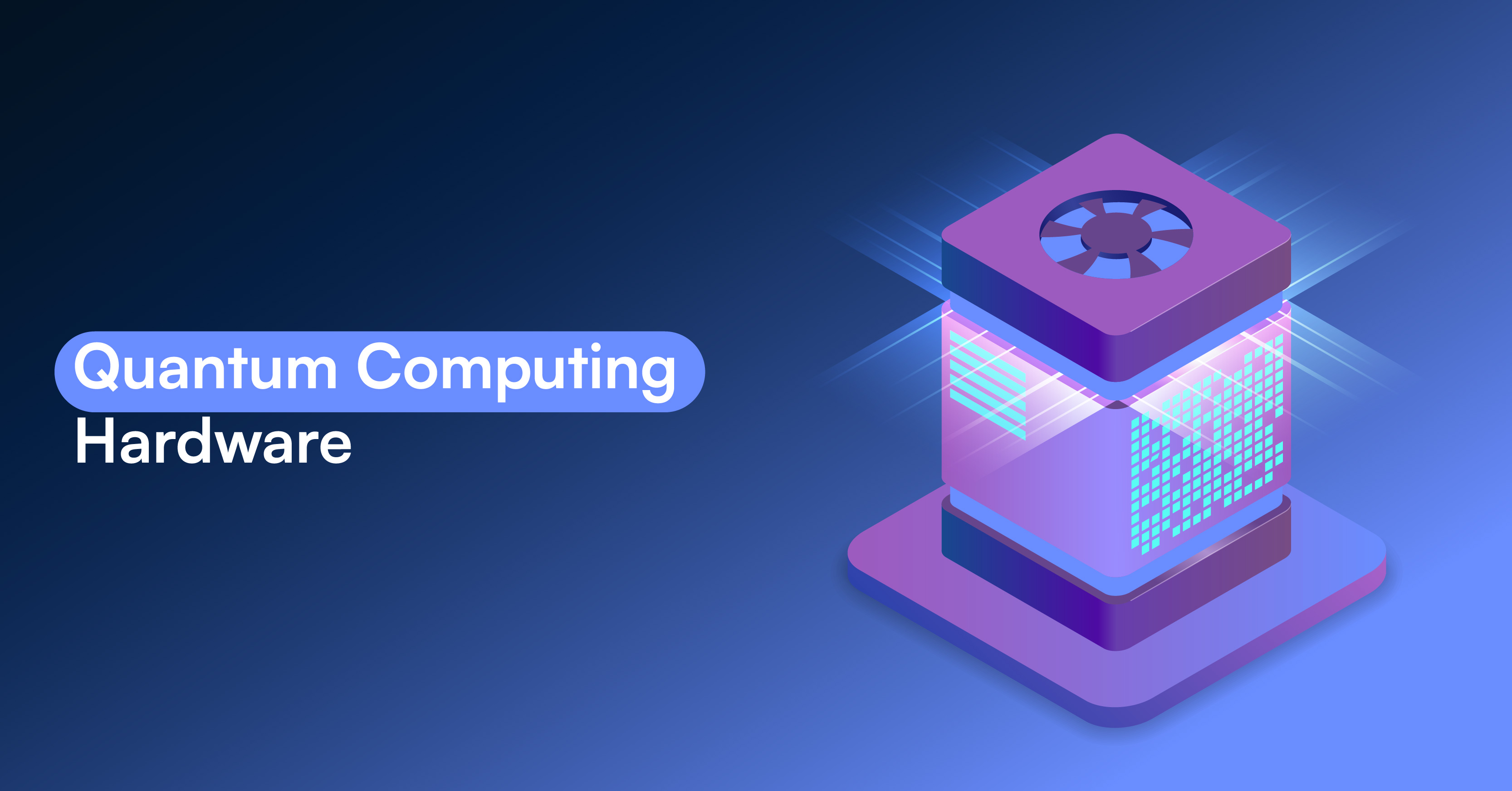
Quantum hardware and processors are the foundation of quantum computing, designed to harness the principles of quantum mechanics for high-speed computation. Unlike classical processors that use transistors to process bits (0s and 1s), quantum processors use qubits that can exist in multiple states simultaneously due to superposition. This allows them to perform parallel computations, making quantum computers exponentially more powerful for certain tasks. Additionally, qubits can be entangled, meaning the state of one qubit is directly related to another, even over long distances. This property enables quantum computers to solve complex problems that classical computers would take years to process.
There are different types of quantum hardware architectures, including superconducting qubits, trapped ions, photonic qubits, and topological qubits. Superconducting qubits, used by Google and IBM, operate at extremely low temperatures near absolute zero to reduce noise and maintain coherence. Trapped-ion quantum computers, used by IonQ and Honeywell, use charged atoms controlled by lasers to perform quantum operations. Photonic quantum computing, explored by companies like Xanadu and PsiQuantum, uses light particles (photons) for faster and more scalable quantum processing. Each of these approaches has its own advantages and challenges in terms of stability, error rates, and scalability.
Developing reliable quantum processors is one of the biggest challenges in quantum computing. Quantum systems are highly sensitive to environmental disturbances, leading to quantum decoherence, where qubits lose their quantum state. To address this, researchers are developing quantum error correction (QEC) techniques to make quantum computations more stable. Companies like Google, IBM, and Rigetti Computing are constantly improving their quantum chips, aiming to increase the number of qubits while maintaining low error rates. As advancements in quantum hardware continue, quantum processors are expected to become more practical and powerful, revolutionizing fields such as cryptography, artificial intelligence, drug discovery, and material science.............
Click here for more information
Quantum computing has the potential to revolutionize various industries by solving complex problems that are beyond the reach of classical computers. One of the most promising applications is in cryptography, where quantum algorithms like Shor’s algorithm can break traditional encryption methods, leading to the development of post-quantum cryptography for secure communications. In drug discovery and materials science, quantum computers can simulate molecular interactions at an atomic level, speeding up the process of finding new medicines and designing advanced materials. Additionally, quantum machine learning (QML) is an emerging field that enhances AI models by leveraging quantum computing’s ability to process vast datasets and detect patterns faster than classical algorithms.
The financial sector is also exploring quantum computing to optimize complex financial models, risk analysis, and fraud detection. In logistics and supply chain management, quantum algorithms can optimize routes and resources, reducing costs and improving efficiency. The energy sector is benefiting from quantum simulations for battery technology and nuclear fusion research. Governments and space agencies, such as NASA, are using quantum technology for weather modeling, space exploration, and satellite communications. These applications highlight how quantum computing is set to transform industries by offering solutions to problems that are currently unsolvable with classical computing.
Looking ahead, the future of quantum computing is focused on scalability, error correction, and commercial viability. While current quantum processors have limitations due to decoherence and noise, companies like IBM, Google, Microsoft, and startups like D-Wave and Rigetti are developing fault-tolerant quantum computers with thousands of qubits. Quantum networks and quantum internet are also in development, enabling secure quantum communication using quantum entanglement. As quantum hardware improves and software frameworks become more accessible, businesses and researchers will increasingly integrate quantum computing into real-world applications, paving the way for a new era of computing that outperforms classical technology in solving the world’s most complex challenges.
.........
Click here for more information
Comments