Future of 5G & Beyond
1. what is Future of 5G & Beyond?
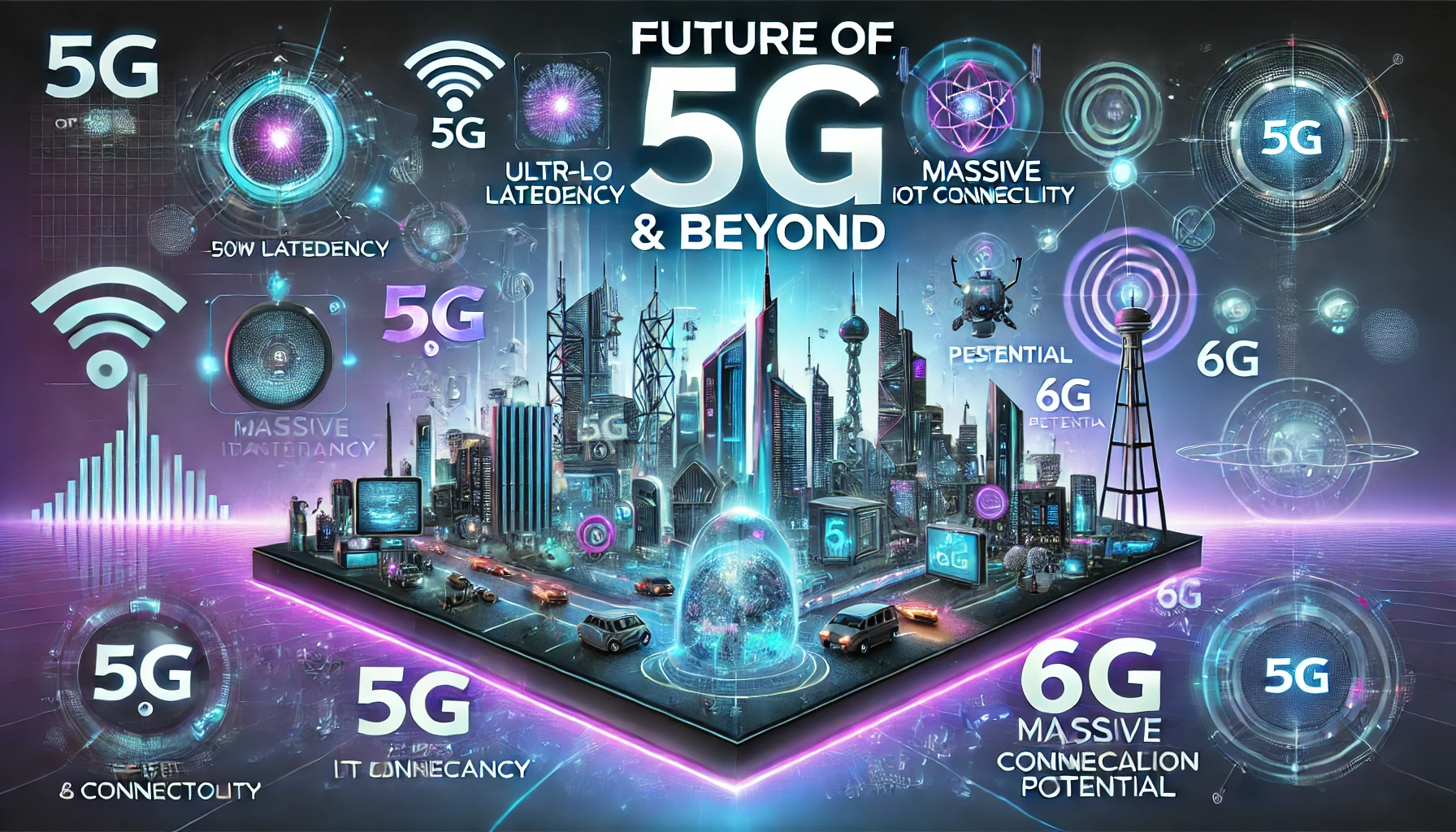
Future of 5G & BeyondThe future of 5G extends beyond faster internet speeds, promising revolutionary advancements in communication, technology, and daily life. With 6G expected by 2030, future networks will offer terabit-level speeds, near-zero latency, and more intelligent data processing. This evolution will support cutting-edge technologies like holographic communication, brain-computer interfaces (BCIs), and fully autonomous vehicles. 5G Advanced (5.5G) will bridge the gap by improving energy efficiency, indoor coverage, and massive IoT connectivity, enabling real-time communication for smart cities, industrial automation, and space exploration. As networks evolve, innovations in AI-driven optimization and quantum communication will enhance security, efficiency, and global connectivity.
One major area of focus is 6G technology, which will surpass 5G capabilities by using terahertz (THz) frequencies to achieve speeds up to 100 times faster. This will enable real-time interactions for immersive virtual environments (AR/VR) and digital twins – virtual replicas of physical systems for remote monitoring. Satellite-based 6G networks will provide global coverage, ensuring connectivity in rural and remote regions. Furthermore, edge computing will become more advanced, processing vast amounts of data closer to users, reducing network congestion, and ensuring faster and more secure communication. These advancements will drive applications like smart healthcare, precision agriculture, and space-based internet.
The future beyond 5G will also prioritize sustainability and cybersecurity. With growing concerns about energy consumption, future networks will adopt green technologies like energy-efficient base stations and renewable-powered infrastructure. Security frameworks will evolve to protect against advanced cyber threats using post-quantum encryption and AI-powered threat detection. Collaborative research and global standardization will be essential to manage spectrum allocation and ensure seamless interoperability between terrestrial and non-terrestrial networks (NTNs). In the coming decades, 5G and beyond will drive a hyper-connected world, transforming industries, enabling new experiences, and bridging the digital divide worldwide.
2.5G in Space Communication
5G in Space Communication
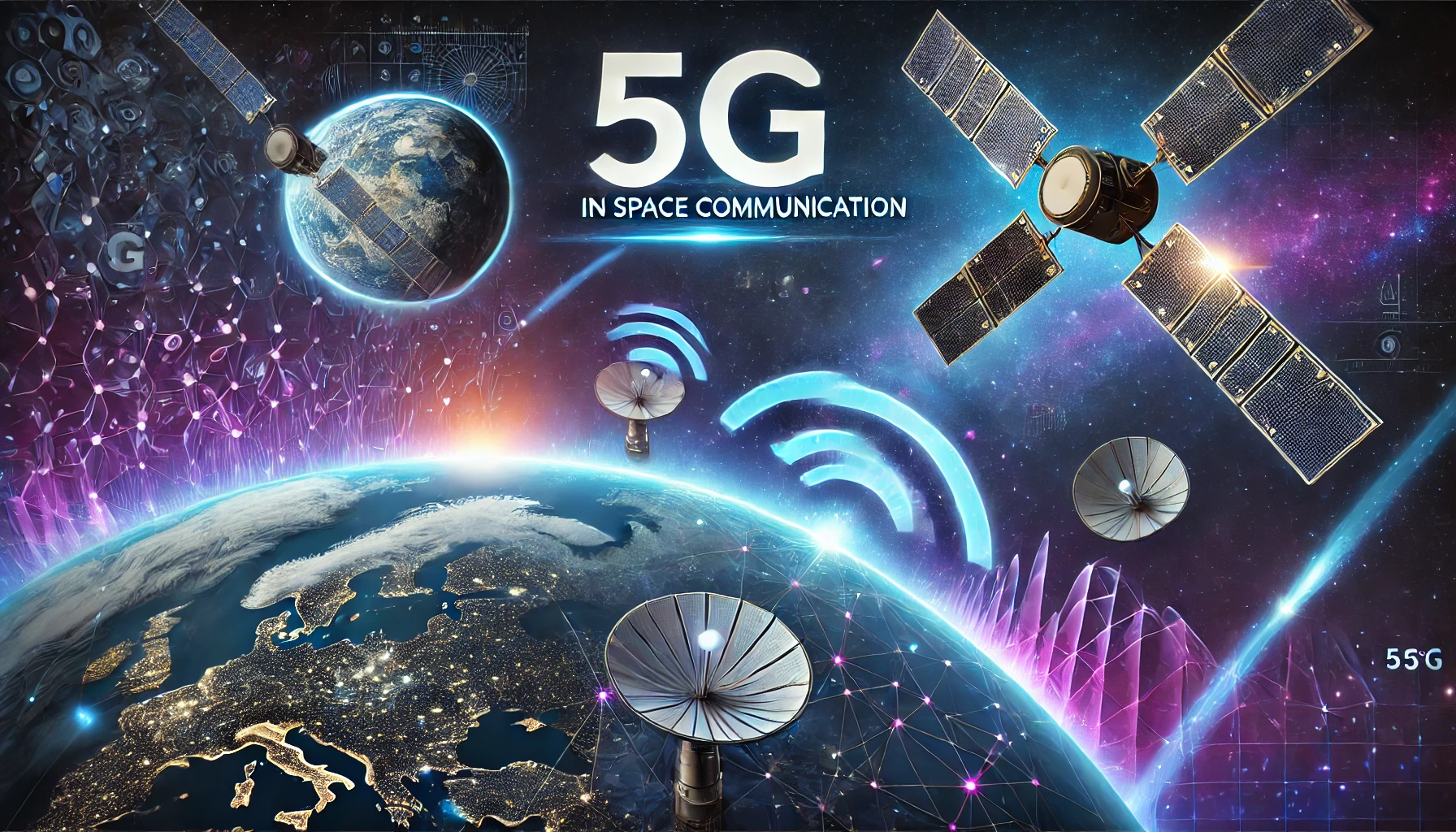
5G technology is transforming space communication by providing faster data transfer, low latency, and reliable connectivity between Earth and space systems. With 5G’s advanced capabilities, satellites can communicate more efficiently, enabling real-time monitoring, improved navigation, and better disaster management. Space-based 5G networks aim to deliver global internet coverage, reaching remote areas where traditional networks cannot. This is especially crucial for applications like satellite internet, space exploration, and Earth observation. Low Earth Orbit (LEO) satellites play a significant role in this advancement by creating mega-constellations that provide seamless connectivity across the globe. This integration of 5G with satellite systems ensures robust communication for both civilian and military purposes.
One key innovation is hybrid space-terrestrial networks, where 5G terrestrial (on Earth) and non-terrestrial networks (NTNs) (in space) work together. This allows for continuous connectivity during air travel, maritime operations, and deep-space missions. 5G in space enhances real-time data sharing for critical tasks like weather forecasting, climate monitoring, and remote sensing. Moreover, space-based 5G enables precision navigation and supports autonomous systems like self-driving vehicles and unmanned aerial vehicles (UAVs). The ultra-reliable low-latency communication (URLLC) feature of 5G ensures secure and instant data exchange between ground stations and spacecraft, crucial for scientific research and space missions.
The future of 5G in space holds promising advancements like inter-satellite communication, where satellites talk to each other without routing data through Earth. This reduces signal delays and enables faster global coverage. With 5G's scalability, smart cities, Internet of Things (IoT) devices, and emergency response systems will benefit from uninterrupted access to data. Additionally, 6G is expected to take space communication further with terahertz frequencies for faster data rates and advanced security using quantum encryption. As space and telecommunication industries collaborate, 5G-powered space networks will drive innovations, fostering a new era of connectivity and exploration.
3.5G-powered AR & VR
5G-powered AR & VR
is revolutionizing Augmented Reality (AR) and Virtual Reality (VR) by providing faster data speeds, lower latency, and increased bandwidth. Traditional AR and VR systems often struggle with lag, buffering, and limited mobility due to the constraints of older networks like 4G LTE. With 5G’s high-speed connectivity (up to 10 Gbps) and ultra-low latency (as low as 1 millisecond), these immersive technologies can deliver real-time, high-definition experiences without interruption. This advancement is crucial for interactive applications like AR navigation, virtual gaming, remote collaboration, and live virtual events, enabling seamless and immersive user engagement.
One key impact of 5G on AR and VR is its ability to support cloud-based rendering. Instead of relying on local devices for heavy processing, 5G allows AR/VR content to be processed in the cloud and streamed in real-time to headsets, smartphones, and glasses. This reduces the need for bulky hardware and enables lighter, more comfortable devices. For example, in education, 5G-powered VR enables virtual field trips and 3D learning environments, while AR allows students to interact with digital models overlaid on the real world. Similarly, in healthcare, 5G AR supports remote surgery by offering real-time 3D visualization and precision tools, enhancing medical training and patient care.
The future of 5G-powered AR and VR promises even more advanced applications across various industries. In entertainment, it enables live, 360-degree streaming of concerts and sports events with immersive participation. Retailers use AR fitting rooms to let customers try products virtually, while smart cities leverage AR overlays for navigation and infrastructure monitoring. As 5G networks expand, the combination of edge computing and AI will further refine AR/VR experiences, delivering personalized, responsive, and immersive environments in real-time, transforming how people work, learn, shop, and interact with the digital world.
5G-powered AR & VR
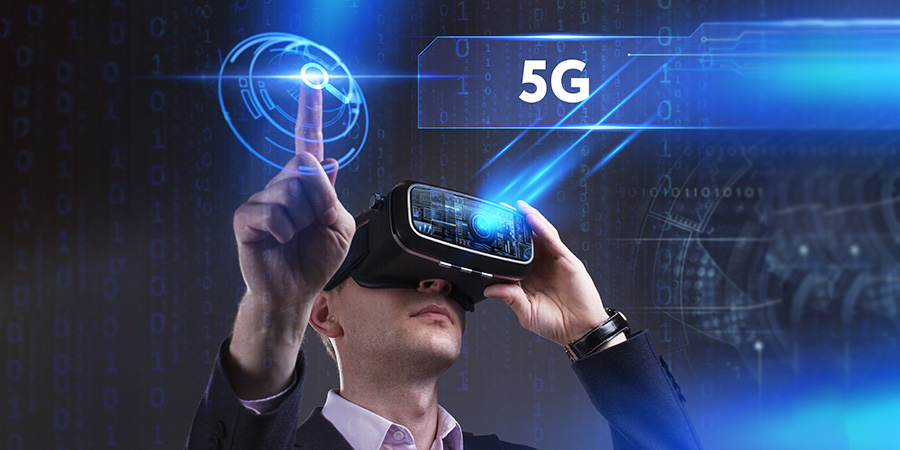
is revolutionizing Augmented Reality (AR) and Virtual Reality (VR) by providing faster data speeds, lower latency, and increased bandwidth. Traditional AR and VR systems often struggle with lag, buffering, and limited mobility due to the constraints of older networks like 4G LTE. With 5G’s high-speed connectivity (up to 10 Gbps) and ultra-low latency (as low as 1 millisecond), these immersive technologies can deliver real-time, high-definition experiences without interruption. This advancement is crucial for interactive applications like AR navigation, virtual gaming, remote collaboration, and live virtual events, enabling seamless and immersive user engagement.
One key impact of 5G on AR and VR is its ability to support cloud-based rendering. Instead of relying on local devices for heavy processing, 5G allows AR/VR content to be processed in the cloud and streamed in real-time to headsets, smartphones, and glasses. This reduces the need for bulky hardware and enables lighter, more comfortable devices. For example, in education, 5G-powered VR enables virtual field trips and 3D learning environments, while AR allows students to interact with digital models overlaid on the real world. Similarly, in healthcare, 5G AR supports remote surgery by offering real-time 3D visualization and precision tools, enhancing medical training and patient care.
The future of 5G-powered AR and VR promises even more advanced applications across various industries. In entertainment, it enables live, 360-degree streaming of concerts and sports events with immersive participation. Retailers use AR fitting rooms to let customers try products virtually, while smart cities leverage AR overlays for navigation and infrastructure monitoring. As 5G networks expand, the combination of edge computing and AI will further refine AR/VR experiences, delivering personalized, responsive, and immersive environments in real-time, transforming how people work, learn, shop, and interact with the digital world.
4.5G & AI Integration
5G & AI Integration
is transforming industries by combining ultra-fast connectivity with intelligent decision-making. 5G networks provide high-speed data transfer, low latency, and massive device connectivity, which enhances AI systems by enabling real-time data analysis and faster model training. This partnership supports edge computing, where data is processed closer to the source (like IoT devices), reducing the need to send data to centralized servers. For example, autonomous vehicles use 5G and AI to process sensory data instantly, ensuring safer and more efficient navigation. Similarly, in smart cities, AI-driven traffic systems use 5G for real-time monitoring, reducing congestion and improving urban mobility.
In healthcare, 5G and AI are revolutionizing patient care through remote monitoring and telemedicine. With 5G’s low latency, AI can analyze patient data in real-time, enabling faster diagnosis and personalized treatments. For example, AI algorithms can monitor vital signs through 5G-connected devices, alerting doctors to abnormalities instantly. Remote surgeries are also becoming possible with AI assistance, where surgeons control robotic systems from thousands of miles away using 5G networks. Furthermore, predictive maintenance in industries relies on AI analyzing data from 5G-connected sensors to anticipate equipment failures, ensuring smoother operations and reducing downtime.
The future of 5G and AI integration holds exciting possibilities, including AI-enhanced network management. 5G networks generate vast amounts of data, and AI algorithms optimize network performance by predicting traffic patterns and automating resource allocation. This is especially important for smart factories, where AI uses 5G-connected machines to enhance production efficiency and reduce waste. Additionally, AI-driven security systems can detect cyber threats in real-time over 5G networks, ensuring data privacy and system integrity. As AI and 5G technologies evolve together, they will unlock innovations in autonomous systems, immersive experiences (like AR/VR), and global communication, shaping a more connected and intelligent future.
5.6G & Future Wireless Networks
6G & Future Wireless Networks
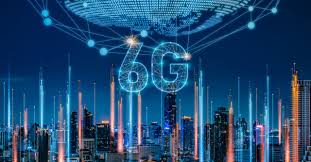
6G is the next-generation wireless technology expected to surpass 5G in speed, connectivity, and intelligence. While 5G provides speeds up to 10 Gbps, 6G aims to deliver 1 Tbps—100 times faster than 5G. This leap will enable instant data transmission, supporting advanced technologies like holographic communication, immersive augmented reality (AR), and real-time digital twins. 6G networks will use terahertz (THz) frequencies, offering higher bandwidth for faster data transfer while utilizing AI-driven network optimization for seamless performance. Industries such as healthcare, transportation, and entertainment will benefit from 6G’s ultra-reliable low-latency communication (URLLC), allowing for real-time remote surgeries, autonomous vehicle networks, and advanced virtual experiences.
One of the key features of 6G is the integration of AI and machine learning for intelligent network management. Unlike previous generations, 6G networks will self-optimize, adjusting bandwidth and power usage based on real-time demand. This will enhance smart city infrastructure, enabling predictive maintenance, energy-efficient traffic management, and massive IoT ecosystems where billions of devices communicate seamlessly. 6G’s sub-millisecond latency will make technologies like brain-computer interfaces (BCIs) more practical, allowing direct interaction between the human brain and digital devices. Satellite-based 6G systems will also expand coverage to remote regions, ensuring global connectivity without gaps in service.
The future of wireless networks beyond 6G envisions a world where digital and physical realities merge. Concepts like the Internet of Everything (IoE) will connect humans, devices, and the environment in a unified ecosystem. 6G will enable quantum communication, ensuring unbreakable data security through quantum encryption. Additionally, wireless power transfer may become mainstream, allowing devices to operate without physical charging. Research on 7G and beyond suggests space-based networks and neural interfaces where human thoughts could directly interact with machines. As wireless technology evolves, 6G and future networks will reshape industries, improve global communication, and drive innovations in AI, space exploration, and advanced healthcare.
6.Satellite-based 5G Networks
Satellite-based 5G Networks
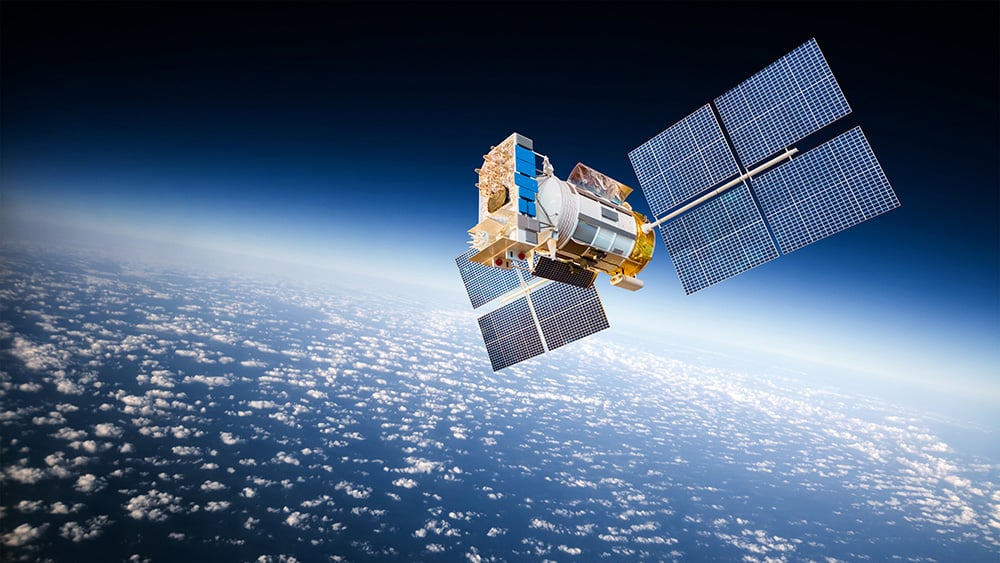
combine terrestrial 5G infrastructure with low Earth orbit (LEO) satellites to provide global, high-speed connectivity. Traditional 5G networks rely on cell towers, which are limited in remote or rural areas. Satellite 5G extends coverage to underserved regions, including oceans, deserts, and polar areas, by using satellites to relay signals where ground-based towers cannot reach. Companies like SpaceX (Starlink), OneWeb, and Amazon (Project Kuiper) are investing in LEO satellite constellations that work with 5G infrastructure to offer low-latency and high-bandwidth communication. This technology enhances services such as remote healthcare, disaster response, and autonomous vehicle communication in areas without reliable traditional networks.
One of the primary advantages of 5G satellites is continuous global coverage. While 5G cell towers provide fast speeds locally, satellite networks deliver connectivity across geographically challenging regions. LEO satellites, positioned approximately 500–2,000 km above Earth, reduce signal travel time compared to traditional geostationary satellites. This enables faster data transmission with latencies as low as 20 milliseconds, which is essential for real-time applications like video streaming, IoT devices, and emergency communication. Moreover, 5G satellite networks can back up terrestrial systems during natural disasters or network outages, ensuring uninterrupted service and enhancing public safety.
The future of satellite-based 5G involves integrating edge computing and AI-driven optimization for smarter, more efficient networks. This combination will enable autonomous drones, smart agriculture, and global IoT ecosystems to operate seamlessly. As the demand for connectivity grows, hybrid networks combining satellites and 5G infrastructure will support innovations like smart cities and advanced remote operations. Additionally, next-generation satellites will use beamforming technology to deliver targeted, high-speed coverage, reducing interference and improving service quality. As 5G satellites evolve, they will play a crucial role in bridging the digital divide and connecting the unconnected worldwide.
7.AI-driven 5G Optimization
AI-driven 5G Optimization
leverages Artificial Intelligence (AI) and Machine Learning (ML) to enhance the performance, efficiency, and reliability of 5G networks. As 5G technology supports massive data transmission and low-latency applications, managing the complex network infrastructure manually becomes challenging. AI helps automate key processes like network traffic management, resource allocation, and predictive maintenance. For example, machine learning models can analyze real-time data to optimize signal strength, reduce latency, and dynamically manage bandwidth for high-demand applications such as AR/VR, IoT devices, and autonomous vehicles.
One significant application of AI in 5G is intelligent network slicing. 5G networks use network slicing to create virtual networks tailored to different user needs. AI helps predict traffic patterns and allocate resources efficiently, ensuring critical services like emergency communication receive priority while minimizing congestion in less urgent tasks. This real-time optimization improves Quality of Service (QoS) and Quality of Experience (QoE) for consumers. For instance, AI algorithms can automatically adjust network parameters to deliver higher speeds for video streaming while ensuring ultra-reliable communication for industrial automation without human intervention.
In the future, AI-driven 5G will play a crucial role in self-healing networks and predictive maintenance. AI models will analyze historical data to anticipate failures, reducing downtime and maintenance costs. In smart cities, AI-enhanced 5G will enable traffic management systems to respond to real-time conditions, optimizing vehicle flow and public transportation. With the rise of 6G, AI will become even more advanced, allowing hyper-automation, personalized network services, and enhanced cybersecurity by detecting and mitigating threats in real-time, ensuring faster, smarter, and more resilient communication networks.

8.Environmental Impact of 5G
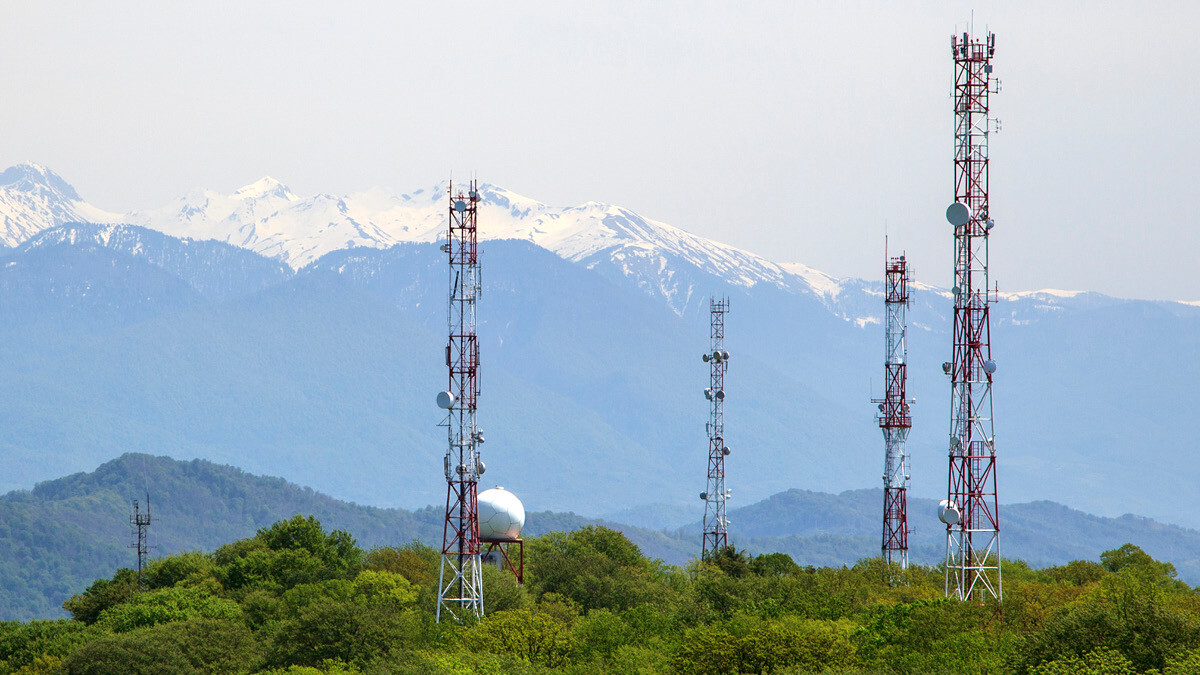
Environmental Impact of 5Gtechnology is a growing concern due to its energy consumption, electronic waste, and radiation effects. 5G networks require more base stations and small cell towers to maintain high-speed and low-latency communication. These installations increase electricity consumption, especially in dense urban areas where continuous data transmission is required. With the demand for 24/7 connectivity, energy use may rise significantly, contributing to a larger carbon footprint. However, new energy-efficient hardware and AI-driven optimization aim to reduce power consumption and improve sustainability by dynamically adjusting network usage based on traffic patterns.
Another concern is the electronic waste (e-waste) generated by 5G deployment. As consumers upgrade to 5G-compatible devices, older 4G and 3G equipment becomes obsolete, contributing to global e-waste. Additionally, 5G infrastructure requires specialized materials like rare earth elements, which are energy-intensive to mine and process. This increases environmental degradation and can harm local ecosystems. To combat these effects, companies are exploring recyclable materials, modular designs, and green manufacturing practices to reduce waste and promote a circular economy..
Despite these concerns, 5G technology also offers environmental benefits. It can enhance smart city initiatives like intelligent energy grids and efficient transportation systems, reducing resource consumption and carbon emissions. For instance, 5G-enabled IoT devices can monitor and optimize water usage, waste management, and energy distribution in real time. Moreover, remote work and virtual meetings supported by 5G reduce the need for physical travel, lowering fuel consumption and air pollution. Moving forward, sustainable 5G networks that utilize renewable energy and advanced cooling technologies can balance technological advancement with environmental responsibility.
Environmental Impact of 5Gtechnology is a growing concern due to its energy consumption, electronic waste, and radiation effects. 5G networks require more base stations and small cell towers to maintain high-speed and low-latency communication. These installations increase electricity consumption, especially in dense urban areas where continuous data transmission is required. With the demand for 24/7 connectivity, energy use may rise significantly, contributing to a larger carbon footprint. However, new energy-efficient hardware and AI-driven optimization aim to reduce power consumption and improve sustainability by dynamically adjusting network usage based on traffic patterns.
Another concern is the electronic waste (e-waste) generated by 5G deployment. As consumers upgrade to 5G-compatible devices, older 4G and 3G equipment becomes obsolete, contributing to global e-waste. Additionally, 5G infrastructure requires specialized materials like rare earth elements, which are energy-intensive to mine and process. This increases environmental degradation and can harm local ecosystems. To combat these effects, companies are exploring recyclable materials, modular designs, and green manufacturing practices to reduce waste and promote a circular economy..
Despite these concerns, 5G technology also offers environmental benefits. It can enhance smart city initiatives like intelligent energy grids and efficient transportation systems, reducing resource consumption and carbon emissions. For instance, 5G-enabled IoT devices can monitor and optimize water usage, waste management, and energy distribution in real time. Moreover, remote work and virtual meetings supported by 5G reduce the need for physical travel, lowering fuel consumption and air pollution. Moving forward, sustainable 5G networks that utilize renewable energy and advanced cooling technologies can balance technological advancement with environmental responsibility.
Comments