Fundamentals of Quantum Computing
1. what is Fundamentals of Quantum Computing?
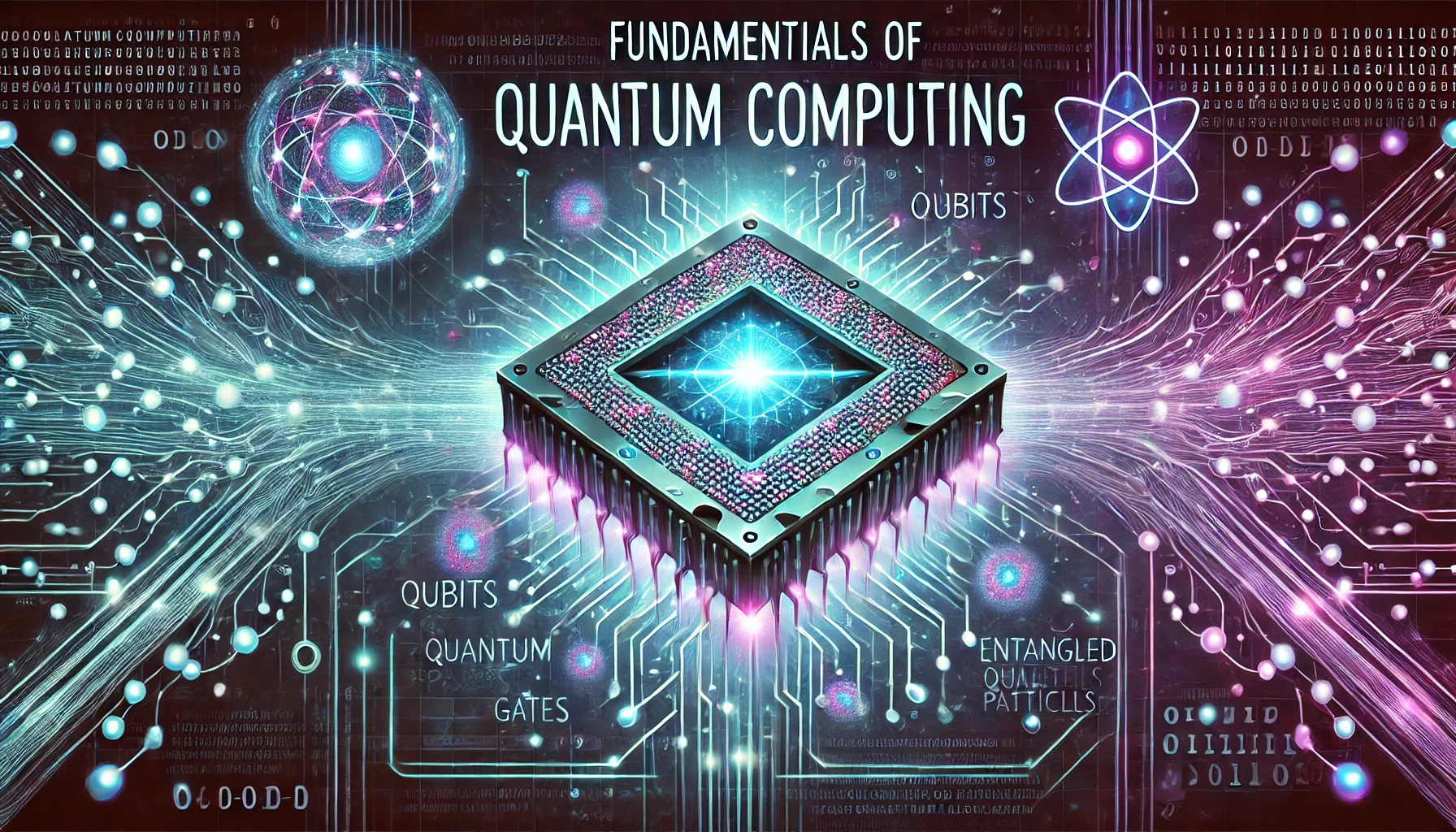
Fundamentals of Quantum Computingare rooted in the principles of quantum mechanics, a branch of physics that deals with the behavior of particles at the atomic and subatomic levels. Unlike classical computers that process data in binary using bits (0s and 1s), quantum computers use quantum bits, or qubits, which possess unique properties. The most significant property of a qubit is superposition, where it can exist in multiple states at once, unlike a classical bit that can only be either 0 or 1. This allows quantum computers to handle complex calculations more efficiently by processing multiple possibilities simultaneously. The combination of multiple qubits in superposition enables quantum computers to perform operations exponentially faster than classical systems for certain tasks, especially those involving large datasets or computations that require parallel processing.
Another critical concept in quantum computing is entanglement, a phenomenon where qubits become interdependent, such that the state of one qubit is directly related to the state of another, regardless of the distance between them. This interconnectedness allows quantum computers to process and store information in a way that classical computers cannot. Entanglement enables quantum systems to perform parallel computations at an unprecedented scale, facilitating faster problem-solving and more efficient algorithms. For example, quantum computers can optimize solutions to complex problems, such as simulating molecular structures in chemistry or solving optimization challenges in logistics, at speeds that were once inconceivable using classical methods. The interconnected nature of qubits also means that information can be transmitted securely, offering the potential for advancements in areas like quantum encryption.
Finally, quantum computers operate using quantum gates that manipulate qubits to perform calculations. These gates are analogous to classical logic gates but differ in how they affect qubits, utilizing quantum properties like superposition and entanglement. Quantum algorithms, such as Shor's algorithm for integer factorization and Grover's algorithm for database searching, demonstrate how quantum computing can outperform classical computing in specific domains. The ability to create and manipulate quantum circuits allows quantum algorithms to solve problems that would be impossible or take millions of years for classical computers. Though quantum computing is still in its infancy, it promises to revolutionize fields such as cryptography, artificial intelligence, and materials science by solving complex, large-scale problems that are currently out of reach. As research continues, the full potential of quantum computing is expected to unlock new capabilities that will fundamentally change industries worldwide.
2.Qubits & Superposition
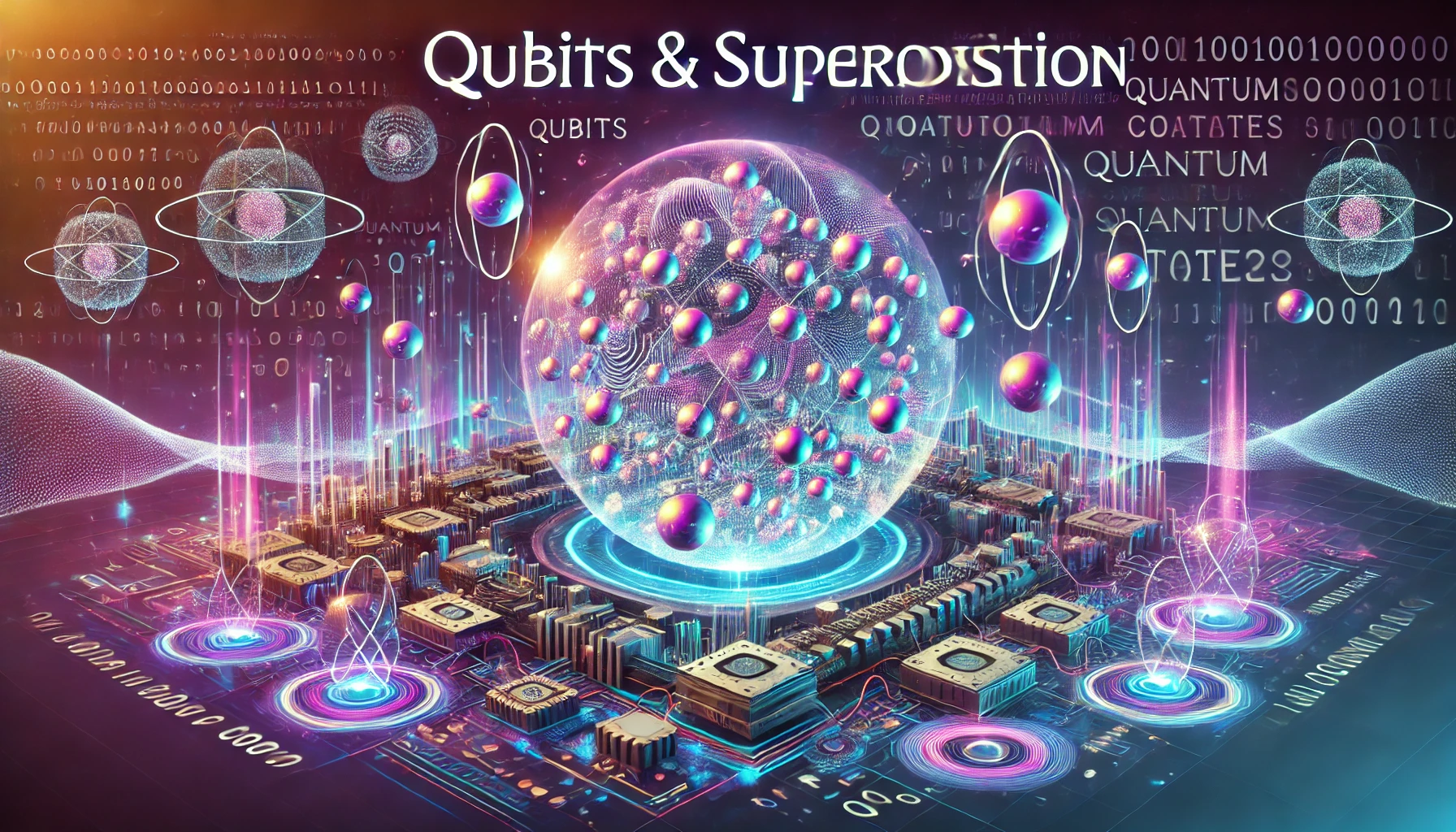
Qubits & Superposition are the fundamental units of information in quantum computing, analogous to classical bits in traditional computing. However, while a classical bit can only be in one of two states, either 0 or 1, a qubit can exist in multiple states simultaneously, thanks to the principle of superposition. This ability allows quantum computers to store and process a much larger amount of information compared to classical computers. A qubit is typically represented as a vector on the Bloch sphere, where its state is a combination of the 0 and 1 states. The state of a qubit is not determined until it is measured, and when measured, it collapses to either 0 or 1 with a certain probability. The power of a qubit lies in its ability to exist in a superposition of both states until it is observed, which allows quantum computers to perform parallel computations and solve problems more efficiently.
Superposition is the quantum phenomenon that enables a qubit to be in multiple states at once. Unlike classical bits, which are either 0 or 1, a qubit in superposition can be both 0 and 1 at the same time, represented by a weighted combination of the two states. Mathematically, a qubit’s state can be expressed as a linear combination of the basis states (|0⟩ and |1⟩), with complex coefficients that determine the probability of the qubit collapsing to either state when measured. This superposition property means that quantum computers can perform many calculations simultaneously, drastically speeding up the computation for certain types of problems. For example, a quantum computer with multiple qubits in superposition can explore many possible solutions to a problem in parallel, which is particularly useful in fields like optimization, cryptography, and machine learning.
The concept of superposition gives quantum computers an exponential advantage over classical computers when it comes to specific tasks. For instance, when you have multiple qubits in superposition, the number of possible states increases exponentially. A system of n qubits can represent 2^n possible states at once, whereas a classical computer would need to process each state sequentially. This capability allows quantum computers to tackle problems that would take classical computers an impractical amount of time to solve, such as factoring large numbers or simulating quantum physical systems. Superposition, along with other quantum properties like entanglement and quantum interference, forms the foundation for quantum algorithms, enabling quantum computers to potentially outperform classical ones in specific problem domains, providing faster and more efficient solutions.
3. Quantum Entanglement
Quantum Entanglement
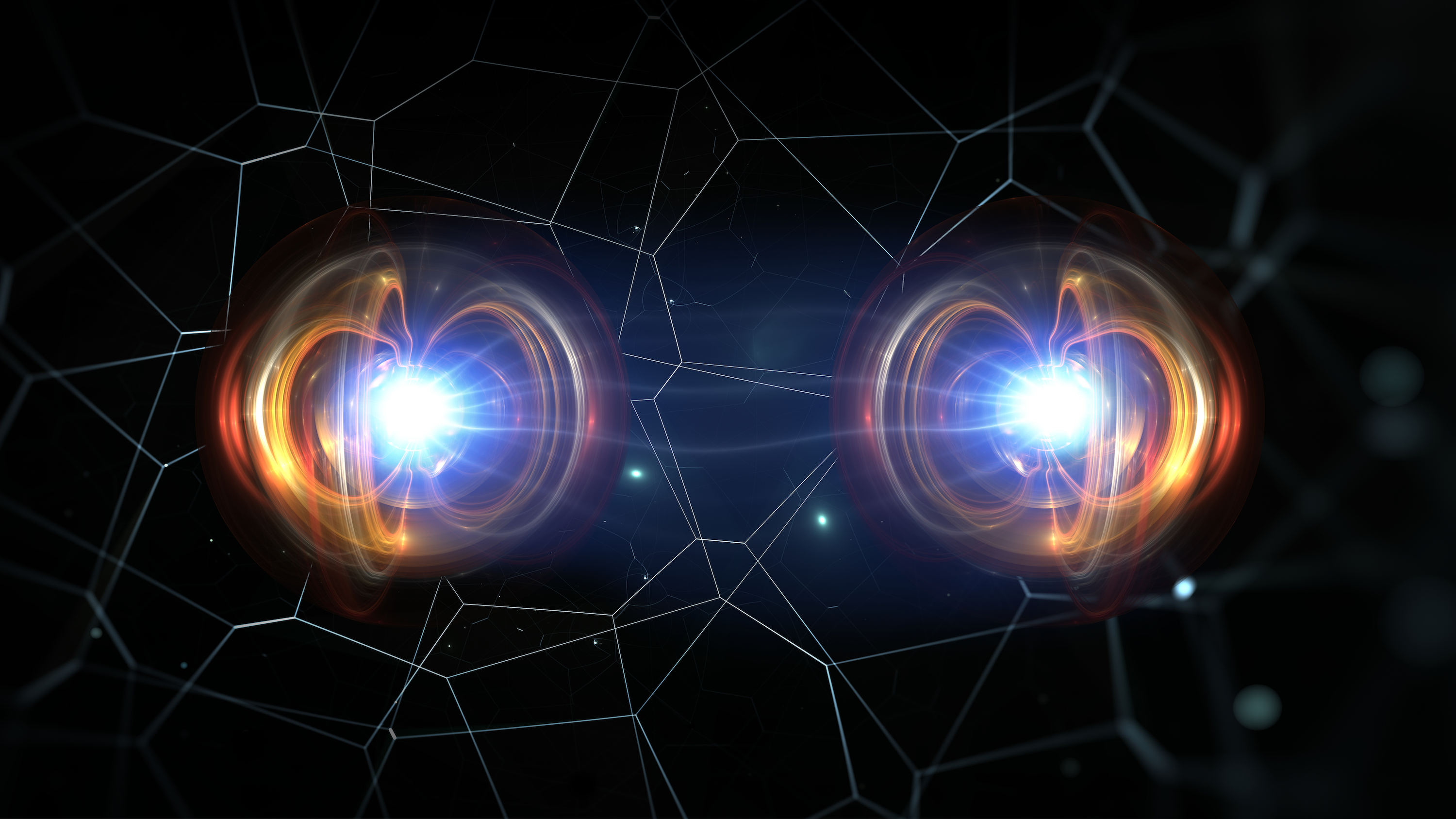
is one of the most fascinating and fundamental concepts in quantum mechanics, and it plays a crucial role in quantum computing. It refers to a phenomenon where two or more quantum particles, such as qubits, become linked in such a way that their states are directly related, no matter how far apart they are in space. Once qubits become entangled, the state of one qubit will instantly influence the state of the other(s) upon measurement, even if they are separated by vast distances. This phenomenon defies classical ideas of locality, where objects are only influenced by their immediate surroundings, and instead allows for correlations between particles that cannot be explained by traditional physics. Quantum entanglement is often described as "spooky action at a distance," a term famously coined by Albert Einstein, who found it puzzling, though subsequent experiments have confirmed its validity.
In quantum computing, entanglement is a powerful resource that allows quantum computers to perform computations much faster than classical computers. When qubits become entangled, the system of qubits can exist in multiple states simultaneously, significantly expanding the amount of information that can be processed at once. For example, if two qubits are entangled, measuring one qubit will instantly reveal information about the other, regardless of the distance between them. This interconnectedness allows quantum computers to perform parallel computations in ways that classical computers cannot. Quantum entanglement enables efficient problem-solving for certain complex tasks, such as simulating molecular structures in chemistry or factoring large numbers in cryptography, by utilizing this unique property to speed up processes and improve performance.
The phenomenon of entanglement is harnessed in quantum algorithms to enhance their computational capabilities. For instance, in algorithms like Shor’s algorithm for factoring large integers or Grover’s algorithm for searching unsorted databases, quantum entanglement helps manipulate the quantum states in ways that classical bits cannot. The entangled qubits work together to explore many possible solutions at the same time, and quantum interference is used to zero in on the correct answer more efficiently than classical algorithms. Additionally, quantum entanglement is the basis for quantum teleportation, a process that allows quantum information to be transferred between distant qubits without physically moving them, further advancing the potential of quantum communication and quantum networking. This unique property of quantum mechanics holds the potential to revolutionize fields such as cryptography, communication, and data processing.
4.Quantum Gates
Quantum Gates
are the fundamental building blocks of quantum circuits, much like classical logic gates are for traditional computing. They are used to manipulate the state of qubits in a quantum system. Quantum gates are represented by unitary matrices that perform operations on qubits, changing their states according to quantum rules, such as superposition and entanglement. Unlike classical gates that operate on bits (0 or 1), quantum gates manipulate qubits, which can exist in multiple states at once due to superposition. The most common quantum gates are Pauli-X, Pauli-Y, Pauli-Z, Hadamard (H), CNOT (Controlled-NOT), and Toffoli. Each quantum gate has specific operations it performs, and they are essential for constructing quantum algorithms and quantum circuits.
One of the most basic and widely used quantum gates is the Hadamard gate (H), which transforms a qubit in a definite state (either 0 or 1) into a superposition of both states. For instance, applying a Hadamard gate to a qubit in state 0 creates a superposition of both 0 and 1 with equal probability amplitudes. The Hadamard gate is often used at the beginning of quantum algorithms to create superpositions and is a crucial element in quantum algorithms like Grover’s search algorithm. Pauli gates (X, Y, Z) are another set of quantum gates that perform basic operations on qubits, such as flipping the state of a qubit (Pauli-X), rotating it on the Bloch sphere (Pauli-Y), or inverting its phase (Pauli-Z). These gates are essential in manipulating qubits in quantum computing and are used to implement operations like error correction and rotations in quantum algorithms.
More advanced quantum gates, such as the CNOT (Controlled-NOT) gate, are used to perform operations on entangled qubits. The CNOT gate is a two-qubit gate where one qubit acts as the control, and the other acts as the target. If the control qubit is in the state 1, the target qubit is flipped (0 becomes 1, and 1 becomes 0); otherwise, the target qubit remains unchanged. This gate is fundamental for creating entanglement between qubits, an essential feature for quantum computing. Quantum gates are applied in sequence to form quantum circuits, which are used to execute quantum algorithms. The combination of these gates in a specific order allows quantum computers to perform complex calculations that would be infeasible for classical computers to execute in a reasonable time frame.
5.Quantum Algorithms
Quantum Algorithms
are specialized computational procedures designed to leverage the unique properties of quantum mechanics, such as superposition, entanglement, and quantum interference, to solve problems more efficiently than classical algorithms. These algorithms utilize quantum bits (qubits) and quantum gates to perform operations that would be impractical or impossible for classical computers, especially for problems involving large datasets or complex calculations. The development of quantum algorithms is one of the key areas that will determine the practical advantages of quantum computing, as they are designed to exploit quantum parallelism and the ability of quantum systems to explore multiple possibilities simultaneously. Some of the most well-known quantum algorithms include Shor’s algorithm, Grover’s algorithm, and Quantum Fourier Transform, each solving specific types of problems that challenge classical computers.
Shor's Algorithm is one of the most famous quantum algorithms, known for its ability to factor large numbers exponentially faster than the best-known classical algorithms. In classical computing, factoring large numbers, such as those used in RSA encryption, is a task that becomes infeasible as the numbers grow large. However, Shor's algorithm, developed by mathematician Peter Shor in 1994, allows a quantum computer to factor these large numbers in polynomial time, which would have profound implications for cryptography, particularly public-key encryption systems. Shor's algorithm uses quantum parallelism and quantum Fourier transforms to find the period of a modular function, which can then be used to factor large integers. This capability is a major reason why the development of quantum computers is a topic of interest in the field of cybersecurity, as it could potentially break many classical encryption methods.
Grover’s Algorithm is another important quantum algorithm, developed by Lov Grover in 1996, which provides a quadratic speedup for unstructured search problems. Specifically, it can search through an unsorted database or solve black-box optimization problems much faster than classical algorithms. In classical computing, searching an unsorted list of N items requires O(N) time, meaning the time to find a solution scales linearly with the size of the list. Grover's algorithm, on the other hand, reduces this to O(√N), providing a quadratic speedup. While it doesn't offer exponential speedup like Shor's algorithm, it still provides significant advantages for certain types of problems, including searching through large datasets, optimization, and solving problems in machine learning and AI.

6.Quantum Decoherence
Quantum Decoherence
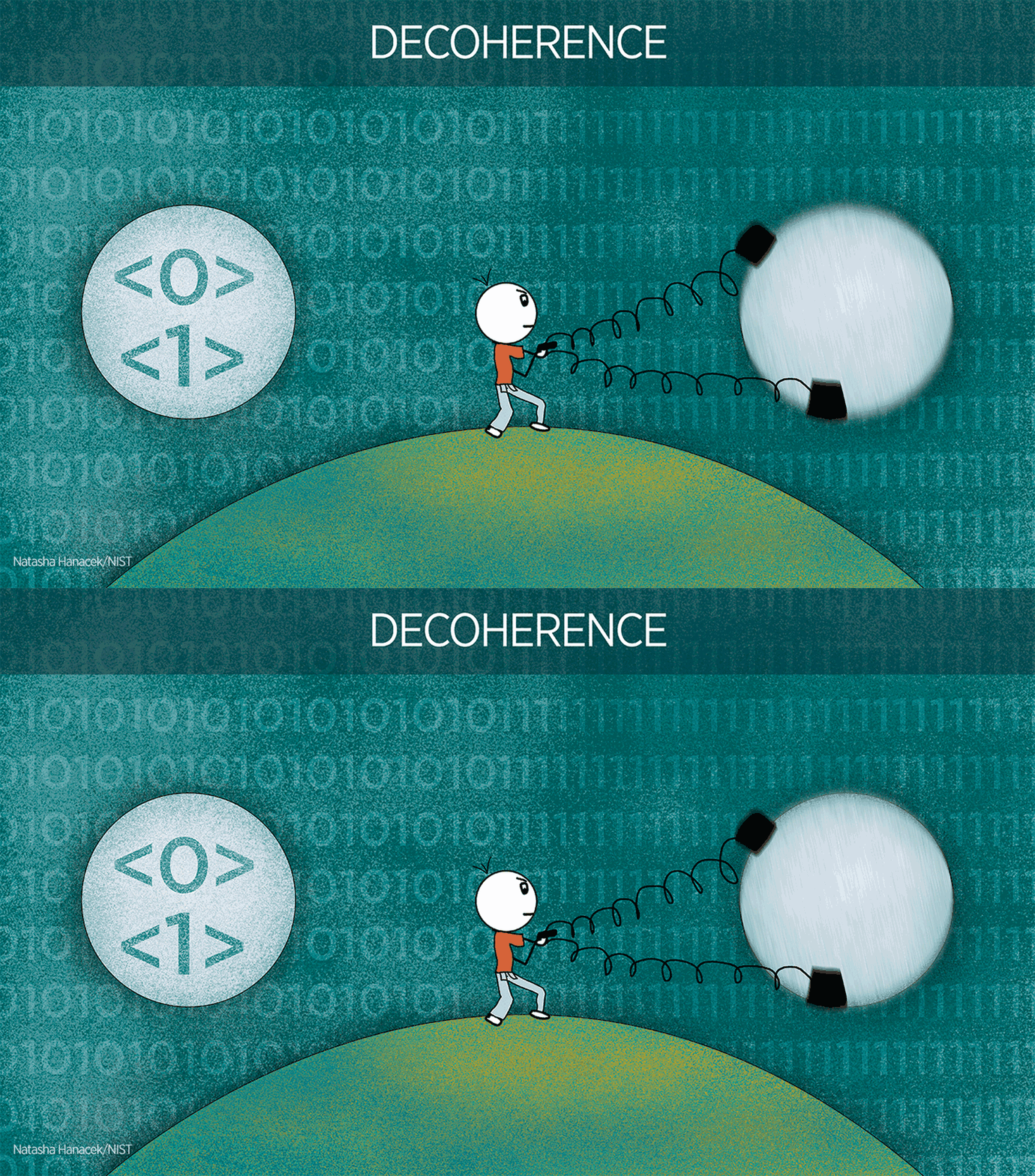
is a phenomenon in quantum mechanics where a quantum system loses its quantum properties, such as superposition and entanglement, and behaves more classically. This transition occurs when the quantum system interacts with its external environment, causing the system's quantum states to collapse into one of the possible classical states. Decoherence explains why we do not observe the strange behaviors of quantum mechanics, like superposition and entanglement, in everyday macroscopic objects. The interaction with the environment effectively "measures" the system, and this measurement causes the loss of the coherence between different quantum states. It is a key challenge in quantum computing because decoherence disrupts the delicate quantum states needed for quantum calculations and makes it harder to maintain entanglement over time.
In a quantum computer, qubits rely on superposition and entanglement to perform calculations, which makes them vastly more powerful than classical bits. However, when qubits interact with their environment, they lose these properties due to decoherence. For example, if qubits are exposed to heat, electromagnetic radiation, or even the smallest vibrations from their surroundings, the quantum system begins to lose its coherent state and eventually becomes classical. This is a major problem in the development of practical quantum computers because, to perform reliable computations, quantum states need to be preserved for a sufficient amount of time to complete a quantum algorithm. The timescale over which decoherence occurs is known as the coherence time, and it must be longer than the time it takes to perform quantum computations. Currently, one of the biggest hurdles in quantum computing is increasing the coherence time to a level that allows for effective quantum calculations.
To counteract quantum decoherence, researchers are developing various methods and technologies to protect quantum systems and extend their coherence times. Some of these methods include quantum error correction techniques, which aim to detect and correct errors caused by decoherence without measuring the quantum system directly. Another approach is to isolate quantum systems from their environments as much as possible, using techniques like cryogenic cooling to reduce environmental noise or building quantum error-correcting codes to preserve the integrity of quantum information. Additionally, researchers are exploring the use of topological qubits, which are inherently more resistant to decoherence because they store information in the system's global properties rather than individual qubits. By addressing decoherence, quantum computing systems can become more reliable, making it possible to unlock their full potential for applications in fields such as cryptography, machine learning, and drug discovery.
7.Quantum Parallelism
Quantum Parallelism
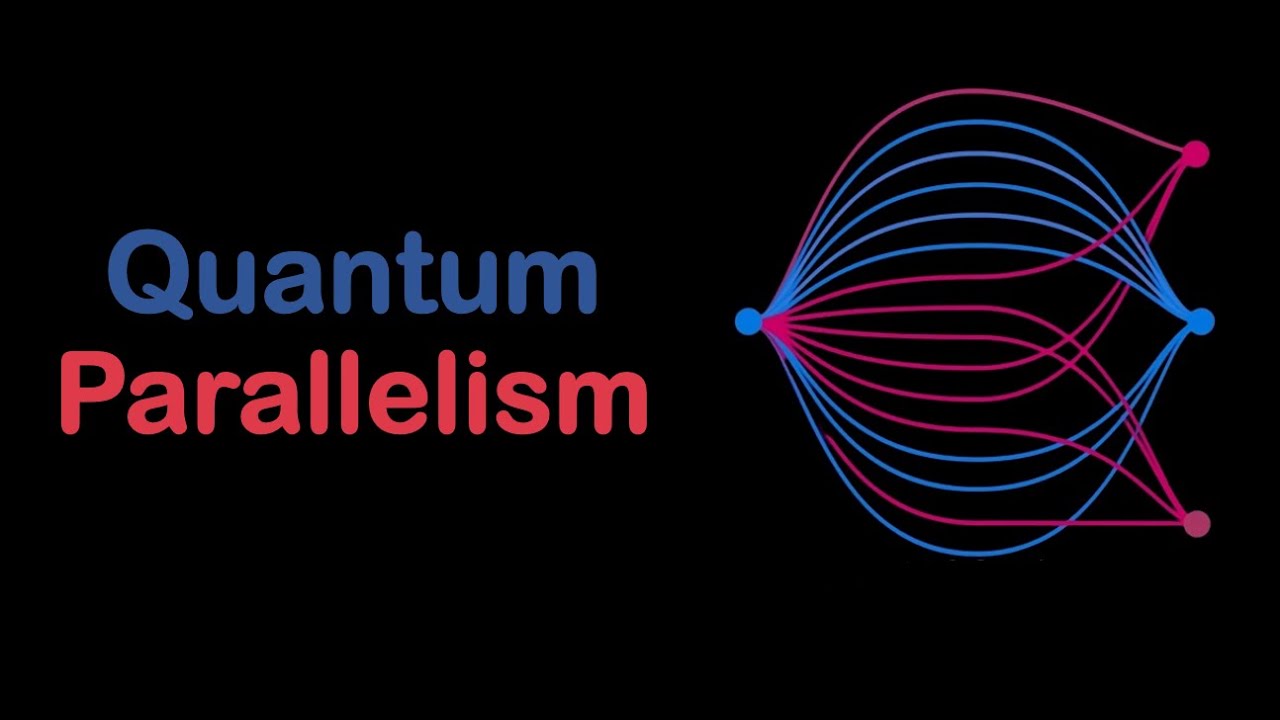
is a key concept in quantum computing that allows quantum computers to perform many calculations simultaneously. It is based on the principle of superposition, which enables qubits to exist in multiple states at once. In classical computing, a bit can be either 0 or 1, but a qubit in a state of superposition can represent both 0 and 1 simultaneously, allowing for a vast number of possibilities to be explored in parallel. This is what gives quantum computers the potential to solve certain problems much faster than classical computers. When a quantum algorithm is executed, the quantum computer can simultaneously process many different inputs, effectively performing parallel computation, which is referred to as quantum parallelism.
For example, consider a quantum algorithm like Grover's algorithm for searching an unsorted database. A classical computer would need to check each entry one by one, taking O(N) time, where N is the number of entries in the database. However, with quantum parallelism, a quantum computer can evaluate multiple entries at the same time because of its ability to process all possible states of the qubits in superposition. This allows the quantum computer to find the solution in O(√N) time, which provides a quadratic speedup over classical algorithms. This parallelism is not an explicit parallel processing in the classical sense (like running multiple threads), but rather a quantum system’s ability to process multiple possibilities simultaneously through its inherent quantum state.
One of the most powerful aspects of quantum parallelism is its ability to exploit the entanglement of qubits. When qubits are entangled, their states become correlated, and the measurement of one qubit can instantly influence the state of another. This correlation enables quantum algorithms to work on entangled qubits in parallel, exponentially increasing the number of states that can be processed. For example, in Shor's algorithm for factoring large numbers, quantum parallelism allows the quantum computer to explore multiple potential solutions at the same time, leading to an exponential speedup over classical factoring algorithms. This is particularly significant for cryptographic applications where factoring large prime numbers is a core challenge. Quantum parallelism, along with other quantum properties like interference, helps quantum computers achieve speeds that are not possible for classical computers.
8.Classical vs Quantum Computing
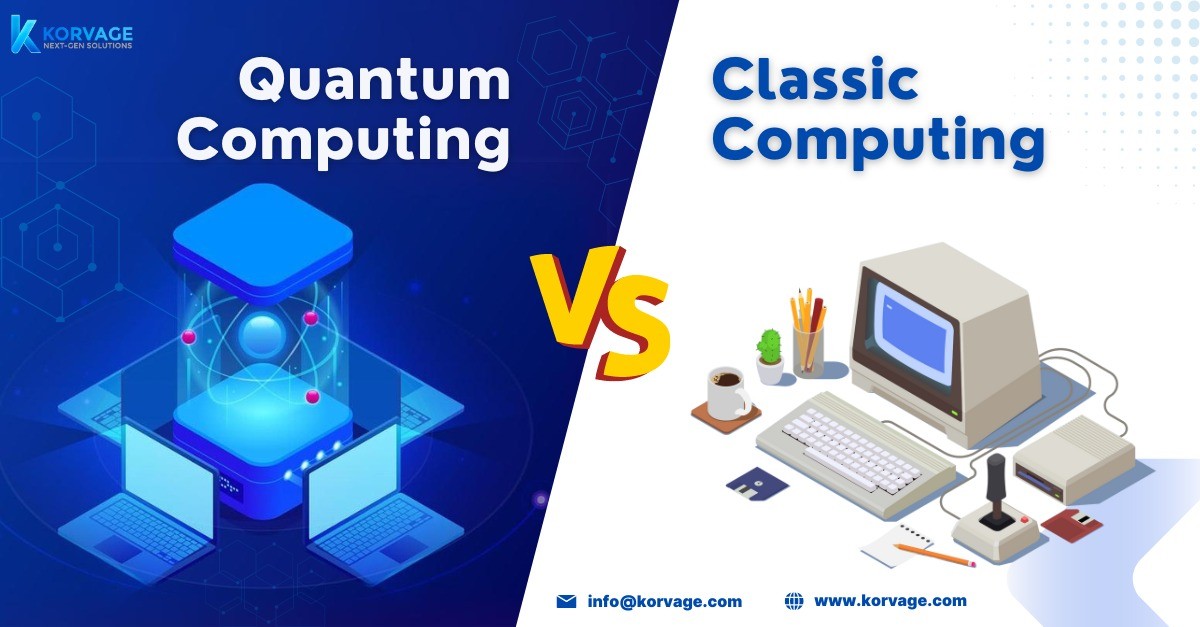
Classical vs Quantum Computingrepresents a fundamental shift in the way computation is performed. Classical computing, which underpins most of today’s technology, relies on classical bits as the basic unit of information. A classical bit can be either 0 or 1, and all computations are carried out by manipulating these bits through logical operations like AND, OR, and NOT. Classical computers operate on deterministic algorithms, meaning the output is predictable based on the input, and they process information sequentially. This method is effective for a wide range of applications, from word processing to complex simulations. However, for specific tasks, particularly those involving large datasets or complex calculations, classical computers can become inefficient, requiring immense time and resources.
In contrast, quantum computing harnesses the principles of quantum mechanics to process information in fundamentally different ways. Instead of classical bits, quantum computers use qubits, which can represent not only the states 0 and 1 but also any superposition of these states simultaneously. This ability to exist in multiple states allows quantum computers to perform many calculations in parallel, significantly speeding up computations for certain problems. Quantum computers also exploit quantum entanglement, where qubits become correlated in ways that enable them to influence each other instantaneously, even if they are far apart. This property, along with quantum interference, enables quantum algorithms to solve certain problems, such as factoring large numbers (Shor’s algorithm) or searching unsorted databases (Grover’s algorithm), exponentially faster than classical counterparts.
While quantum computing promises immense potential, it is still in its early stages and faces significant challenges, particularly in terms of stability and scalability. Decoherence—the loss of quantum coherence due to environmental interactions—is a major issue, as qubits are highly sensitive to their surroundings. Classical computers, on the other hand, are reliable, stable, and well-established, with vast infrastructure supporting them. Quantum computers are not meant to replace classical ones but rather to complement them, handling problems that are currently infeasible for classical computers. For now, classical computing remains dominant in everyday applications, while quantum computing is poised to tackle specific, complex challenges in fields like cryptography, material science, artificial intelligence, and optimization. The future will likely see hybrid models where classical and quantum systems work together to provide more efficient solutions to computational problems.
Comments