Ethical Hacking
1. What is Ethical Hacking?

Ethical Hacking is the practice of legally breaking into systems or networks to identify and fix vulnerabilities before malicious hackers can exploit them. Ethical hackers, also known as white-hat hackers, use their technical skills and tools to test the security of an organization’s infrastructure. Their main goal is to protect sensitive data, prevent cyberattacks, and improve cybersecurity by finding weaknesses and recommending solutions. Ethical hacking is performed with proper authorization and follows the laws and guidelines of cybersecurity.
Ethical hacking involves various techniques such as network scanning, penetration testing, social engineering, and password cracking. Ethical hackers simulate real-world attacks to test firewalls, intrusion detection systems (IDS), and other security measures. This helps organizations identify and fix vulnerabilities like unpatched software, weak passwords, and misconfigured systems. Regular security audits and ethical hacking assessments help businesses maintain a strong security posture and comply with industry regulations..
To become an ethical hacker, professionals often pursue certifications like Certified Ethical Hacker (CEH), Offensive Security Certified Professional (OSCP), and CompTIA Security+. These certifications validate their expertise in ethical hacking methodologies and cyber defense strategies. Ethical hacking is crucial in today’s digital world to safeguard personal data, financial systems, and critical infrastructure. By identifying security gaps before attackers do, ethical hackers play a vital role in protecting organizations from cyber threats.
2. Penetration Testing
Penetration Testing also known as pen testing, is a cybersecurity practice where ethical hackers simulate real-world attacks on a system, network, or application to find and fix security vulnerabilities. It helps organizations identify weak points that could be exploited by malicious hackers. The goal of penetration testing is to assess the effectiveness of security measures and improve cyber defenses. This process is conducted with authorization and follows a structured methodology to ensure safety and compliance with industry standards.
Penetration testing involves several phases, including planning, reconnaissance, scanning, exploitation, and reporting. In the planning phase, the scope and goals of the test are defined. During reconnaissance, ethical hackers gather information about the target system. Scanning is done to identify open ports, services, and vulnerabilities. The exploitation phase involves attempting to breach the system using the identified weaknesses. Finally, a detailed report is created, outlining the vulnerabilities found, the impact of potential exploitation, and recommendations for remediation.
TThere are different types of penetration testing, including black-box, white-box, and gray-box testing. Black-box testing simulates an attack with no prior knowledge of the system, while white-box testing is conducted with full knowledge of the target’s internal architecture. Gray-box testing combines both approaches, providing partial access to information. Penetration testing is essential for organizations to identify and resolve security gaps, meet compliance standards, and protect sensitive data from cyber threats.

3. Social Engineering Attacks
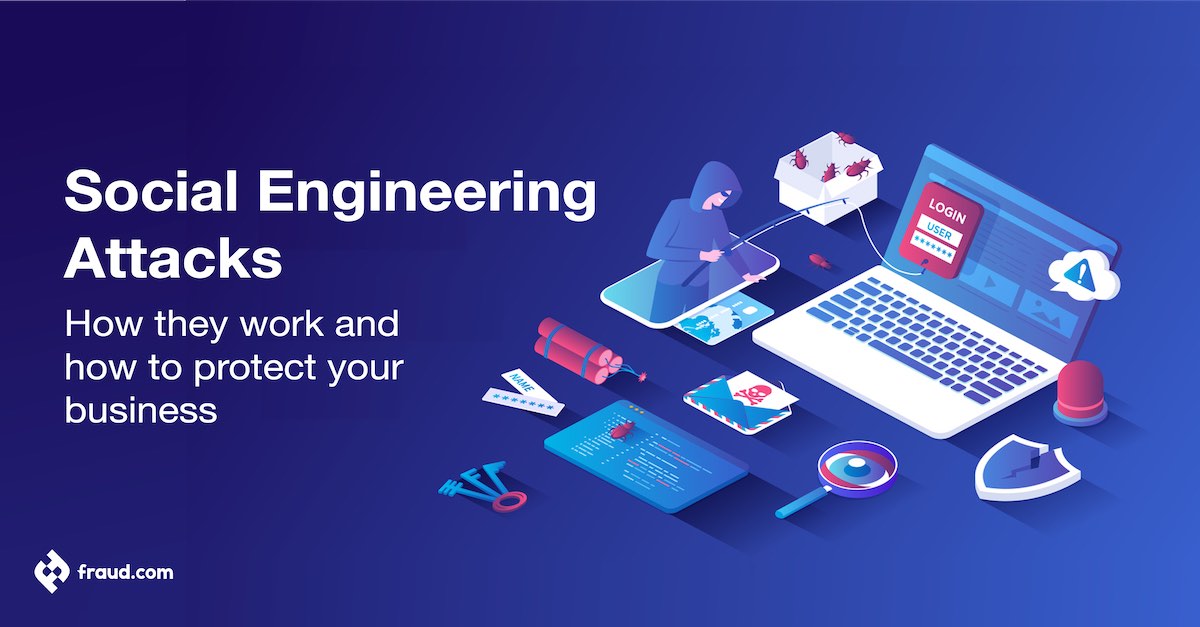
Social Engineering Attacks are psychological manipulation tactics used by cybercriminals to trick individuals into revealing confidential information or performing actions that compromise security. Instead of exploiting technical vulnerabilities, these attacks target human weaknesses like trust, fear, or curiosity. Common goals include stealing passwords, financial data, or gaining unauthorized system access. Social engineering is a significant threat because it bypasses traditional cybersecurity measures through deception and manipulation
There are several types of social engineering attacks. Phishing is the most common, where attackers send fraudulent emails pretending to be legitimate sources to steal sensitive information. Vishing (voice phishing) involves using phone calls to deceive targets, while smishing uses SMS messages for similar purposes. Another form is pretexting, where attackers create a false narrative to trick victims into sharing personal data. Baiting lures victims by offering free items or downloads that secretly contain malware. Tailgating involves physically following someone into a restricted area without proper authorization.
Preventing social engineering attacks requires a combination of awareness, training, and technical defenses. Organizations should conduct regular security awareness programs to educate employees on recognizing and avoiding these tactics. Implementing multi-factor authentication (MFA) can protect accounts even if credentials are compromised. Verifying requests for sensitive information through independent channels and using email filters to block suspicious messages are also effective strategies. By combining technological and human-focused security practices, businesses and individuals can reduce their vulnerability to social engineering attacks.
4. Wireless Network Hacking
Wireless Network Hackingrefers to the practice of exploiting vulnerabilities in Wi-Fi networks to gain unauthorized access, intercept data, or disrupt services. Attackers target weaknesses in wireless protocols, poorly configured networks, or weak passwords to infiltrate systems. Since wireless signals travel through the air, they are easier to intercept compared to wired connections. Common methods of wireless hacking include password cracking, packet sniffing, and man-in-the-middle (MITM) attacks, which allow cybercriminals to spy on or manipulate data transmissions.
One common technique is WEP and WPA cracking. WEP (Wired Equivalent Privacy) is an outdated and insecure encryption method that can be easily cracked using tools like aircrack-ng. WPA (Wi-Fi Protected Access), especially WPA2, is more secure but can still be compromised through brute-force attacks or dictionary attacks on weak passwords. Another method is evil twin attacks, where an attacker sets up a fake Wi-Fi access point that mimics a legitimate network. When users connect, the hacker can intercept sensitive data like passwords and banking information.
To protect against wireless network hacking, it is essential to use strong encryption like WPA3, which offers enhanced security. Changing default router credentials, disabling WPS (Wi-Fi Protected Setup), and using complex passwords can prevent unauthorized access. Implementing MAC address filtering, hidden SSIDs, and network segmentation adds another layer of protection. Regularly monitoring network activity and using VPNs (Virtual Private Networks) for encrypted communication further strengthens wireless security. By adopting these best practices, individuals and organizations can reduce the risk of wireless network attacks.

5.Password Cracking
Password Cracking is the process of recovering or guessing passwords to gain unauthorized access to systems, applications, or networks. It is commonly used by ethical hackers to test the strength of passwords and by malicious hackers to breach systems. Passwords are typically stored as hashed values, and cracking involves reversing or matching these hashes. Various methods are used for password cracking, ranging from brute-force attacks to more sophisticated techniques like rainbow tables and dictionary attacks. Stronger passwords with complex characters, length, and multi-factor authentication (MFA) make cracking significantly harder.
One common method is the brute-force attack, where every possible password combination is systematically tried until the correct one is found. Although effective, this method is time-consuming, especially if the password is long and complex. Dictionary attacks are faster, as they rely on precompiled lists of common passwords, phrases, or leaked credentials. Hackers can also use rainbow tables, which are large databases of precomputed hash values. Instead of calculating hashes for each attempt, the attacker compares the target hash to the table, speeding up the cracking process.
To protect against password cracking, it is essential to use strong, unique passwords with a combination of uppercase and lowercase letters, numbers, and special characters. Enforcing password complexity policies, salting (adding random data to a password before hashing), and using multi-factor authentication (MFA) can significantly reduce vulnerability. Regularly updating passwords and monitoring for suspicious login attempts also strengthens password security. Organizations often use password managers to securely store and manage complex passwords, reducing the likelihood of successful password-cracking attempts.

6. Web Application Security
Web Application Security refers to the practices and measures used to protect websites and web-based applications from cyber threats and vulnerabilities. As web applications handle sensitive data such as personal information, payment details, and login credentials, ensuring their security is critical. Common threats include SQL injection, cross-site scripting (XSS), cross-site request forgery (CSRF), and broken authentication. To secure web applications, developers follow security best practices like input validation, encryption, secure coding, and regular security audits to identify and fix vulnerabilities. Implementing security headers, HTTPS, and proper session management further enhances web application security.
One crucial aspect of web application security is input validation and sanitization. Attackers often exploit user input fields to inject malicious code or commands. Validating and sanitizing inputs prevent these attacks by ensuring only expected and safe data is processed. Another important defense is authentication and authorization. Implementing multi-factor authentication (MFA), strong password policies, and access controls helps verify user identities and restricts access to authorized users. Additionally, secure session management prevents session hijacking by using secure cookies, enforcing session timeouts, and ensuring sessions are properly invalidated after logout.
Regular security testing is vital to maintain web application security. This includes penetration testing, vulnerability scanning, and code reviews to identify and mitigate weaknesses. Security frameworks like OWASP (Open Web Application Security Project) provide guidelines and tools to address the most critical web application risks. Web Application Firewalls (WAFs) protect against common attacks by filtering and monitoring HTTP traffic. Organizations must also stay updated with the latest security patches and software updates to safeguard against emerging threats and ensure their web applications remain secure.

7. Reverse Engineering
Reverse Engineering is the process of analyzing and understanding a system, software, or hardware to discover its design, functionality, and operation. It involves deconstructing a product to identify how it works, often without access to the original source code or design documents. This practice is commonly used in cybersecurity to analyze malware, identify vulnerabilities, and develop security patches. In software reverse engineering, techniques like disassembling, decompiling, and debugging are used to translate machine code back into a human-readable format. This helps researchers and security professionals understand the internal workings of software and detect hidden features or malicious code.
In hardware reverse engineering, physical devices are analyzed to understand their circuits, components, and design. This process is used in industries to identify competitors' technology, recreate legacy systems, or detect hardware vulnerabilities. For example, engineers might analyze a microchip to understand its function and improve upon its design. In the context of cybersecurity, hardware reverse engineering can help identify potential backdoors or security flaws embedded in physical devices. Techniques include circuit tracing, chip decapsulation, and scanning electron microscopy (SEM) to examine the internal structure of hardware components.
Reverse engineering has both legal and ethical considerations. While it is valuable for improving security, understanding competitor products, and recovering lost data, it can also be used maliciously for software piracy, unauthorized copying, or exploiting vulnerabilities. Many industries use reverse engineering for compatibility testing and product innovation, but it must comply with intellectual property laws. Ethical reverse engineering focuses on improving system security and ensuring compliance with legal guidelines. Organizations often use reverse engineering as part of their vulnerability research and incident response processes to identify and mitigate emerging threats.

8. Exploit Development
Exploit Development is the process of creating software or scripts that take advantage of vulnerabilities or weaknesses in a system, application, or network. These vulnerabilities may exist due to flaws in the code, poor security practices, or unpatched software. Ethical hackers and cybersecurity professionals use exploit development to test and improve system security, while malicious actors may use it to compromise systems. The process involves identifying a vulnerability, analyzing how it works, and crafting code that exploits the weakness to achieve unauthorized access, execute commands, or disrupt system functions. This requires advanced knowledge of programming languages like C, Python, and Assembly, as well as an understanding of system architecture and network protocols.
The exploit development process typically begins with vulnerability research, where security analysts use tools like fuzzers, debuggers, and disassemblers to identify weak points in a system. Once a vulnerability is found, the next step is proof-of-concept (PoC) development, where a basic script or program is created to demonstrate the flaw’s existence. This PoC helps security teams understand the impact of the vulnerability and is the foundation for further refining the exploit. Techniques like buffer overflows, format string exploits, and use-after-free vulnerabilities are commonly targeted in exploit development. By understanding and replicating these attacks, ethical hackers can help organizations patch vulnerabilities before malicious actors can exploit them.
TExploit development plays a crucial role in offensive security and penetration testing, where security experts simulate real-world attacks to identify and fix vulnerabilities. While the process can be used for both ethical and unethical purposes, responsible disclosure is a key principle for ethical hackers—they report vulnerabilities to the software vendor to allow for a fix before making the exploit public. Advanced exploit development also involves bypassing modern security defenses like Address Space Layout Randomization (ASLR), Data Execution Prevention (DEP), and control flow integrity. Mastering exploit development requires deep technical skills, creativity, and a commitment to ethical hacking practices for improving global cybersecurity

Comments