Cloud Service Models
1. what is Cloud Service Models?
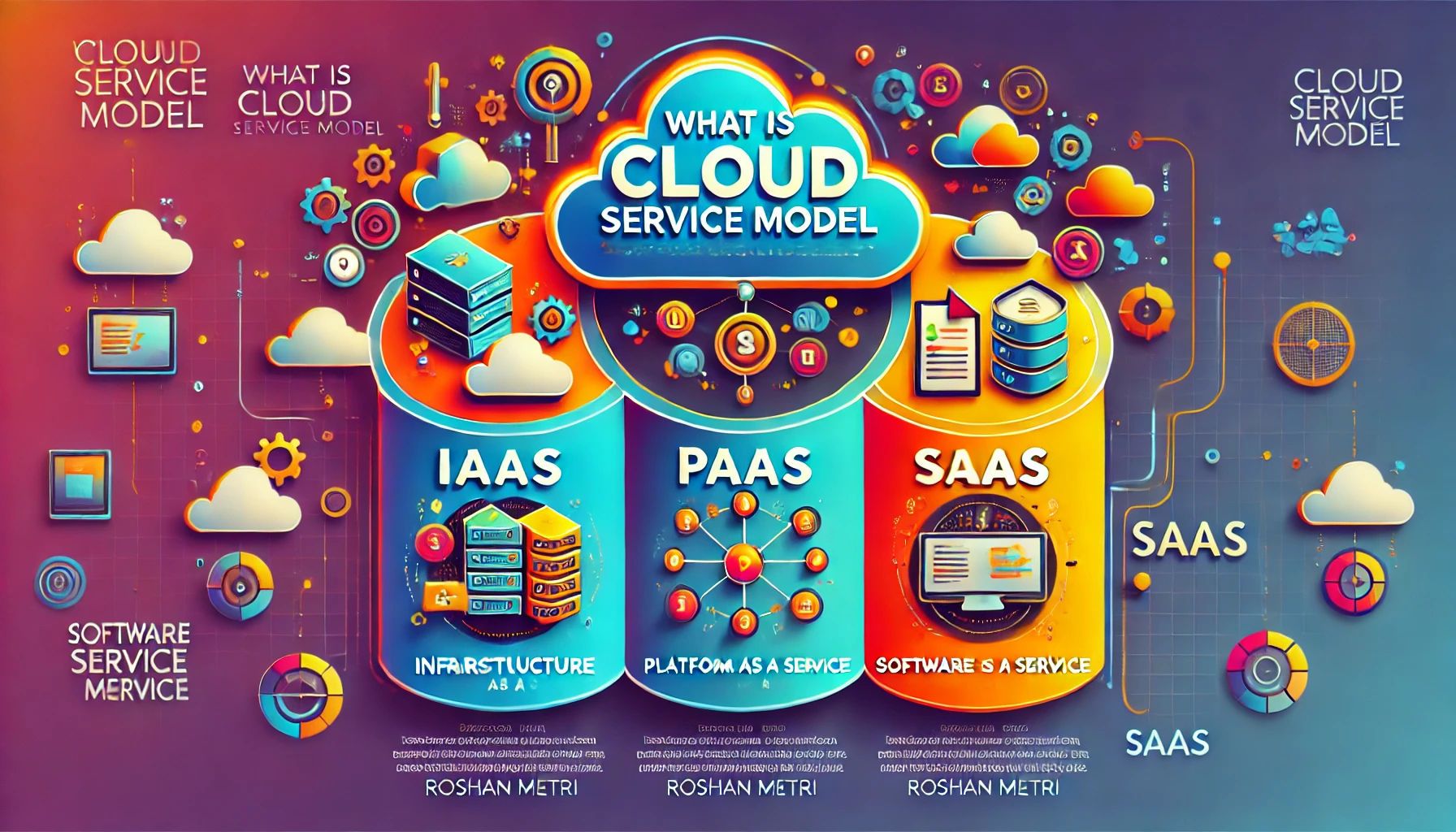
Cloud Service Models refer to the different ways cloud computing resources are provided to users. These models define how data, applications, and services are delivered over the internet. The three main cloud service models are Infrastructure as a Service (IaaS), Platform as a Service (PaaS), and Software as a Service (SaaS). Each model offers a different level of control, flexibility, and management responsibility for users and providers.
Infrastructure as a Service (IaaS) provides virtualized computing resources over the internet. It includes servers, storage, and networking, allowing users to manage and control the operating system, applications, and data. This model is ideal for businesses that need scalability without investing in physical hardware. Examples of IaaS providers include Amazon Web Services (AWS), Microsoft Azure, and Google Cloud Platform (GCP). Users only pay for the resources they consume, making it cost-effective for growing businesses
Platform as a Service (PaaS) offers a complete development and deployment environment in the cloud. It allows developers to build, test, and manage applications without worrying about the underlying infrastructure. PaaS is suitable for software developers who want to focus on coding while the cloud provider handles hardware, security, and maintenance. Popular PaaS solutions include Heroku, Google App Engine, and Microsoft Azure App Services. This model accelerates application development and reduces the complexity of infrastructure management.
2.Infrastructure as a Service (IaaS)
Infrastructure as a Service (IaaS)is a cloud computing model that provides virtualized physical resources like servers, storage, and networking over the internet. Instead of purchasing and maintaining physical hardware, users can rent computing infrastructure on a pay-as-you-go basis. This model gives businesses flexibility and scalability while reducing the costs and complexities of managing on-site infrastructure. Users have full control over their operating systems and applications, while the cloud provider handles hardware maintenance and physical security.
In IaaS, users can create virtual machines (VMs), store large amounts of data, and manage networks without owning physical servers. This model is ideal for businesses needing scalable resources for development, testing, and hosting applications. For example, a company can scale its infrastructure up during peak traffic periods and scale down when demand decreases. This flexibility is especially useful for startups and large organizations that want to optimize costs and operational efficiency.
Popular IaaS providers include Amazon Web Services (AWS), Microsoft Azure, Google Cloud Platform (GCP), and IBM Cloud. These platforms offer a range of services like virtual servers (EC2 on AWS), object storage (Azure Blob Storage), and networking solutions. Businesses benefit from global availability, disaster recovery, and advanced security options. IaaS enables faster deployment, improved resource management, and the ability to focus on core business activities without worrying about maintaining hardware infrastructure.
.webp)
3. Platform as a Service (PaaS)
Platform as a Service (PaaS)
is a cloud computing model that provides a ready-to-use platform for developing, testing, deploying, and managing applications. It offers the infrastructure (servers, storage, and networking) along with additional tools like operating systems, databases, and development frameworks. With PaaS, developers can focus on writing code and building applications without worrying about the underlying hardware or software maintenance. This model speeds up the development process and reduces the complexity of managing the infrastructure.
In PaaS, the cloud provider manages the hardware, operating systems, and software updates, while users control their applications and data. This model is ideal for developers working on web and mobile applications, as it supports faster development cycles and collaboration. For example, a business can use PaaS to build and deploy a web application without setting up servers or managing databases manually. It also allows teams to work on different stages of a project simultaneously, improving productivity and efficiency.
Popular PaaS providers include Google App Engine, Microsoft Azure App Services, Amazon Elastic Beanstalk, and Heroku. These platforms offer pre-configured environments, database management, and scalability options. Businesses benefit from reduced operational costs, faster time-to-market, and seamless scaling as application demands increase. PaaS is especially useful for companies building modern applications, as it simplifies the development process and allows developers to focus on innovation rather than infrastructure management.
1.webp)
4.Software as a Service (SaaS)
Software as a Service (SaaS)
is a cloud computing model where software applications are delivered over the internet. Users can access these applications through a web browser without needing to install or maintain any software on their local devices. The cloud provider manages everything, including the infrastructure, software updates, security, and maintenance, allowing users to focus on using the application. SaaS is popular because it reduces the need for upfront investments in hardware and software while providing on-demand access to advanced applications.
In SaaS, users typically pay a subscription fee based on usage or features. This model is convenient for businesses because it allows employees to access the software from anywhere with an internet connection. For example, office productivity tools like Google Workspace and Microsoft 365 allow teams to collaborate in real time without installing software on their computers. SaaS is also scalable, meaning businesses can adjust their usage as their needs grow without significant changes to their infrastructure.
Examples of SaaS applications include Dropbox for file storage, Salesforce for customer relationship management (CRM), and Zoom for video conferencing. These services provide automatic updates and data backups, ensuring users always have access to the latest features without manual intervention. SaaS benefits organizations by offering cost efficiency, flexibility, and easy integration with other systems. It is widely used across industries for tasks ranging from project management to customer support, providing reliable, scalable, and accessible software solutions.
.webp)
5.Function as a Service (FaaS)
Function as a Service (FaaS)
) is a cloud computing model that allows developers to execute individual functions or pieces of code in response to specific events without managing the underlying infrastructure. It is a core part of serverless computing, where the cloud provider automatically handles resource allocation, scaling, and maintenance. Developers only need to focus on writing the code, which is triggered by events like user requests, database updates, or file uploads. This model is cost-efficient because users are only charged for the execution time of their functions rather than paying for idle server resources.
In FaaS, each function is stateless and runs in isolated environments for a short duration. When an event occurs, the cloud provider quickly spins up the required resources, executes the function, and then shuts down the environment. For example, a function can automatically resize uploaded images, process payments, or send email notifications when triggered. This approach reduces operational overhead and allows rapid development and deployment of microservices-based applications.
Popular FaaS platforms include AWS Lambda, Microsoft Azure Functions, and Google Cloud Functions. These platforms provide high availability and automatic scaling, making them ideal for handling unpredictable workloads. FaaS is commonly used for tasks like data processing, real-time monitoring, and building APIs. It enables developers to deliver applications faster by focusing on writing business logic without worrying about server management, improving both productivity and cost-effectiveness.
.webp)
6.Backend as a Service (BaaS)
Backend as a Service (BaaS)
is a cloud computing model that provides developers with ready-to-use backend infrastructure, allowing them to focus on building the front-end and user experience without managing servers, databases, or other backend components. BaaS platforms offer pre-built features like database management, user authentication, cloud storage, APIs, push notifications, and real-time analytics, making it easier and faster to develop applications. This model is especially popular for mobile and web applications where rapid development and scalability are crucial.
In BaaS, developers interact with the backend through APIs and SDKs (Software Development Kits) provided by the cloud provider. For example, when a user logs into an app, the BaaS platform handles the authentication process and stores the user data securely. This reduces the time and effort needed to build complex backend logic from scratch. It also enables automatic scaling, ensuring the application can handle increased user traffic without manual intervention.
Popular BaaS providers include Firebase (by Google), AWS Amplify, and Supabase. These platforms are widely used for creating chat applications, social networks, and e-commerce systems. BaaS is cost-effective because it operates on a pay-as-you-go model, meaning developers only pay for the resources they use. It also improves security and reliability, as most BaaS platforms include built-in protections like data encryption and user access controls, reducing the risks of data breaches.
.webp)
7. Cloud Storage Services
Cloud Storage Services
provide a way to store, manage, and access data over the internet instead of on local devices or physical servers. These services allow users and businesses to securely save files, documents, images, videos, and other digital content in remote data centers managed by cloud providers. Cloud storage is highly scalable, meaning users can increase or decrease storage capacity based on their needs, paying only for the space they use. It also offers anytime, anywhere access, allowing users to retrieve their data from any device connected to the internet.
One major benefit of cloud storage is data redundancy and backup. Cloud providers often store multiple copies of data across different geographic regions to prevent data loss in case of hardware failure or natural disasters. Additionally, automatic synchronization ensures that changes made to files on one device are updated across all linked devices in real time. This is particularly useful for collaborative work environments, where multiple users need to access and edit the same documents simultaneously.
Popular cloud storage services include Google Drive, Dropbox, Amazon S3, Microsoft OneDrive, and iCloud. These services vary in features, offering different levels of security, file sharing capabilities, and storage limits. Advanced cloud storage solutions also provide encryption, access controls, and compliance with data privacy regulations. As cloud technology evolves, cloud storage continues to play a crucial role in modern data management for both personal and professional use.
8.Serverless Computing
Serverless Computing is a cloud computing model where developers can run applications without managing the underlying infrastructure. In this model, cloud providers handle the servers, scaling, and resource management automatically. Developers only focus on writing code, while the cloud platform manages the deployment, execution, and scaling of applications. This approach eliminates the need for maintaining physical or virtual servers, reducing operational overhead and allowing for faster application development.
One of the key features of serverless computing is event-driven execution. Applications run in response to specific triggers, such as HTTP requests, file uploads, or database changes. This ensures that computing resources are used only when needed, making it a cost-effective solution because you only pay for the actual compute time used. Popular serverless platforms include AWS Lambda, Azure Functions, Google Cloud Functions, and IBM Cloud Functions.
Serverless computing offers scalability by design, automatically adjusting the number of running instances based on demand. This is ideal for applications with variable workloads, such as real-time data processing, chatbots, or IoT services. It also enhances fault tolerance by distributing workloads across multiple locations, reducing the risk of system failures.
Comments