Cloud Deployment Models
1. what is Cloud Deployment Models?
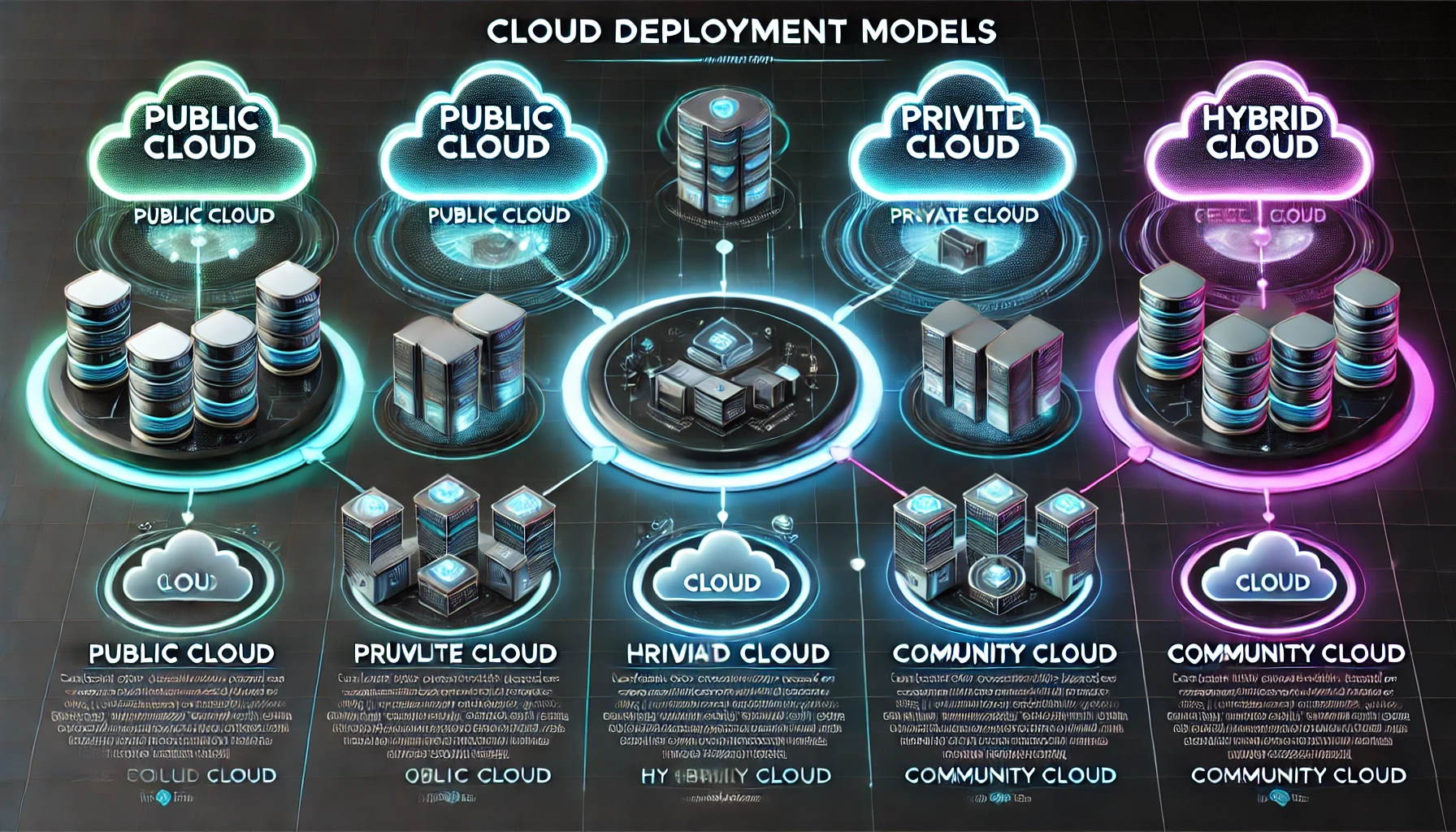
Cloud Deployment Models define how cloud services are hosted, managed, and accessed. These models determine the ownership, structure, and purpose of the cloud environment. There are four main cloud deployment models: Public Cloud, Private Cloud, Hybrid Cloud, and Community Cloud, each offering different levels of control, security, and scalability.
In the Public Cloud model, cloud services are provided by third-party vendors like Amazon Web Services (AWS), Microsoft Azure, and Google Cloud Platform (GCP). These services are available to multiple users over the internet. Public clouds are cost-effective because users only pay for what they consume, but they may pose security risks due to shared infrastructure. They are ideal for startups and businesses needing scalable and on-demand resources.
The Private Cloud model involves dedicated cloud infrastructure for a single organization. This can be hosted on-premises or by a third-party provider. Private clouds offer greater control, enhanced security, and customization but are expensive to build and maintain. This model suits large enterprises handling sensitive data like financial institutions and government agencies.
2.Public Cloud
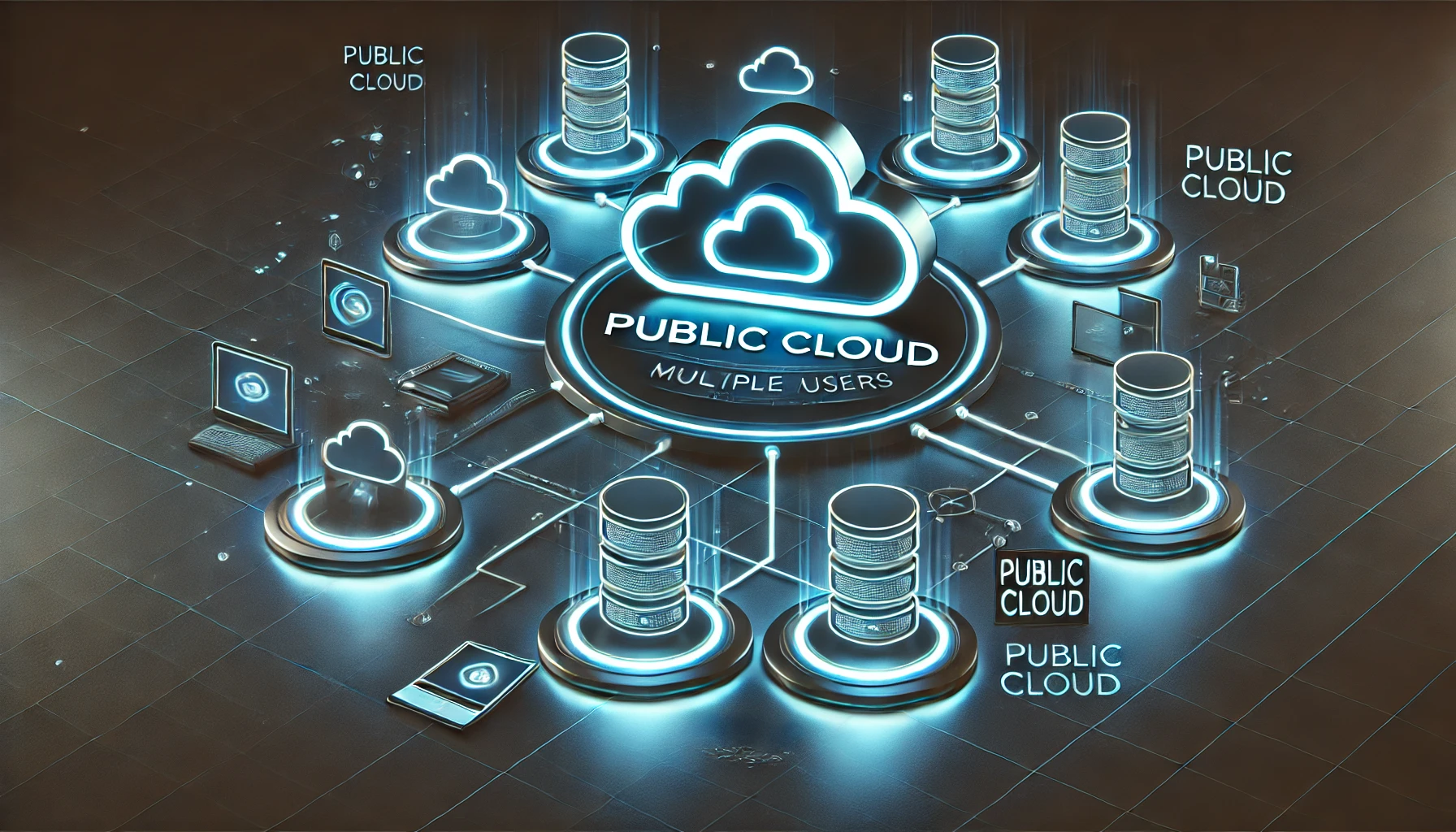
Public Cloud is a cloud deployment model where third-party service providers deliver computing resources—such as servers, storage, databases, and applications—over the internet. These resources are shared among multiple users (called tenants) and are available on a pay-as-you-go basis. Popular public cloud providers include Amazon Web Services (AWS), Microsoft Azure, Google Cloud Platform (GCP), and IBM Cloud. This model is cost-effective because users do not need to invest in hardware or maintenance, making it ideal for startups, small businesses, and enterprises needing scalable solutions.
Public cloud offers high scalability and flexibility, allowing businesses to scale up or down based on their needs. It also provides global accessibility, enabling users to access services from anywhere with an internet connection. However, public cloud environments pose security risks due to shared infrastructure and may face compliance challenges for industries handling sensitive data. Despite these concerns, public clouds are widely used for web hosting, software development, data storage, and disaster recovery due to their affordability and ease of deployment.
One of the key advantages of the public cloud is reduced operational costs. Organizations only pay for the resources they consume, eliminating the need for large upfront investments. Additionally, public cloud providers offer advanced technologies like AI, big data analytics, and IoT without requiring organizations to build these capabilities themselves. While public cloud is ideal for non-sensitive workloads, businesses handling highly confidential data may prefer private or hybrid cloud models for better security and control.
3. Private Cloud
Private Cloud
is a cloud deployment model where computing resources are exclusively used by a single organization. Unlike public clouds, the private cloud is either hosted on-premises (within the organization's data center) or by a third-party provider offering dedicated infrastructure. This model offers greater control, customization, and security, making it ideal for industries with strict regulatory requirements like banking, healthcare, and government agencies. Organizations using a private cloud have exclusive access to the resources, ensuring data privacy and compliance with industry standards.
Private clouds provide enhanced security because the infrastructure is isolated from other users. This model allows organizations to implement custom security protocols, firewalls, and access controls tailored to their needs. Additionally, private clouds support mission-critical applications that require consistent performance and minimal downtime. However, maintaining a private cloud requires significant investment in hardware, software, and IT personnel, making it costlier than public cloud solutions.
One major advantage of the private cloud is its customizability. Organizations can design the infrastructure to meet specific business needs, ensuring optimized performance and scalability. It also offers better data governance, as organizations maintain full control over where and how their data is stored. However, private clouds may lack the flexibility and scalability of public clouds unless they adopt a hybrid model. Despite the higher costs, businesses handling sensitive data or requiring full regulatory compliance often choose private clouds for their security and control.

4.Hybrid Cloud
Hybrid Cloud
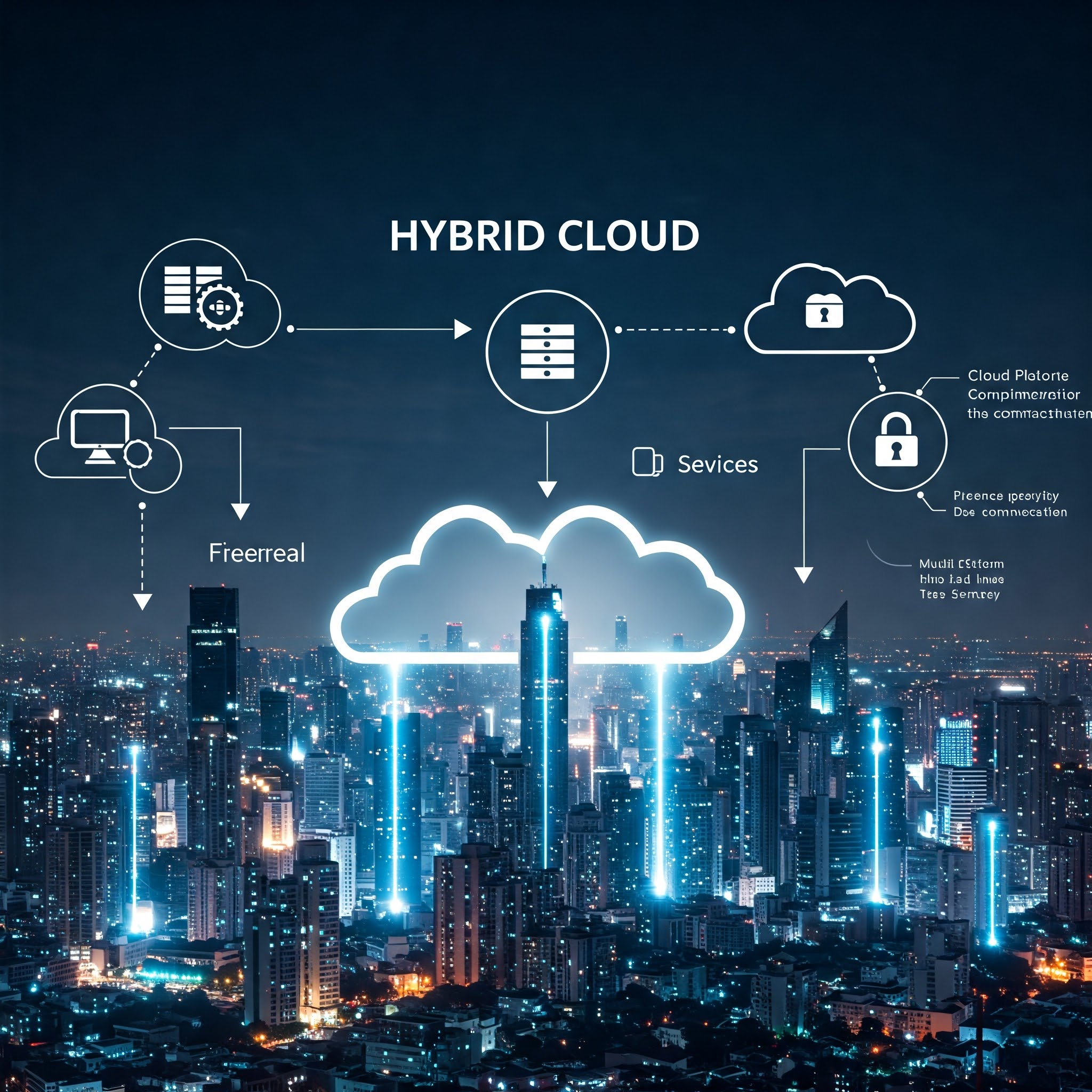
is a cloud deployment model that combines public and private cloud environments, allowing data and applications to be shared between them. This model offers flexibility, enabling organizations to keep sensitive data on a private cloud while utilizing the public cloud for scalability and cost efficiency. It is commonly used by businesses that require data privacy for certain operations while leveraging the public cloud for handling large workloads or non-sensitive tasks.
One of the main advantages of the hybrid cloud is its scalability. Organizations can expand their resources in the public cloud when demand increases without investing in additional on-premises infrastructure. This model also enhances business continuity by providing backup and disaster recovery options. For instance, in case of system failure in the private cloud, workloads can be shifted to the public cloud, ensuring uninterrupted service.
The hybrid approach also supports cost optimization. Critical data and applications that need tight security remain on the private cloud, while less-sensitive processes run on the public cloud, reducing operational expenses. It is particularly useful for industries such as finance, healthcare, and e-commerce, where data protection and scalability are crucial. This model allows organizations to balance performance and security while optimizing resource usage.
5.Multi-cloud Strategy
Multi-cloud Strategy
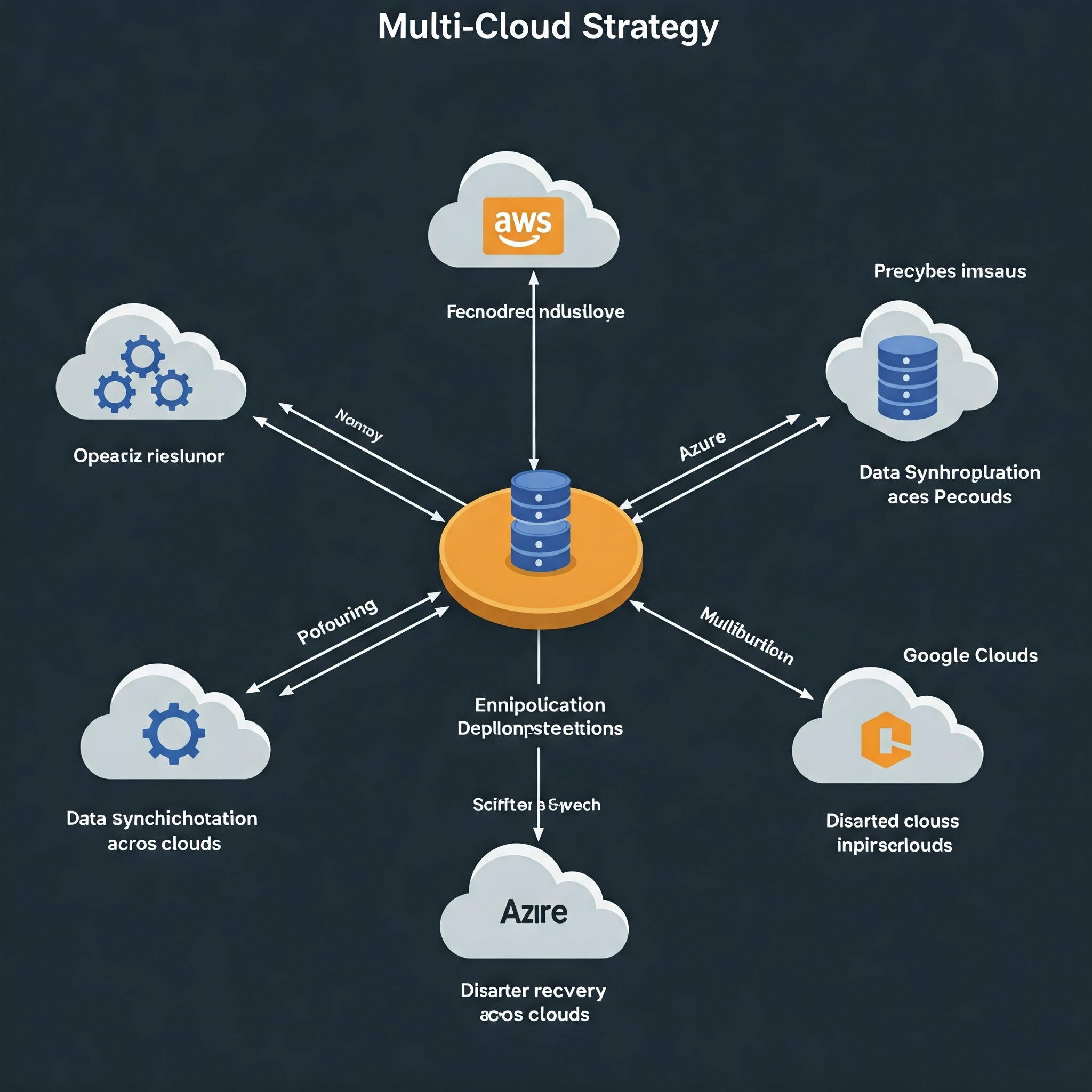
refers to the practice of using two or more cloud service providers to meet different business needs. Instead of relying on a single cloud provider, organizations distribute their workloads across multiple cloud platforms, such as Amazon Web Services (AWS), Microsoft Azure, Google Cloud Platform (GCP), and others. This strategy helps businesses leverage the unique strengths of each provider while minimizing the risks associated with vendor lock-in and service outages.
One of the main advantages of a multi-cloud strategy is increased reliability. If one cloud provider experiences an outage, critical services can continue to function on another platform, ensuring business continuity. This approach also allows organizations to optimize costs by choosing the most cost-effective services from different providers, which can reduce overall operational expenses.
Another benefit is flexibility and performance optimization. Different cloud providers excel in specific areas—one may offer better AI capabilities, while another provides superior database performance. By adopting a multi-cloud approach, businesses can select the best tools for each task, enhancing overall efficiency. This is particularly useful for companies operating in multiple regions, as they can use local cloud providers to reduce latency and improve user experience.
6.Community Cloud
Community Cloud
s a cloud deployment model where the infrastructure is shared by multiple organizations with similar interests, security requirements, or compliance needs. This model is designed to serve a specific community such as healthcare, government agencies, financial institutions, or educational sectors, allowing them to collaborate while maintaining data privacy and regulatory compliance. The community cloud can be managed by one of the participating organizations, a third-party provider, or a combination of both.
A major advantage of community cloud is its ability to offer a customized environment that meets specific industry needs. For example, in healthcare, it can ensure compliance with HIPAA regulations, while in education, it can align with data-sharing protocols. It provides a cost-effective solution since the infrastructure cost is shared among multiple organizations, reducing the financial burden on individual entities.
Another key benefit is collaboration. Organizations within the same community can share resources, data, and applications securely, improving efficiency and innovation. For instance, research institutions can collaborate on scientific projects, and government agencies can share information while maintaining data integrity and security.

7. Edge Computing
Edge Computing
is a distributed computing model where data is processed closer to the source of generation rather than relying on a centralized cloud or data center. In traditional cloud computing, data travels to remote servers for processing and storage. However, in edge computing, devices or local servers handle the data, reducing latency and improving real-time processing capabilities.
One of the main advantages of edge computing is faster data processing. Since data does not need to travel long distances to a centralized cloud, critical applications—such as autonomous vehicles, smart devices, and industrial automation—can react in real-time. This is particularly useful for systems where even a slight delay can impact performance or safety.
Another benefit is reduced bandwidth usage. Large amounts of data generated by IoT devices can overwhelm networks if sent to the cloud. By processing data locally, edge computing reduces data traffic, costs, and network congestion, making it ideal for industries like healthcare, retail, and manufacturing.Edge computing also enhances privacy and security. Sensitive data, such as medical records or financial transactions, can be processed locally rather than being transmitted over the internet. This approach minimizes the risk of data breaches and ensures compliance with data protection regulations like GDPR and HIPAA.

8.On-premise Cloud
On-premise Cloud also known as a private cloud, refers to a cloud computing environment that is hosted and managed within an organization's own physical infrastructure. Unlike public clouds (offered by third-party providers like AWS, Azure, or Google Cloud), on-premise cloud resources are maintained locally within the company’s data center. This setup provides full control over hardware, software, and security configurations while offering cloud-like capabilities such as scalability, virtualization, and automation.
A major advantage of on-premise cloud is enhanced security and privacy. Sensitive data remains within the organization, reducing the risk of data breaches and ensuring compliance with regulatory frameworks such as GDPR, HIPAA, or PCI-DSS. Organizations that handle confidential or classified information—like financial institutions, government agencies, and healthcare providers—often prefer on-premise cloud solutions for better control over data.
Another benefit is customization. Organizations can tailor their on-premise cloud to meet specific performance and business needs. This includes optimizing for workloads, data storage, processing power, and specialized software. Moreover, on-premise clouds support legacy systems that may not be compatible with public cloud environments.However, on-premise cloud also comes with challenges. It requires significant upfront investment in hardware and infrastructure. Maintenance, upgrades, and scaling also demand a dedicated IT team to ensure the system runs smoothly. Additionally, unlike public cloud services where you pay for what you use, on-premise solutions involve fixed costs even if the resources are underutilized.

Comments