Blockchain Technology
Blockchain technology is a decentralized, distributed ledger system that securely records transactions across multiple computers, ensuring transparency and immutability.
Blockchain technology is a decentralized, distributed ledger system that securely records transactions across multiple computers, ensuring transparency and immutability.
Cryptocurrency is a digital or virtual currency that uses blockchain technology for secure and decentralized transactions. Unlike traditional currencies, cryptocurrencies operate on a peer-to-peer (P2P) network, eliminating the need for intermediaries like banks. Blockchain acts as a distributed ledger, recording all transactions in a transparent and immutable manner. Popular cryptocurrencies such as Bitcoin (BTC), Ethereum (ETH), and Ripple (XRP) leverage blockchain to ensure security, transparency, and decentralization. Each transaction is verified through cryptographic techniques like hashing and digital signatures, making it nearly impossible to alter past records.
The working of cryptocurrency involves several key components. Mining is the process where nodes solve complex mathematical problems to validate transactions and add them to the blockchain. Cryptocurrencies use different consensus mechanisms, such as Proof of Work (PoW) in Bitcoin and Proof of Stake (PoS) in Ethereum, to achieve network security. Transactions are recorded in blocks, which are linked together, forming a secure and immutable chain. Smart contracts, a feature of Ethereum, enable self-executing agreements without intermediaries, automating processes like payments and digital identity verification.
Cryptocurrency has transformed financial systems by offering borderless transactions, low fees, fast settlements, and financial inclusion. However, it also faces challenges, including volatility, security risks, regulatory concerns, and scalability issues. Governments worldwide are working on crypto regulations to prevent fraud and ensure consumer protection. Despite challenges, the adoption of cryptocurrency continues to grow, with applications expanding beyond finance into gaming, healthcare, supply chain management, and decentralized applications (DApps). As blockchain technology evolves, cryptocurrencies are expected to play a crucial role in shaping the future of digital finance......
Click here for more information

Blockchain security refers to the measures and protocols used to protect blockchain networks, transactions, and data from cyber threats, fraud, and unauthorized access. Since blockchain is a decentralized and immutable ledger, it offers strong security advantages over traditional systems. However, it is not completely immune to risks like 51% attacks, smart contract vulnerabilities, and phishing scams. Blockchain security involves cryptographic encryption, consensus mechanisms, and decentralized control to ensure data integrity, transparency, and resistance against cyber threats. The public and private keys in blockchain provide secure access, preventing unauthorized transactions and ensuring confidentiality.
One of the biggest security threats in blockchain is the 51% attack, where a single entity gains control of more than 50% of the network's mining power, potentially altering transaction history and double-spending coins. Smart contract vulnerabilities are another major risk, as poorly written code can be exploited by hackers, leading to fund theft and system failures. Phishing attacks target users by tricking them into revealing their private keys, leading to the loss of assets. To counter these threats, blockchain networks implement strong encryption, multi-signature wallets, secure coding practices, and robust consensus mechanisms like Proof of Work (PoW) and Proof of Stake (PoS) to enhance security.
To strengthen blockchain security, organizations must adopt best practices such as multi-factor authentication (MFA), regular security audits, network monitoring, and compliance with regulatory standards. Many enterprises also use permissioned blockchains, where access is restricted to authorized users, reducing security risks. Innovations like zero-knowledge proofs (ZKP) and homomorphic encryption are further enhancing privacy and security in blockchain systems. As blockchain technology continues to evolve, ensuring robust security measures is essential for its adoption in industries like finance, healthcare, supply chain, and government services, where data integrity and security are paramount..........
Click here for more information

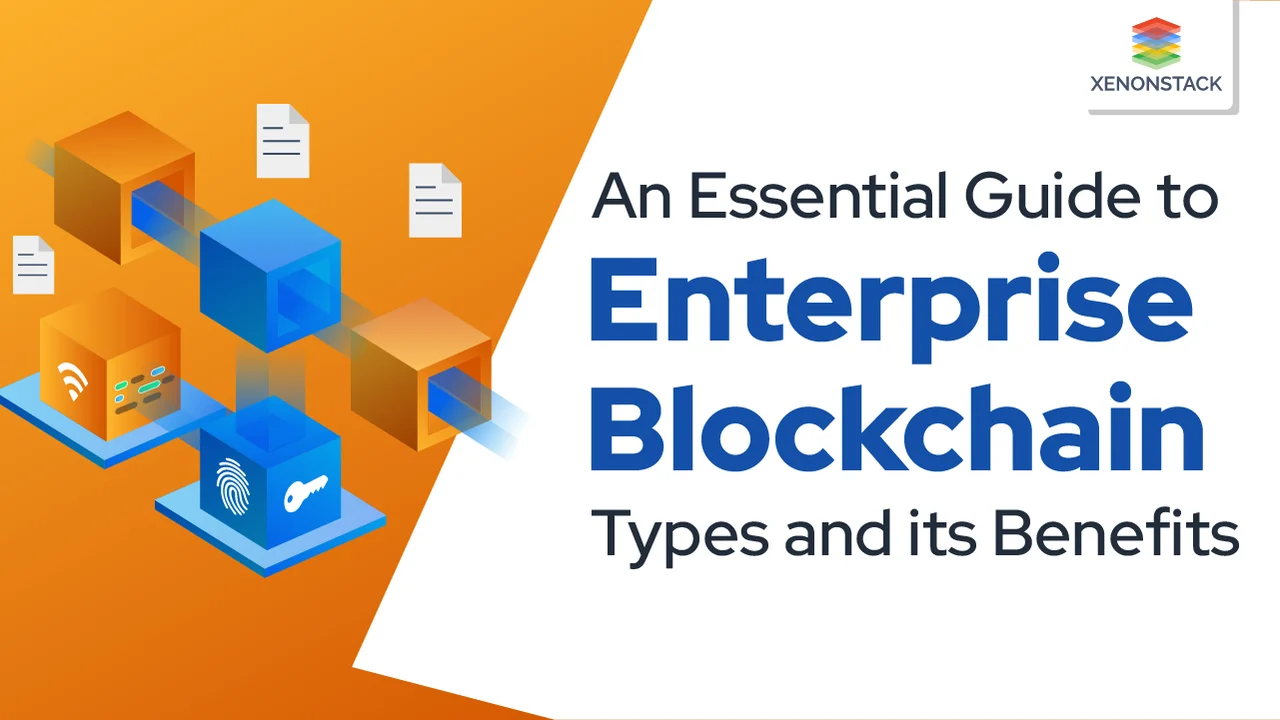
Enterprise blockchain refers to private or permissioned blockchain networks designed specifically for businesses and organizations to improve security, transparency, and efficiency in operations. Unlike public blockchains like Bitcoin and Ethereum, which allow anyone to participate, enterprise blockchains are restricted to authorized users, ensuring better data privacy and compliance with regulatory requirements. These blockchains are widely used in industries such as finance, healthcare, supply chain management, and government services to streamline processes, reduce fraud, and enhance collaboration between stakeholders.
One of the key advantages of enterprise blockchain is improved security and efficiency. By using smart contracts, businesses can automate agreements, reducing manual paperwork and human errors. Consensus mechanisms like Proof of Authority (PoA) or Practical Byzantine Fault Tolerance (PBFT) ensure that only trusted nodes validate transactions, making the system more scalable and faster compared to traditional public blockchains. Hyperledger Fabric, Corda, and Quorum are some popular enterprise blockchain frameworks that provide customizable and high-performance solutions tailored for business needs.
Enterprise blockchain also plays a crucial role in enhancing supply chain management, identity verification, and secure data sharing. For example, companies use blockchain to track product authenticity, prevent counterfeiting, and ensure regulatory compliance. In healthcare, it helps securely manage patient records while ensuring data privacy. Despite its benefits, challenges such as high implementation costs, integration with legacy systems, and regulatory concerns remain. However, with advancements in interoperability, scalability, and security, enterprise blockchain is expected to revolutionize industries by providing trust, efficiency, and innovation in business operations..........
Click here for more information
Web3 represents the next generation of the internet, focusing on decentralization, blockchain technology, and user ownership. Unlike traditional Web2 platforms controlled by centralized entities (like Google, Facebook, or Amazon), Web3 aims to give users control over their data, identity, and digital assets. It leverages blockchain networks, smart contracts, and decentralized finance (DeFi) to create an open and trustless digital ecosystem. This shift reduces reliance on intermediaries, enhancing security, transparency, and user autonomy in online interactions.
Decentralized Applications (DApps) are applications built on blockchain networks like Ethereum, Solana, and Polkadot, operating without a central authority. Unlike traditional apps that run on centralized servers, DApps use smart contracts to execute transactions automatically, ensuring tamper-proof and transparent operations. Popular use cases of DApps include decentralized finance (DeFi) platforms, non-fungible tokens (NFT) marketplaces, gaming, and decentralized social media. DApps enable peer-to-peer transactions, reducing costs and increasing efficiency in digital ecosystems.
Despite the advantages of Web3 and DApps, challenges such as scalability, high transaction fees, regulatory uncertainty, and user adoption remain. Many blockchain networks struggle with network congestion and speed, making it difficult for DApps to match the performance of Web2 applications. However, advancements in Layer 2 solutions, cross-chain interoperability, and decentralized identity (DID) are paving the way for a more efficient and accessible Web3 landscape. As the ecosystem matures, Web3 and DApps are expected to revolutionize industries by enabling greater decentralization, financial inclusion, and digital innovation...........
Click here for more information
.png)
Blockchain technology is poised to revolutionize industries beyond cryptocurrency, with advancements in decentralization, security, and transparency. In the coming years, we can expect blockchain to play a critical role in sectors such as finance, healthcare, supply chain management, and government services. The rise of smart contracts and decentralized finance (DeFi) is reshaping traditional banking by enabling peer-to-peer lending, faster cross-border transactions, and automated financial services without intermediaries. Additionally, central bank digital currencies (CBDCs) are being explored by governments, integrating blockchain into national economies for secure and transparent monetary systems.
Blockchain's future will also see improvements in scalability, energy efficiency, and interoperability. Currently, networks like Bitcoin and Ethereum face challenges related to high transaction costs and slow processing speeds. Emerging solutions such as Layer 2 scaling (Lightning Network, Optimistic Rollups), proof-of-stake (PoS) consensus mechanisms, and cross-chain interoperability are addressing these limitations, making blockchain more efficient and widely adoptable. Enterprises are increasingly adopting private and hybrid blockchain models, ensuring better privacy, compliance, and business integration while maintaining the advantages of decentralization.
Another key development is blockchain’s integration with emerging technologies like artificial intelligence (AI), the Internet of Things (IoT), and quantum computing. AI-powered blockchain applications can enhance fraud detection, predictive analytics, and automated decision-making in decentralized ecosystems. IoT and blockchain together will secure smart devices, automate supply chain tracking, and improve data integrity across connected systems. However, challenges such as regulatory frameworks, mass adoption, and security concerns must be addressed for blockchain to reach its full potential. As research and development progress, blockchain is set to become a cornerstone of digital transformation, driving trust, security, and decentralization across industries worldwide..........
Click here for more information
Comments