AR & VR Technologies
1. what is AR & VR Technologies?
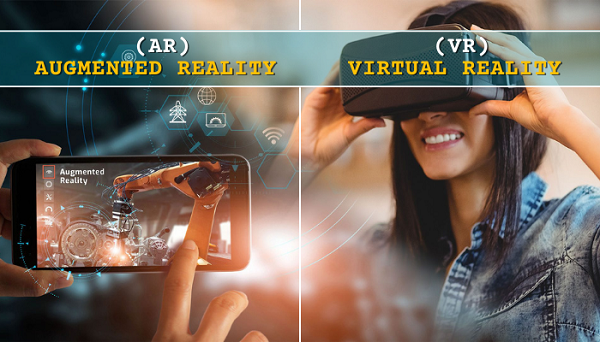
AR & VR Technologies enhances the real world by overlaying digital content, such as images, videos, or information, onto a user's view of their surroundings. AR combines real-world environments with computer-generated graphics, allowing users to see both the physical world and virtual elements simultaneously. One of the most common examples of AR is using smartphones or tablets to view 3D objects placed in a real-world setting, like when you use a mobile app to visualize how furniture would look in your living room before purchasing it. Other examples include gaming applications like Pokémon Go, where virtual characters interact with the user's real environment, or in industrial settings where AR can provide real-time data or instructions overlaid on machinery. AR doesn't replace the real world; it simply enhances it with additional information or interactive elements.
Virtual Reality (VR), on the other hand, completely immerses the user in a computer-generated environment, disconnecting them from the real world. This is typically achieved by wearing a VR headset, which blocks out the physical world and replaces it with a fully immersive 3D digital environment. VR is commonly used for gaming, where players are placed in an interactive virtual world, but it also has applications in fields such as education, healthcare, and training. For instance, in VR-based simulations, students can perform virtual surgeries, or astronauts can train in simulated space environments. VR provides a sense of presence, making users feel like they are physically located in the virtual space, even though they are actually in a controlled environment.
Both AR and VR have significant potential across various industries, including education, gaming, healthcare, real estate, and retail. AR is more focused on enhancing the user's interaction with the real world, while VR creates an entirely new world for the user to engage with. These technologies are expected to continue evolving, with the goal of making the virtual and augmented experiences more immersive, realistic, and accessible.
2.AR vs VR vs MR
AR vs VR vs MR
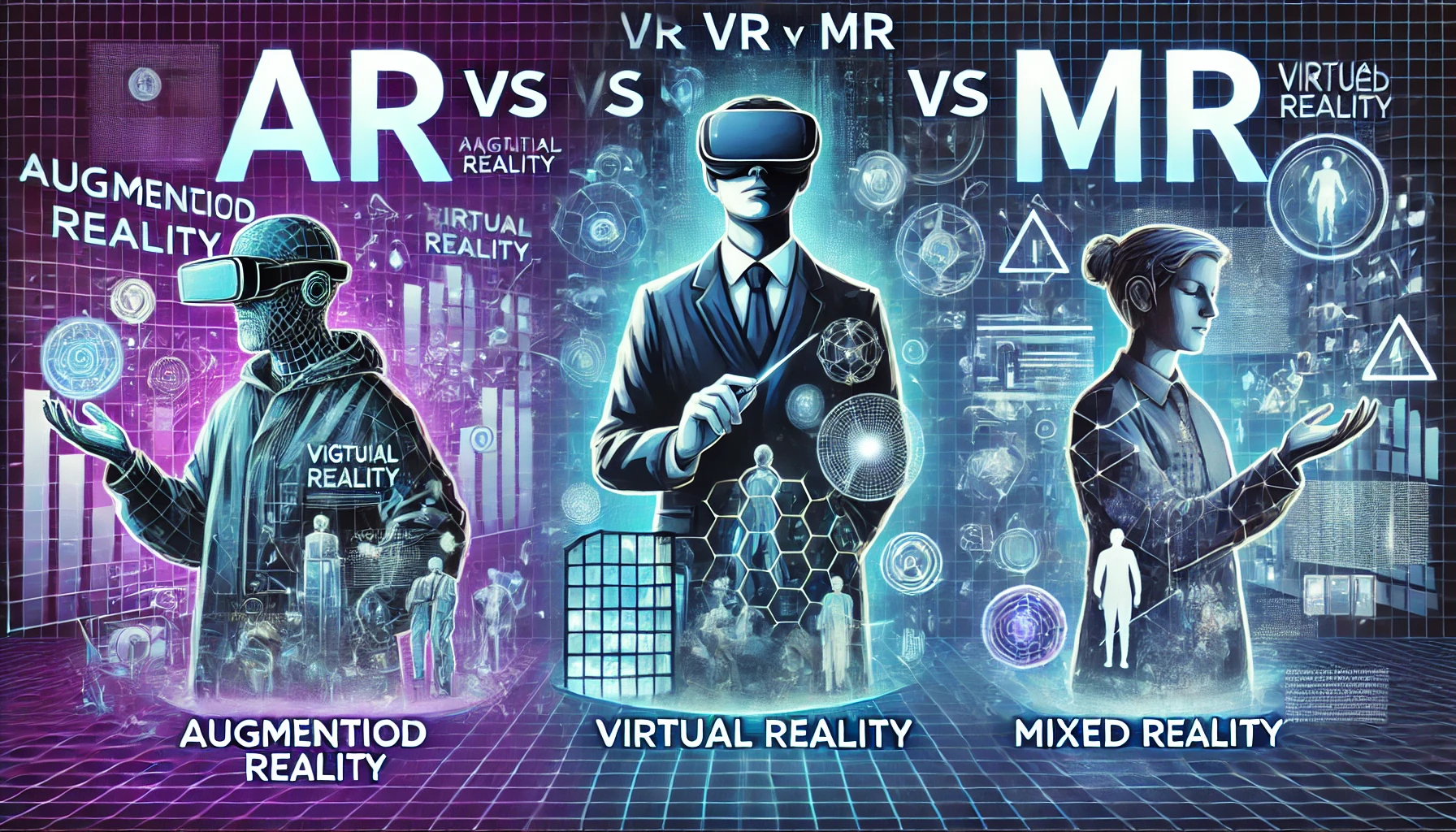
R (Augmented Reality), VR (Virtual Reality), and MR (Mixed Reality) are three immersive technologies that offer different levels of interaction with the real world and digital environments. AR enhances the real world by overlaying digital elements, such as images or 3D models, onto the user’s physical environment, allowing them to interact with both the virtual and real world simultaneously. It is commonly used in mobile apps like Pokémon Go or in applications like virtual try-ons and navigation. VR, on the other hand, completely immerses users in a digital environment, cutting off all interaction with the real world. With VR headsets, users are transported to a fully virtual space, commonly used in gaming, training, and simulations, providing a deep sense of presence in the virtual world. MR is a hybrid of AR and VR, blending both physical and digital worlds by enabling real-time interaction with virtual elements anchored to real-world objects. MR allows users to not only see but also interact with digital objects in the real world, making it more immersive than AR and more interactive than VR. While AR and VR each focus on enhancing or replacing the real world, MR offers a seamless combination of both, making it ideal for collaborative work, industrial design, and advanced gaming experiences.
AR, VR, and MR each have distinct applications across various industries. AR is especially beneficial in fields like retail, education, healthcare, and logistics. For instance, in retail, AR allows customers to visualize products in their home environment before purchase, improving the shopping experience. In education, AR can enhance learning by overlaying interactive 3D models or information onto textbooks or physical objects, making concepts more engaging and easier to understand. In healthcare, AR assists surgeons by overlaying vital data during procedures or helping in medical training through interactive models. VR, being highly immersive, is widely used in gaming, where it creates a fully interactive digital world, allowing players to experience games in a more engaging way. Beyond gaming, VR also has critical applications in training and simulations for fields like aviation, military, and healthcare, enabling realistic, risk-free environments for practicing complex tasks.
IMR is gaining traction in industries that require seamless interaction between digital and physical objects. In industries like architecture and design, MR allows professionals to visualize and manipulate 3D models of buildings or products in real-world spaces, improving the design process and collaboration. In healthcare, MR can be used for surgical planning by allowing surgeons to interact with a 3D model of the patient’s body, improving accuracy during operations. In the workplace, MR can enhance collaboration by allowing remote teams to interact with shared virtual elements, making it easier to collaborate on projects. While AR enhances the real world and VR isolates users in a completely virtual space, MR bridges the gap between the two, offering a more interactive and dynamic experience that is expected to revolutionize how we work, learn, and interact with technology.
3.Head-mounted Displays (HMDs)
Head-mounted Displays (HMDs)
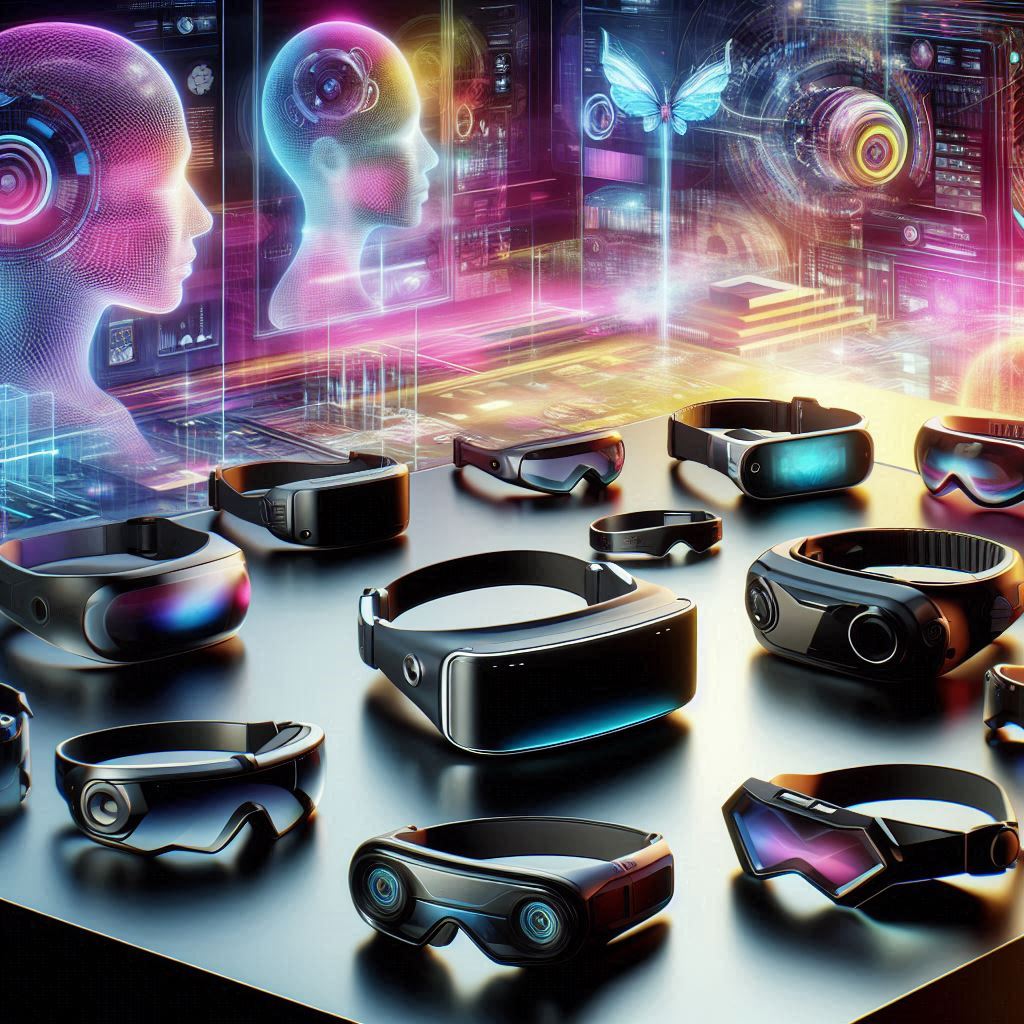
are wearable devices that display visual content directly in front of the user’s eyes, providing an immersive experience for applications such as virtual reality (VR), augmented reality (AR), and mixed reality (MR). These devices typically consist of a headset that contains screens, sensors, and other hardware components, which are positioned close to the eyes to create the illusion of being inside a digital environment. HMDs can either be tethered to a computer or mobile device or function wirelessly, depending on the design. In VR, HMDs completely immerse the user in a virtual world, blocking out the real environment, while in AR and MR, they overlay digital content onto the user’s view of the real world, allowing interaction between both environments.
HMDs come in various types and configurations, with some offering higher levels of immersion and interactivity than others. For example, high-end VR headsets like the Oculus Rift, HTC Vive, and PlayStation VR offer features such as 360-degree tracking, hand controllers, and haptic feedback, providing a highly interactive experience. On the other hand, AR headsets like the Microsoft HoloLens or Magic Leap allow users to see the physical world while interacting with virtual objects overlaid onto it. These devices often include specialized sensors, such as cameras and depth sensors, to track the user's movements and adjust the display accordingly. HMDs are used in a variety of industries, including gaming, healthcare, education, training, and design, where immersive or interactive experiences are needed. As technology advances, HMDs are becoming more compact, comfortable, and capable, making them an essential tool for both entertainment and professional applications.
In addition to their use in entertainment and professional applications, HMDs are also playing a crucial role in enterprise and industrial settings. For example, in manufacturing and maintenance, HMDs allow workers to access real-time information, instructions, and schematics while keeping their hands free for tasks. This improves efficiency and reduces the need for physical manuals or external devices. In healthcare, HMDs are being used for surgical planning, training, and even in remote surgeries, where doctors can interact with 3D models or consult with colleagues in real-time. Moreover, HMDs are advancing rapidly, with improvements in display quality, field of view, and comfort, making them more practical for extended use in a variety of settings. As the technology evolves, HMDs are expected to be more integrated into daily life, enhancing how we work, learn, and interact with both virtual and physical environments.
4.3D Mapping & Tracking
3D Mapping & Tracking
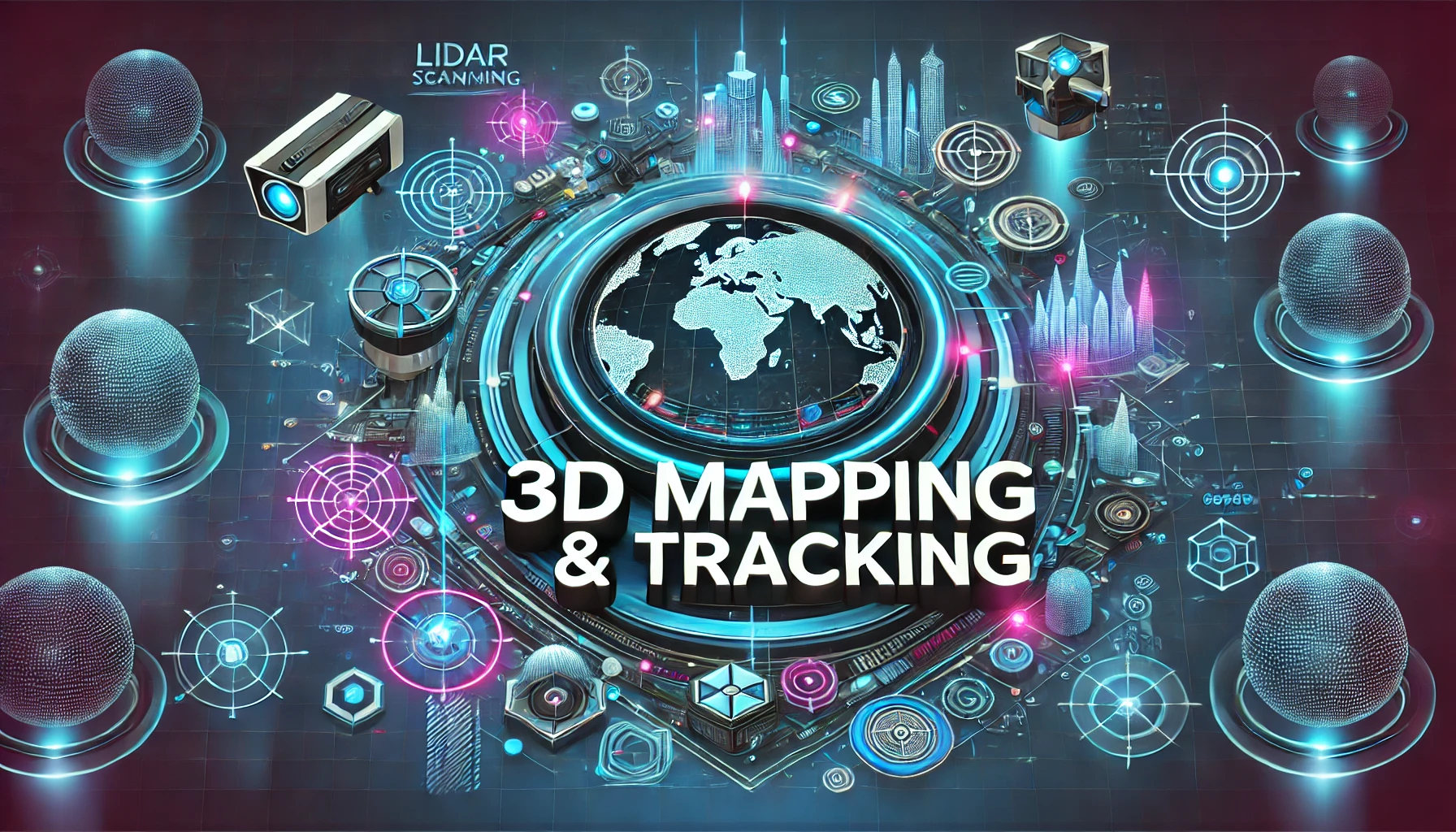
are technologies that enable the creation of three-dimensional representations of real-world environments and the ability to track the movement or position of objects within those environments. These technologies are widely used in industries such as robotics, autonomous vehicles, augmented reality (AR), and virtual reality (VR). 3D mapping involves capturing the geometry of the physical world to create accurate 3D models or maps. This process is often done using sensors such as LiDAR (Light Detection and Ranging), stereo cameras, or depth sensors, which gather data about the surroundings. The data is then processed and used to generate detailed, three-dimensional maps that can represent everything from indoor spaces to large outdoor terrains. 3D tracking, on the other hand, focuses on tracking the movement and position of objects or users in 3D space, which is essential for applications like motion capture, AR, VR, and robotics.
In augmented reality and virtual reality, 3D mapping and tracking are crucial for accurately placing and interacting with virtual objects in the real world. For example, in AR applications, 3D mapping allows digital objects to be anchored and aligned correctly in the user's physical environment. The tracking system then ensures that these virtual objects maintain their position as the user moves or changes their perspective. In VR, precise 3D tracking is required to monitor the user's movements, such as head, hand, and body position, and translate them into the virtual environment for a more immersive experience. The combination of 3D mapping and tracking helps create realistic simulations, where virtual elements seem to interact naturally with the real world or respond to the user’s actions in real time.
3D mapping & tracking also play an essential role in autonomous vehicles and robotics. Autonomous vehicles use 3D mapping to create detailed maps of their environment, which helps them navigate and understand the world around them, avoiding obstacles and planning routes. 3D tracking systems are integrated into these vehicles to detect and follow moving objects, like pedestrians, other vehicles, or road signs. Similarly, in robotics, 3D mapping helps robots understand and navigate their surroundings, while 3D tracking enables them to interact with specific objects or follow precise instructions in dynamic environments. These technologies are advancing rapidly with the use of AI and machine learning to improve accuracy and efficiency, allowing for more reliable and intelligent systems. As 3D mapping and tracking continue to evolve, their applications will expand further, transforming industries such as healthcare, entertainment, manufacturing, and logistics.
5.Haptic Feedback Technology
Haptic Feedback Technology
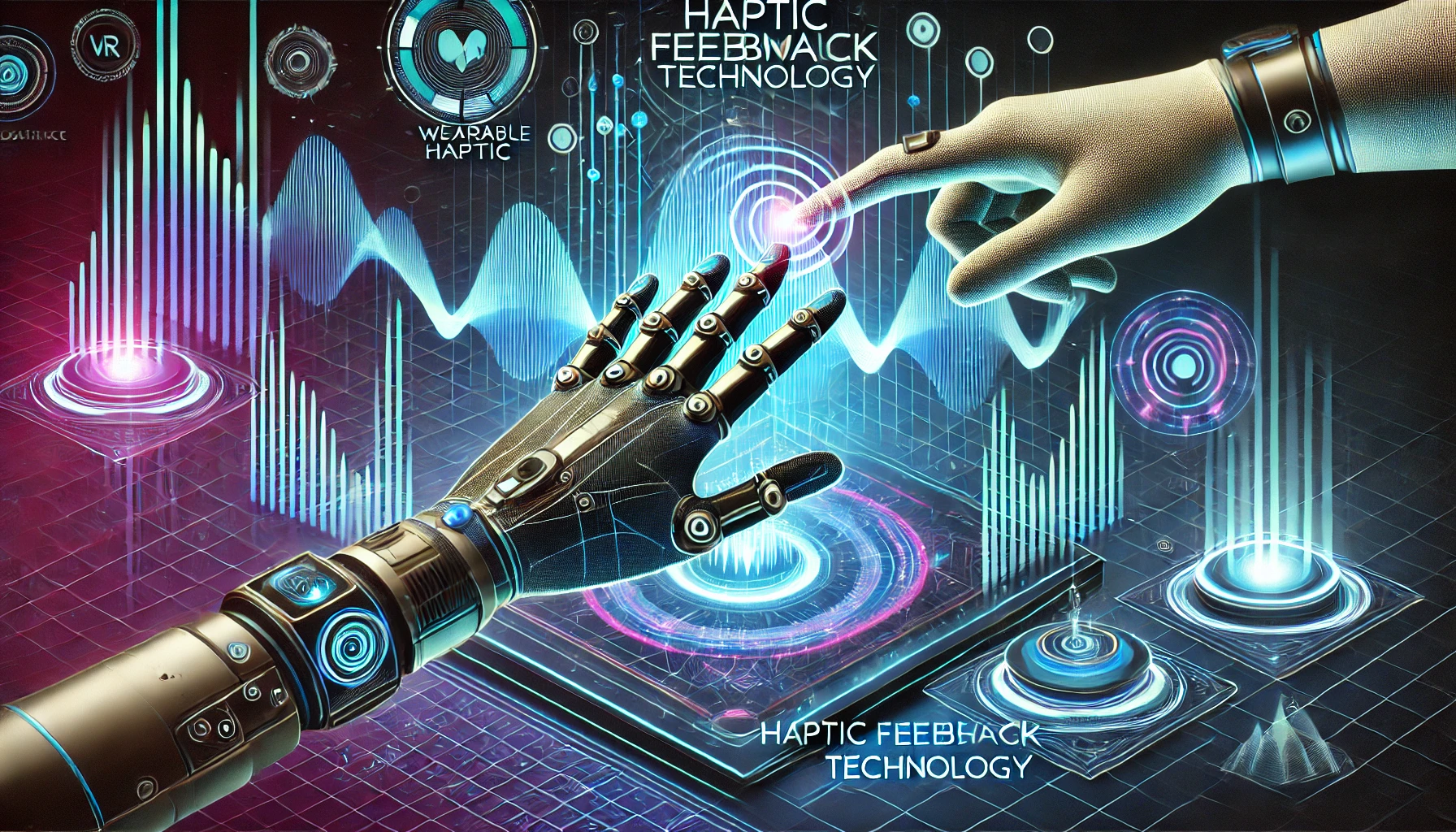
refers to the use of tactile sensations to simulate the feeling of touch or physical interaction in virtual environments. It provides users with sensory feedback, typically through vibrations or motions, to simulate the sense of touch, which enhances their interaction with digital content. Haptic feedback is commonly used in devices like smartphones, gaming controllers, VR headsets, and wearables, where it allows users to feel sensations like vibrations, pressure, or texture, making digital experiences more immersive. For example, in gaming, haptic feedback in controllers provides users with sensations such as the feeling of an explosion, a vehicle's engine rumbling, or the impact of a hit, adding to the realism and excitement of the game. In virtual reality (VR), haptic gloves or suits offer feedback when users interact with virtual objects, simulating the sensation of holding, touching, or manipulating things in the virtual world.
Haptic feedback technology works by translating digital signals into physical sensations, typically through the use of actuators. These actuators, which can be small motors or piezoelectric materials, generate vibrations, forces, or motions that are felt by the user. The feedback can be simple, such as a vibration indicating a notification or a more complex interaction, like the feeling of resistance when manipulating a virtual object or simulating the texture of an object in VR or AR. For instance, in robotic surgery, surgeons may use haptic feedback systems to feel the resistance of tissue or organs, enhancing precision and control during procedures. Similarly, in autonomous vehicles, haptic feedback can alert drivers about obstacles or provide navigational cues, allowing for safer driving experiences.
As technology advances, haptic feedback is becoming more sophisticated, enabling more realistic and diverse sensations. In medical applications, for example, haptic devices are used to train surgeons or help with rehabilitation by providing physical sensations to mimic procedures or guide the user through exercises. In consumer electronics, innovations like smart wearables are incorporating haptic technology to provide a more intuitive and interactive experience, such as feeling a message notification or a subtle reminder. The potential of haptic feedback extends beyond entertainment and healthcare, with future applications in fields such as education, remote work, and communication, where it can enable more natural and immersive interactions between people and digital environments.
6.Gesture-based Controls
Gesture-based Controls
refer to technologies that allow users to interact with devices or systems through physical movements or gestures, rather than using traditional input methods like keyboards, mice, or touchscreens. This form of interaction relies on sensors, cameras, and motion-detecting technologies to recognize and interpret a user’s gestures, translating them into commands or actions. For example, in smartphones and tablets, gesture-based controls are often used for tasks like swiping, pinching, or tapping on the screen to navigate, zoom, or switch between apps. Gesture-based controls are also prominent in gaming consoles like the Nintendo Wii or Microsoft Kinect, where users can control the game by moving their bodies, waving their hands, or mimicking specific actions. In virtual reality (VR) or augmented reality (AR), users can interact with digital environments by performing gestures, like grabbing, pointing, or scrolling, providing a more immersive experience.
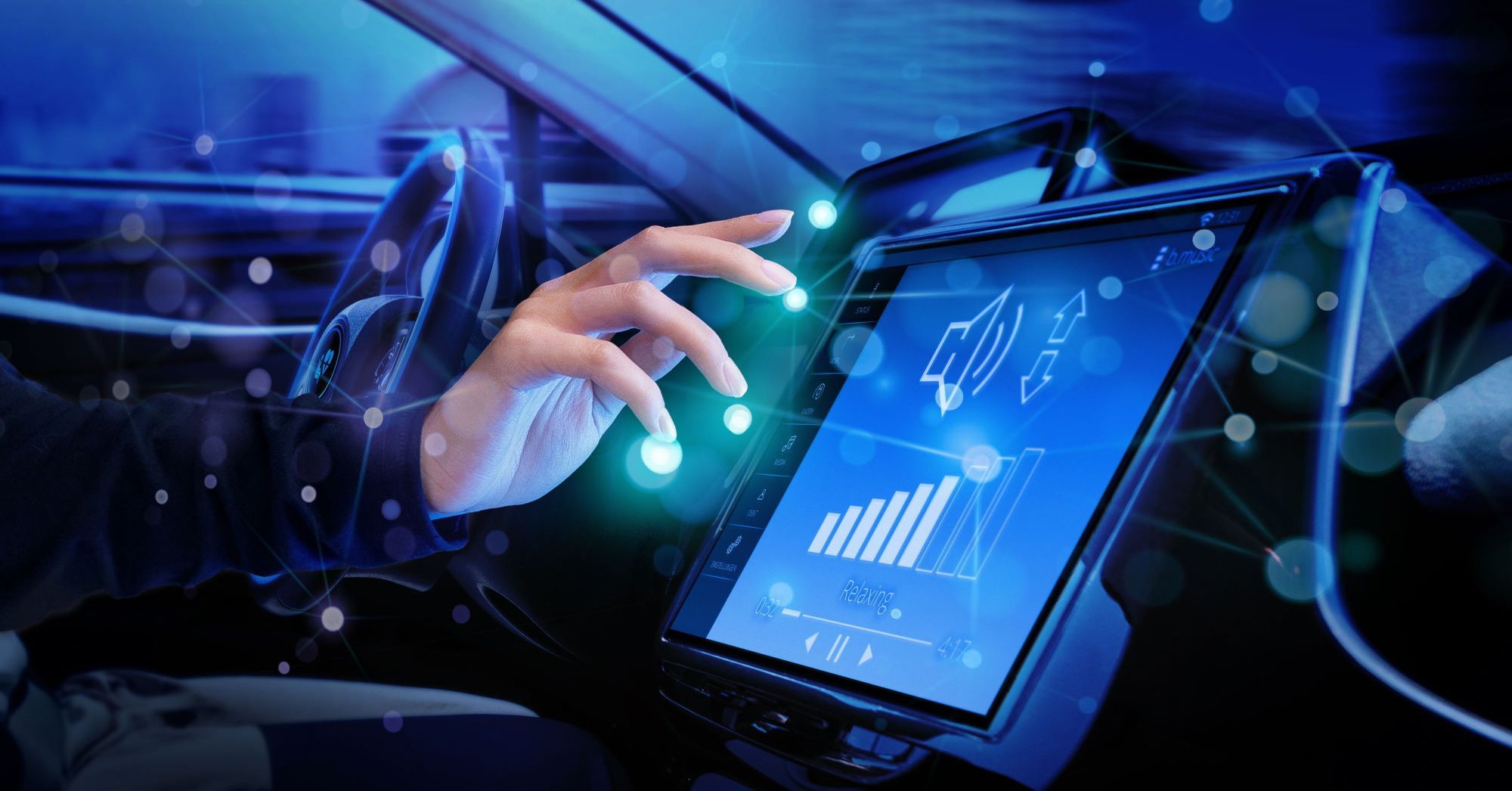
The core of gesture-based controls lies in advanced motion-sensing technologies, such as infrared sensors, cameras, and depth sensors, which track and interpret the user's movements. These technologies are often enhanced with machine learning algorithms to improve the accuracy and responsiveness of gesture recognition. For example, in smart home systems, users can control lights, temperature, or entertainment systems with simple hand gestures without needing to physically touch any device. In robotics, gesture-based controls enable operators to control robotic arms or drones remotely by performing specific hand movements, which is especially useful in situations requiring precision or hands-free operation. This technology is also making its way into automotive systems, where drivers can control in-car features like music, navigation, and phone calls with gestures, reducing distractions and enhancing safety.
As gesture-based control technologies continue to evolve, they are becoming increasingly intuitive and accurate, making them viable for a broader range of applications. In healthcare, gesture recognition is being used for physical therapy, where patients can perform exercises and receive real-time feedback without the need for direct interaction with equipment. In education, gesture-based systems can be used for interactive learning, allowing students to engage with educational content in a hands-on manner. Gesture controls are also expected to play a significant role in the development of wearable devices like smart glasses and haptic gloves, providing more natural and immersive interactions with both virtual and physical worlds. As these systems improve, they hold the potential to revolutionize industries by making human-device interaction more natural, efficient, and engaging.
7.AR Smart Glasses
AR Smart Glasses
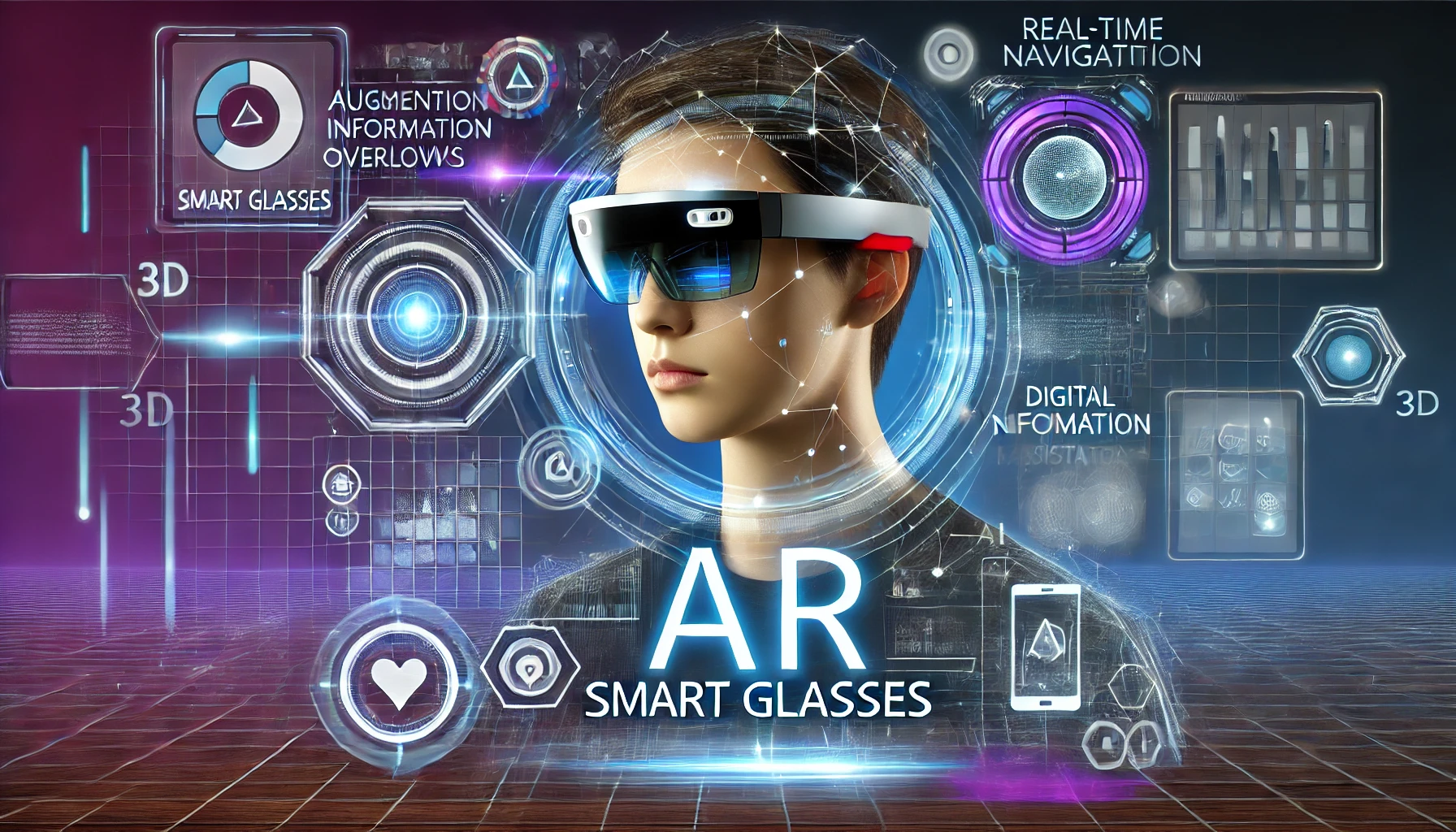
are wearable devices that combine augmented reality (AR) technology with traditional eyewear to display digital information overlaid on the real world, enhancing the user’s perception and interaction with their environment. These glasses are equipped with small displays, sensors, and cameras that allow users to see both the physical world around them and digital content simultaneously. The glasses can project images, videos, or interactive data directly onto the lenses, offering hands-free access to information, navigation, or communication. Unlike regular glasses, AR smart glasses often come with additional features such as voice recognition, touch controls, and gesture-based interaction, providing a seamless integration of virtual and physical worlds. Examples of AR smart glasses include the Microsoft HoloLens, Google Glass, and Magic Leap.
The primary purpose of AR smart glasses is to improve the way users interact with their surroundings by overlaying useful information onto the physical world in real-time. For instance, in navigation, AR smart glasses can display directions directly in the user's line of sight, guiding them through unfamiliar locations without the need to look at a separate screen. In industrial settings, such as manufacturing or warehousing, AR glasses can provide workers with real-time data on equipment status, inventory levels, or assembly instructions, enhancing productivity and reducing errors. In healthcare, they can assist surgeons or medical professionals by displaying vital patient information or 3D models of organs during procedures, improving accuracy and efficiency. AR smart glasses also have potential applications in education, where they can deliver interactive learning content, or in entertainment, allowing users to engage with digital content while still being immersed in the physical environment.
Despite their potential, AR smart glasses face several challenges, such as limitations in battery life, processing power, and the need for more advanced sensors. The current models tend to be bulky, limiting their widespread adoption. However, as technology advances, the design and functionality of AR smart glasses are expected to improve, making them more lightweight, comfortable, and capable of providing more sophisticated AR experiences. The integration of 5G technology and edge computing is also likely to enhance the capabilities of AR smart glasses, allowing for faster processing and more responsive interactions. As the technology evolves, AR smart glasses could transform industries by enabling more hands-free, immersive, and efficient ways to interact with both the digital and physical worlds.
8.Immersive VR Environments
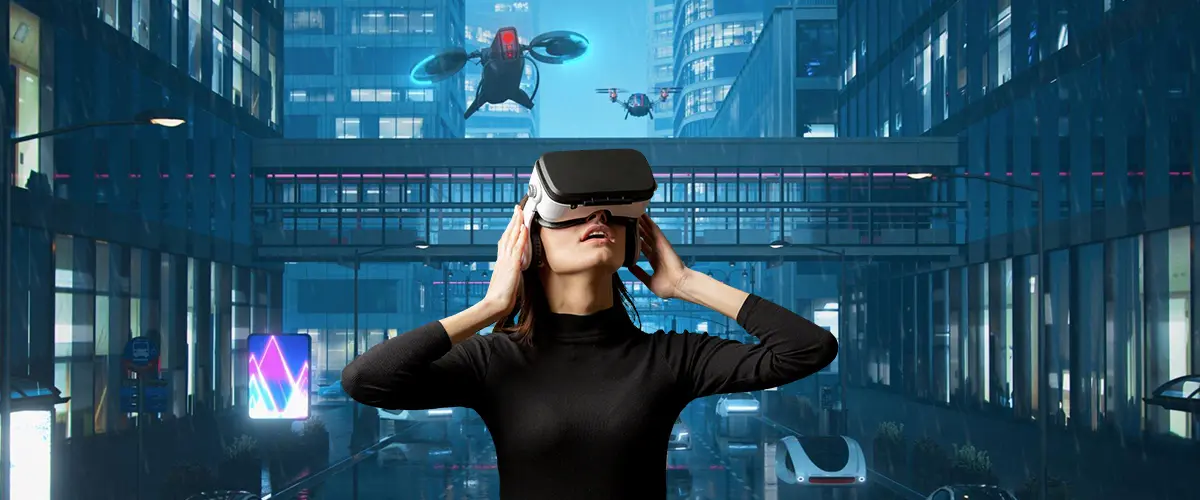
Immersive VR Environments are fully digital, computer-generated spaces that allow users to experience and interact with virtual worlds in a highly immersive manner. Through the use of VR headsets, motion controllers, and sometimes haptic feedback systems, users can feel as though they are physically present within these environments, even though they are not in the real world. Immersive VR environments can simulate various experiences, ranging from realistic recreations of the physical world to entirely fantastical or abstract spaces. These environments are often used for applications in gaming, training simulations, virtual tourism, education, and even therapy, offering users a rich and engaging way to interact with digital content.
The key to creating immersive VR environments is the level of realism and interaction provided to the user. High-quality VR systems are equipped with sensors and cameras that track the user’s head and hand movements in real-time, adjusting the virtual world to match those movements. This ensures that users can look around and move within the environment as though they are actually there. In gaming, for example, players can use motion controllers to physically interact with the environment, swing weapons, or manipulate objects in the game world. In professional training, VR environments are used to simulate complex scenarios like surgery, flight simulation, or emergency response, allowing trainees to practice skills and make decisions in a safe, controlled, and risk-free environment. These simulations offer hands-on learning without the potential consequences of real-world mistakes.
In addition to training and entertainment, immersive VR environments are also used for therapeutic purposes. In psychology and mental health, VR is used in exposure therapy to treat phobias, PTSD, and anxiety disorders by gradually exposing patients to triggers in a controlled and safe environment. VR has also shown potential in helping patients with physical rehabilitation by guiding them through exercises or encouraging movement in an interactive, engaging way. Furthermore, immersive VR environments are expanding into virtual tourism and remote collaboration, where users can visit virtual replicas of real-world places or engage with colleagues and clients in virtual workspaces, enhancing global collaboration without geographical limitations. As VR technology advances, the realism, accessibility, and variety of immersive VR environments will continue to evolve, opening up new possibilities for entertainment, education, healthcare, and beyond.
Immersive VR Environments are fully digital, computer-generated spaces that allow users to experience and interact with virtual worlds in a highly immersive manner. Through the use of VR headsets, motion controllers, and sometimes haptic feedback systems, users can feel as though they are physically present within these environments, even though they are not in the real world. Immersive VR environments can simulate various experiences, ranging from realistic recreations of the physical world to entirely fantastical or abstract spaces. These environments are often used for applications in gaming, training simulations, virtual tourism, education, and even therapy, offering users a rich and engaging way to interact with digital content.
The key to creating immersive VR environments is the level of realism and interaction provided to the user. High-quality VR systems are equipped with sensors and cameras that track the user’s head and hand movements in real-time, adjusting the virtual world to match those movements. This ensures that users can look around and move within the environment as though they are actually there. In gaming, for example, players can use motion controllers to physically interact with the environment, swing weapons, or manipulate objects in the game world. In professional training, VR environments are used to simulate complex scenarios like surgery, flight simulation, or emergency response, allowing trainees to practice skills and make decisions in a safe, controlled, and risk-free environment. These simulations offer hands-on learning without the potential consequences of real-world mistakes.
In addition to training and entertainment, immersive VR environments are also used for therapeutic purposes. In psychology and mental health, VR is used in exposure therapy to treat phobias, PTSD, and anxiety disorders by gradually exposing patients to triggers in a controlled and safe environment. VR has also shown potential in helping patients with physical rehabilitation by guiding them through exercises or encouraging movement in an interactive, engaging way. Furthermore, immersive VR environments are expanding into virtual tourism and remote collaboration, where users can visit virtual replicas of real-world places or engage with colleagues and clients in virtual workspaces, enhancing global collaboration without geographical limitations. As VR technology advances, the realism, accessibility, and variety of immersive VR environments will continue to evolve, opening up new possibilities for entertainment, education, healthcare, and beyond.
Comments